Brihati
बृहती
Solanum anguivi Lam.
Solanaceae · Solanum
Benefits & side effects
TRADITIONAL VIEW, WITH SAFETY LIMITS
Hindi name: Badi kateri
What the texts say Brihati does
- Kasahara — relieves cough
- Shwasahara — relieves breathlessness
- Deepana — kindles digestion (appetiser)
- Pachana — digests ama (digestive)
- Jwaraghna — used in fever
- Hridya — good for the heart
What the evidence says. The classical record is broad. Clinical research on Brihati as a single herb is scarce, and most of it uses a name that may not refer to one species.
Side effects and limits
- Burning sensation
- Digestive upset
Avoid or ask first: Pregnancy.; Conditions aggravated by ushna and tikshna dravya.
A traditional classification, not a recommendation. The full safety record is below.
Stands in 8 groups
- Kanthya — Good for the voice and throat
- Hikkanigrahana — Arresting hiccough
- Shothahara — Reducing swelling
- Angamardaprashamana — Allaying body ache
- Vidarigandhadi — Vata disorders and the wasting states
- Varunadi — Kapha, fat, and the head
- Brihatyadi — Agni, bladder and the urinary passage
- Laghu Panchamula — The lesser five roots
A Samhita can only be read forwards, from the group to its members. This is the same list read backwards.
Photographs
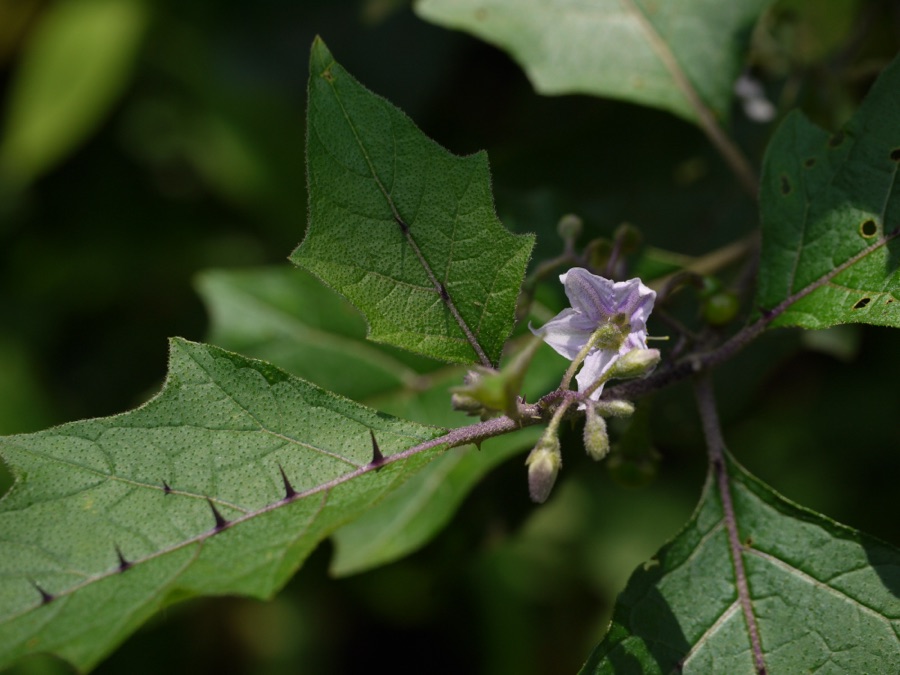
Photo: Dinesh Valke from Thane, India · CC BY-SA 2.0 · Wikimedia Commons

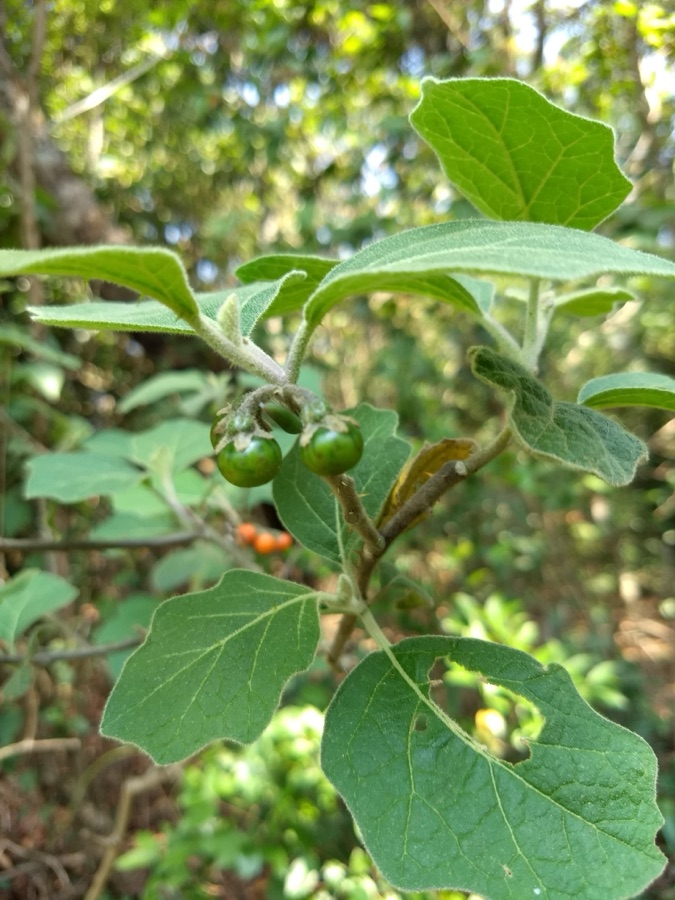
Photo: Renjusplace · CC BY-SA 3.0 · Wikimedia Commons

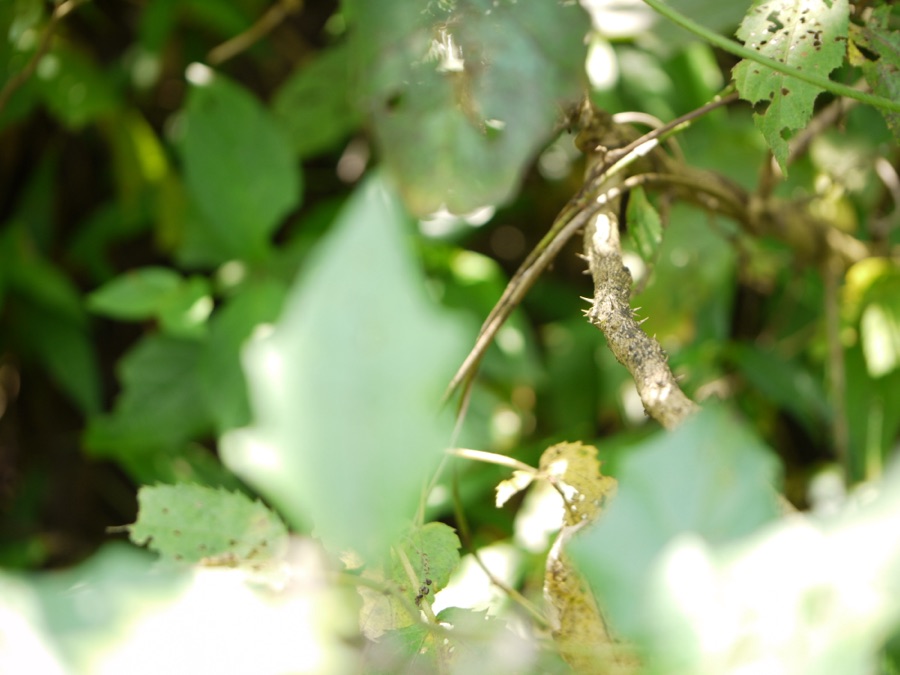
Photo: Dinesh Valke from Thane, India · CC BY-SA 2.0 · Wikimedia Commons

Matra and anupana
AS THE CLASSICAL TEXTS AND THE API PRESCRIBE
| Churna | 3–6 g |
| Kwatha | 50–100 ml |
| Anupana | Ushnodaka · Madhu |
| Kala | Adhobhakta |
Usually given as part of Dashamoola or in combination with kantakari, rather than alone. The figures apply to the root.
Reported from Sharangadhara Samhita and the Ayurvedic Pharmacopoeia of India. Laisha states what the texts prescribe; it does not recommend. No quantity here is adjusted for a particular person — not for agni, koshtha, bala, age, pregnancy, kidney or liver function, or anything already being taken.
Pharmacopoeial standard
Ayurvedic Pharmacopoeia of India, Part I
| Marker | Solasodine |
| Assay | |
| Total ash | |
| Acid-insoluble ash | |
| Alcohol-soluble extractive | |
| Water-soluble extractive | |
| Foreign matter |
Solanum anguivi and the older S. indicum are both traded as Brihati. The glycoalkaloid is the marker, but the more basic question for a laboratory is which species it has been given.
These are the marker and the identity test for this dravya, and they are not a test Laisha has run on anything. Laisha does not state the numeric limits here: the assay, ash and extractive figures must be read from the current edition of the Ayurvedic Pharmacopoeia of India, because a wrong limit printed here is a number a laboratory would act on. The entries in this library that DO carry figures carry them because each one was checked.
Rasapanchaka
| Rasa | TiktaKatu |
| Guna | LaghuRukshaTikshna |
| Virya | Ushna |
| Vipaka | Katu |
| Prabhava | Usually prescribed together with kantakari as Brihatidvaya. Charaka nevertheless lists it on its own in groups for the throat, for hiccup, for swelling and for body ache, so it is not only the other half of a pair. |
| Doshakarma | Kaphavatahara. Being ushna it increases pitta. |
Bitter and pungent, heating in virya and pungent after digestion. The texts give kantakari the same profile, which is one reason the two are so often prescribed together.
Karma and part used
The actions given are those recorded by the texts and by Charaka's group lists. They express the tradition's classification and are not offered here as demonstrated effects in people.
| Upayukta anga | Mula (the root) Panchanga Phala (the fruit) |
| Why it matters | Dashamoola uses the root, so the root is the pharmacopoeial article. Brihati also bears a large orange-red berry; in this nightshade it is the unripe fruit that carries the most glycoalkaloid, and the root and fruit should not be treated as interchangeable. |
Paryaya
Brihati and Mahati both mean 'the large one', in contrast to Kshudra, 'the small one', the name for kantakari; together the two plants are called Brihatidvaya. Simhi, 'the lioness', is matched by Vyaghri, 'the tigress', for kantakari, so even the animal names come as a pair. Vartaki is not a synonym here: it is the brinjal, Solanum melongena, a separate dravya in the same genus.
Names, by language
| English | Indian nightshade |
| Sinhala | Ela batu |
| Nepali | Brihati |
| Hindi | Badi kateri |
| Kannada | Gulla |
| Tamil | Chundai |
| Telugu | Mulaka |
| Malayalam | Cheruchunda |
| Marathi | Dorli |
| Gujarati | Ubhi ringani |
| Bengali | Byakur |
| Punjabi | Kandiari |
| Odia | Bheji baigana |
| Urdu | Katai kalan |
Classical references
Rasa, guna, virya, vipaka and karma are recorded as the classical texts give them, with the text and section named so a student can open the book and check. Where an exact chapter and verse could not be confirmed, this library names the section rather than inventing a number.
Formulations it appears in
| Dashamoolarishta | One of the ten roots. |
| Dashamoola Kwatha | One of the ten roots. |
| Chyawanprash | Charaka's recipe (Chikitsasthana 1.1.62) calls for 'both brihatis', so Brihati enters together with kantakari. |
| Brihati Kwatha | A single-herb decoction under its own name. |
Adulterants and substitutes
Here the confusion starts with the botany, not with fraud. The older name Solanum indicum is applied by different authors to different plants, so 'Brihati' bought in one region may be a different species from 'Brihati' bought elsewhere; S. anguivi and S. violaceum are both traded under the name. Kantakari roots are also sold in its place. Within Dashamoola, where both are included, this matters less than it would in a single-herb preparation.
Identity
This entry carries an unresolved name, and says so rather than hiding it. Ayurvedic literature names Brihati as Solanum indicum L. When that name was checked live against the GBIF backbone on 28 September 2026 it could not be resolved below genus: the accepted names returned were Solanum anguivi Lam. and Solanum violaceum Ortega, and different authorities apply the old name to different plants. This entry uses Solanum anguivi as the accepted name while recording plainly that the identity behind the classical Brihati is not settled. One of the ten roots of Dashamoola.
A WAY TO REMEMBER IT
Solanum is thought to come from Latin solamen, comfort, after the sedative reputation of some nightshades. The epithet anguivi was taken from a plant name recorded in Madagascar. Brihati, 'the large one', contrasts with Kantakari, 'the thorny one', which is also called Kshudra, 'the small one'.
What the tradition holds
Brihati is one of the five lesser roots (Laghu Panchamoola) of Dashamoola. Charaka also lists it in groups for the throat, hiccup, swelling and body ache, and his Chyavanaprasha calls for both brihatis. These are the texts' classifications, recorded here as such.
Constituents. Like other Solanum species, Brihati contains steroidal glycoalkaloids, among them solasodine, as well as steroidal saponins. How much is present depends on the part and on the species actually collected, which is uncertain for this name.
What the evidence says
| Status | The classical record is broad. Clinical research on Brihati as a single herb is scarce, and most of it uses a name that may not refer to one species. |
| Suggested | Health Canada's monograph system shows that a regulator may accept some traditional-use claims for Ayurvedic ingredients on the basis of documented tradition. That acceptance concerns the history of use, not the results of trials. |
| Not established | Good clinical trials of Brihati alone for any condition have not been identified. Its classical place in Dashamoola and in throat and breathing groups is not evidence that it works for those purposes. |
| The honest gap | The naming problem described above means published work under the name Solanum indicum may not all concern the same plant, which is a limit on reading any of it across studies. |
Safety
Brihati is a nightshade, and its unripe berries contain the same class of glycoalkaloid that makes green potatoes poisonous. The root, which is the part in Dashamoola, is the part normally used. The texts regard it as heating, so it may aggravate pitta. People taking prescribed medicines, those who are pregnant, and anyone with a diagnosed condition should ask a doctor or qualified practitioner before using it.
| Side effects | Burning sensation Digestive upset |
| Contraindications | Pregnancy. Conditions aggravated by ushna and tikshna dravya. |
| Interactions | No specific drug interaction is documented for Brihati. It has not been studied alongside modern medicines; anyone using it should still tell the doctor who prescribes for them. Solanum glycoalkaloids (solasodine type): large amounts of unripe fruit irritate the gut, which could add to the effects of other irritant medicines. |
| Pregnancy and breastfeeding | Not to be used in pregnancy. There is not enough evidence to establish safety in breastfeeding. |
Growing it
| Climate | Tropical, in scrub and on waste ground. |
| Soil | Ordinary well-drained ground. |
| Planting | Grown from seed; also self-sows. |
| Harvest | Roots lifted after fruiting, washed and dried in shade. |
| What is not stated | Growing guidance specific to Brihati, such as spacing or yields, has not been checked against an agricultural authority, so none is given. The uncertainty about which species is grown under the name would limit such figures anyway. |
Last updated · How Laisha writes and checks its pages · Report a mistake
Go further with Laisha Smarter
US$10 a month · one price worldwide · cancel any time
- Ask Laisha about any herb or formulation — up to 1,000 questions a month
- The full study tracks with practice questions
- Reports and exports as real files