Devadaru
देवदारु
Cedrus deodara (Roxb. ex D.Don) G.Don
Pinaceae · Cedrus
Benefits & side effects
TRADITIONAL VIEW, WITH SAFETY LIMITS
Hindi name: Devdar
What the texts say Devadaru does
- Shothahara — reduces swelling
- Vedanasthapana — relieves pain
- Deepana — kindles digestion (appetiser)
- Kaphaghna — pacifies kapha
- Krimighna — anthelmintic (against worms)
What the evidence says. Devadaru's traditional record is long. Clinical studies are few, though the wood and its oil have been examined in the laboratory.
Side effects and limits
- Skin irritation reported from the undiluted oil applied externally
Avoid or ask first: No absolute contraindication for the heartwood is recorded in the sources used. The oil should not be applied undiluted.
A traditional classification, not a recommendation. The full safety record is below.
Stands in 3 groups
- Stanyashodhana — Purifying breast milk (named there as Suradaru)
- Eladi — Vata and Kapha, poison, and itching (named there as Bhadradaru)
- Vachadi — Ama, and the cleansing of breast milk (named there as Bhadradaru)
A Samhita can only be read forwards, from the group to its members. This is the same list read backwards.
Photographs
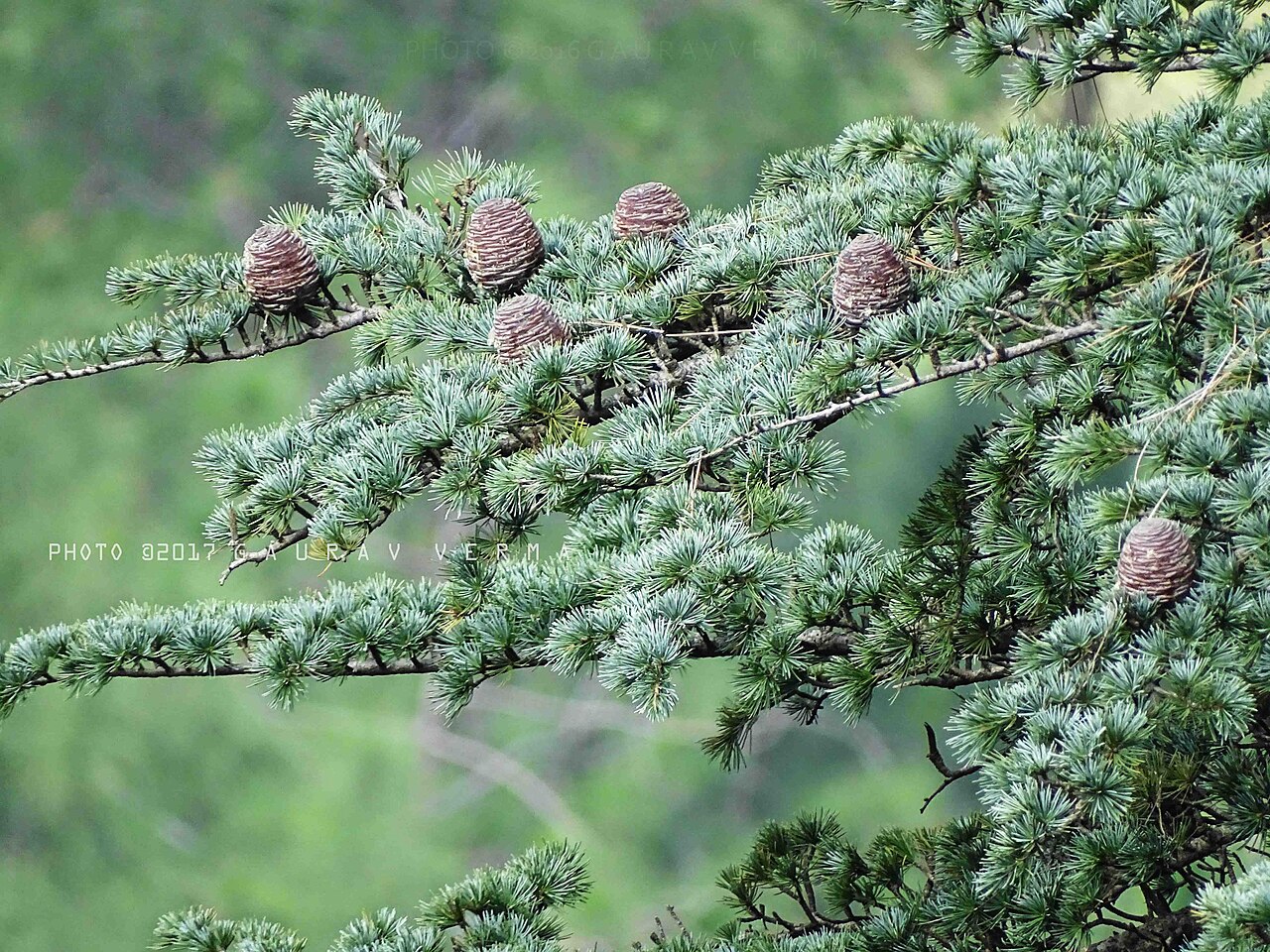
Photo: Gv3101992 · CC BY-SA 4.0 · Wikimedia Commons

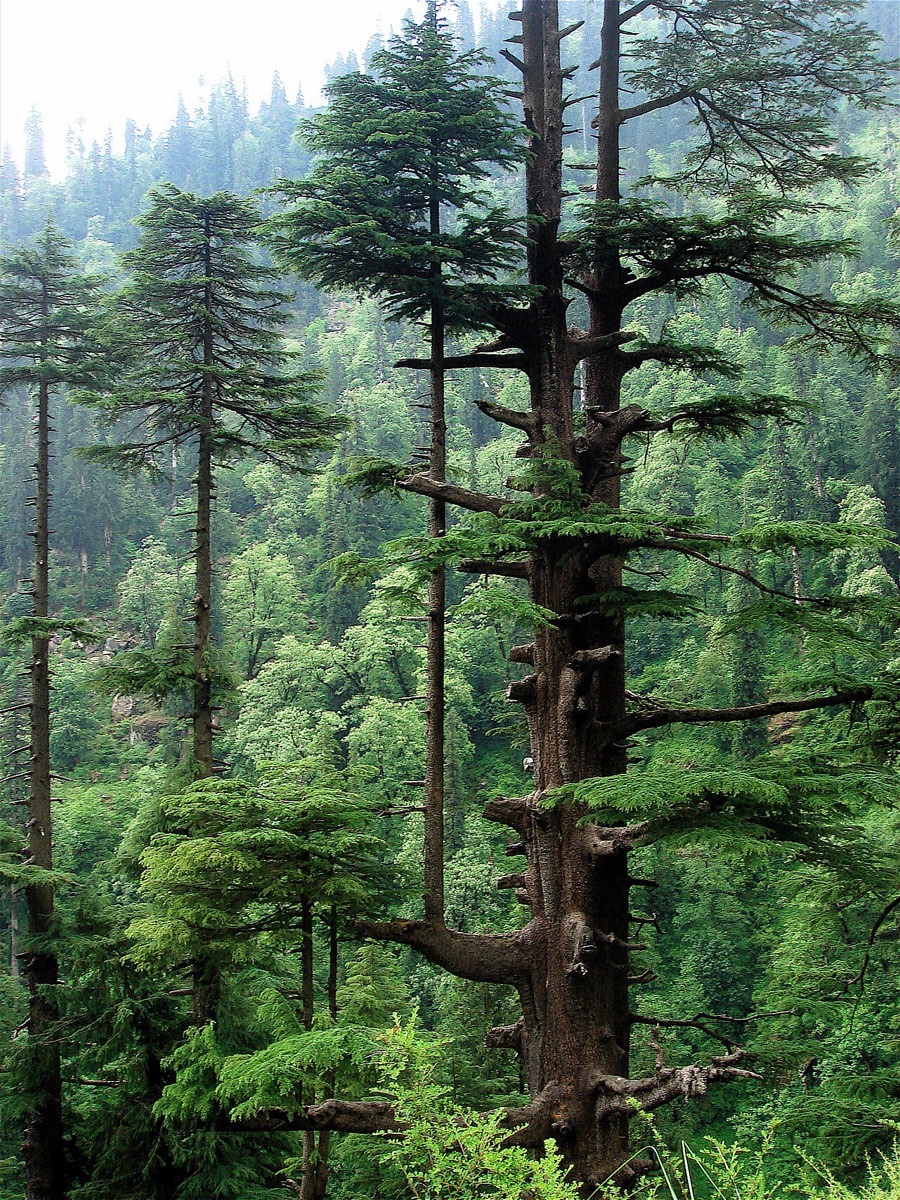
Photo: Paul Evans from London, United Kingdom · CC BY 2.0 · Wikimedia Commons

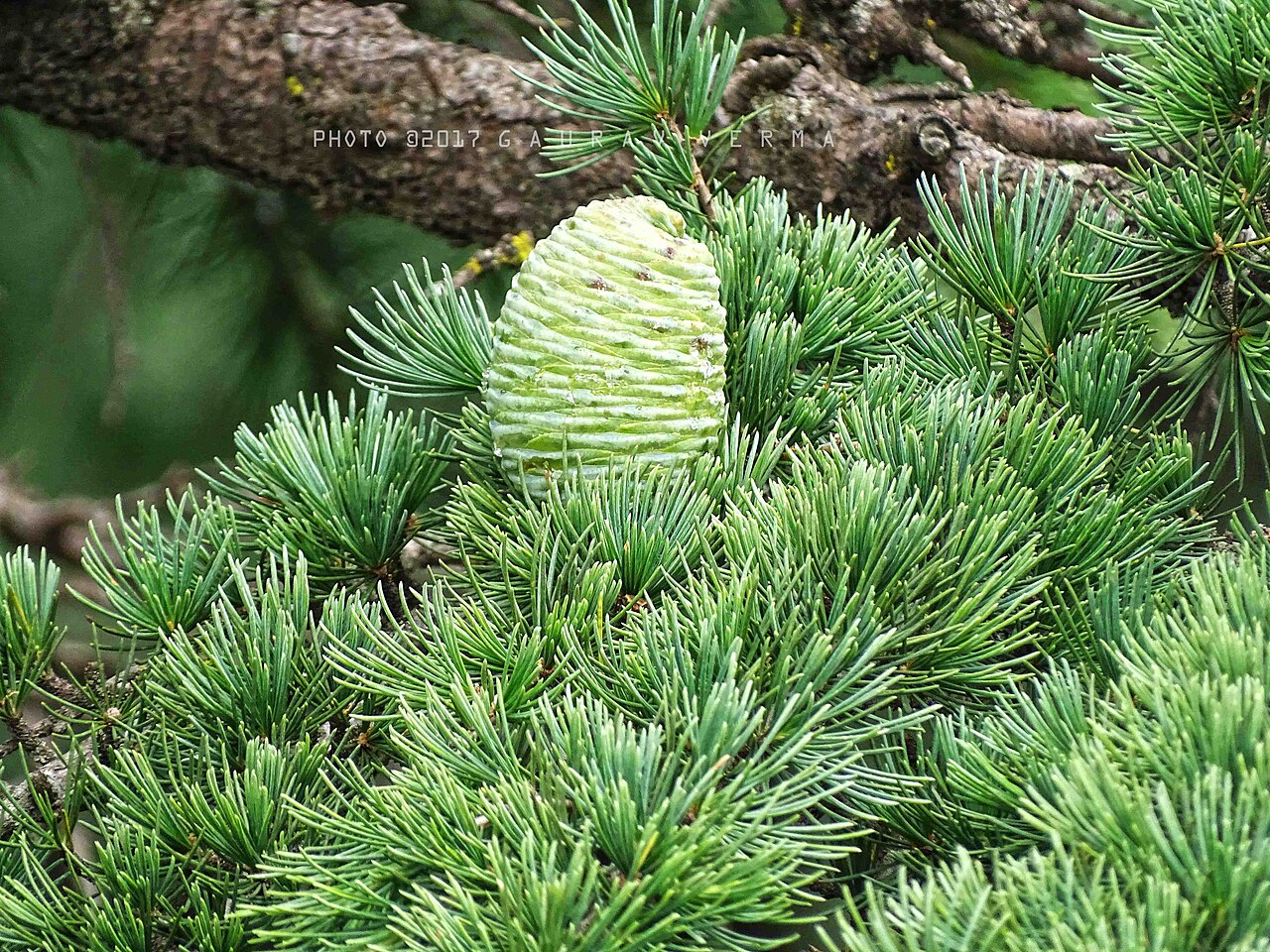
Photo: Gv3101992 · CC BY-SA 4.0 · Wikimedia Commons

Matra and anupana
AS THE CLASSICAL TEXTS AND THE API PRESCRIBE
| Churna | 1–3 g |
| Kwatha | 50–100 ml |
| Anupana | Ushnodaka |
| Kala | Adhobhakta |
The churna and kwatha ranges recorded for Devadaru when used for swelling (shothahara). The oil is used externally and has no internal range here.
Reported from Sharangadhara Samhita and the Ayurvedic Pharmacopoeia of India. Laisha states what the texts prescribe; it does not recommend. No quantity here is adjusted for a particular person — not for agni, koshtha, bala, age, pregnancy, kidney or liver function, or anything already being taken.
Pharmacopoeial standard
Ayurvedic Pharmacopoeia of India, Part I
| Marker | Himachalol and the sesquiterpenes |
| Assay | |
| Total ash | |
| Acid-insoluble ash | |
| Alcohol-soluble extractive | |
| Water-soluble extractive | |
| Foreign matter |
The monograph is for Cedrus deodara heartwood. Chir pine (Pinus roxburghii) wood is substituted where deodar is scarce.
The markers named are himachalol and the related sesquiterpenes. They describe the standard as published and are not a test Laisha has run on any Devadaru sample. The numeric limits are not reproduced here; read them in the current Ayurvedic Pharmacopoeia of India.
Rasapanchaka
| Rasa | Tikta |
| Guna | LaghuSnigdha |
| Virya | Ushna |
| Vipaka | Katu |
| Prabhava | The texts name Devadaru for swelling (shotha) and for vata disorders. Charaka also uses it in the group of aids to oily enemas (anuvasanopaga) and for purifying breast milk. |
| Doshakarma | Kaphavatahara. |
Tikta in taste, laghu and snigdha in quality, ushna virya and katu vipaka. The oily quality fits a resinous wood.
Karma and part used
Shothahara, vedanasthapana, deepana, kaphaghna and krimighna are recorded. These are the tradition's statements and not findings.
| Upayukta anga | Kashtha (the heartwood) |
| Why it matters | The resinous, fragrant heartwood, and the oil distilled from it. Some regional practice uses the bark separately; wood, bark and oil are three different articles. |
Paryaya
Suradaru, Bhadradaru, Indradaru and Amara all mean, in one way or another, the wood of the gods, the same idea as Devadaru. Daru is simply 'wood'. Sushruta's groups use Suradaru and Bhadradaru, and Charaka uses Suradaru, so all these names have to be read as one drug when reading the group lists.
Names, by language
| English | Himalayan cedar |
| Hindi | Devdar |
| Kannada | Devadari |
| Tamil | Devataram |
| Telugu | Devadaru |
| Malayalam | Devataram |
| Marathi | Devdar |
| Gujarati | Devdar |
| Bengali | Devdaru |
| Odia | Debadaru |
| Urdu | Deodar |
Classical references
Formulations it appears in
| Devadarvadi Kwatha | The decoction named after Devadaru, which leads its ingredient list. |
| Maharasnadi Kwatha | One of the many woods and roots in this large decoction for vata conditions. |
| Dashamularishta | One of the additional ingredients of this fermented Dashamula preparation. |
Adulterants and substitutes
Where deodar is scarce, wood of Pinus roxburghii (chir pine) is substituted, and chips of the two are hard to tell apart. Deodar is a valuable, regulated timber across much of its range, so the medicinal trade competes with a building market that pays more, which encourages the swap.
Identity
Devadaru is Cedrus deodara, the deodar or Himalayan cedar, a tall conifer of the western Himalaya; Charak Samhita Online gives the same identity under the name Suradaru. The botanical identity is not in doubt. The only confusion is a trade name: in parts of South India 'devadar' is applied to Erythroxylum monogynum, an entirely different plant.
A WAY TO REMEMBER IT
Cedrus is the classical Latin word for a cedar. Deodara comes directly from the Sanskrit devadaru, timber of the gods, so here the botanical name preserves the Sanskrit one.
What the tradition holds
Devadaru appears under three names: as Suradaru in Charaka's groups for oily enemas and for purifying breast milk, and as Suradaru or Bhadradaru in three of Sushruta's groups. Its classic use is in decoctions and oils for swelling, pain and vata disorders.
What the evidence says
| Status | Devadaru's traditional record is long. Clinical studies are few, though the wood and its oil have been examined in the laboratory. |
| Suggested | There is a pharmacopoeial monograph for the heartwood, with himachalol and related sesquiterpenes as markers. Laboratory research on deodar wood and oil exists. These describe the material and its chemistry, not a proven effect in people. |
| Not established | No good clinical evidence shows that Devadaru helps swelling, pain or any vata disorder. |
| The honest gap | Many studies use the essential oil, which is a concentrate, rather than the heartwood the texts prescribe, and few check for chir pine substitution. |
Safety
Devadaru is used both as wood taken internally and as an oil applied to the skin. The distilled oil is much more concentrated than the wood and should be treated as a separate product; undiluted, it has caused skin irritation. Anyone pregnant, on medication or managing a diagnosed condition should speak to a doctor or a qualified practitioner first.
| Side effects | Skin irritation reported from the undiluted oil applied externally |
| Contraindications | No absolute contraindication for the heartwood is recorded in the sources used. The oil should not be applied undiluted. |
| Interactions | No specific drug interaction is documented for Devadaru, either as wood or as oil. |
| Pregnancy and breastfeeding | Not established. Although Charaka lists it for purifying breast milk, that is a traditional statement and not evidence of safety while breastfeeding. |
Last updated · How Laisha writes and checks its pages · Report a mistake
Go further with Laisha Smarter
US$10 a month · one price worldwide · cancel any time
- Ask Laisha about any herb or formulation — up to 1,000 questions a month
- The full study tracks with practice questions
- Reports and exports as real files