Kampillaka
कम्पिल्लक
Mallotus philippensis (Lam.) Müll.Arg.
Euphorbiaceae · Mallotus
Benefits & side effects
TRADITIONAL VIEW, WITH SAFETY LIMITS
Hindi name: Kamala
What the texts say Kampillaka does
- Krimighna — anthelmintic (against worms)
- Rechana — purgative
- Kushthaghna — used in skin disease
- Vranashodhana — cleans wounds
- Raktashodhana — purifies the blood
What the evidence says. Traditional use is extensive and long recorded. Modern clinical evidence is limited.
Side effects and limits
- Griping and abdominal cramp
- Nausea and vomiting
- Severe diarrhoea in quantity
Avoid or ask first: Pregnancy.; Children and the frail.; Intestinal obstruction or undiagnosed abdominal pain.; and more below.
A traditional classification, not a recommendation. The full safety record is below.
Stands in 1 group
- Shyamadi — Purgation, poison, and retained Vata
A Samhita can only be read forwards, from the group to its members. This is the same list read backwards.
Photographs
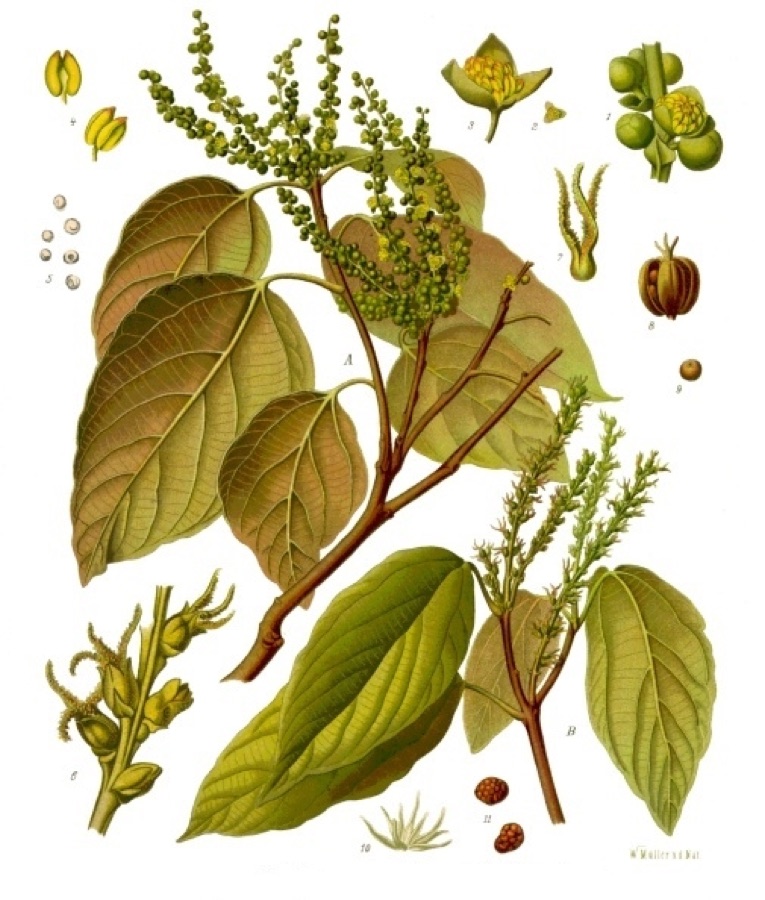
Photo: Franz Eugen Köhler, Köhler's Medizinal-Pflanzen · Public domain · Wikimedia Commons

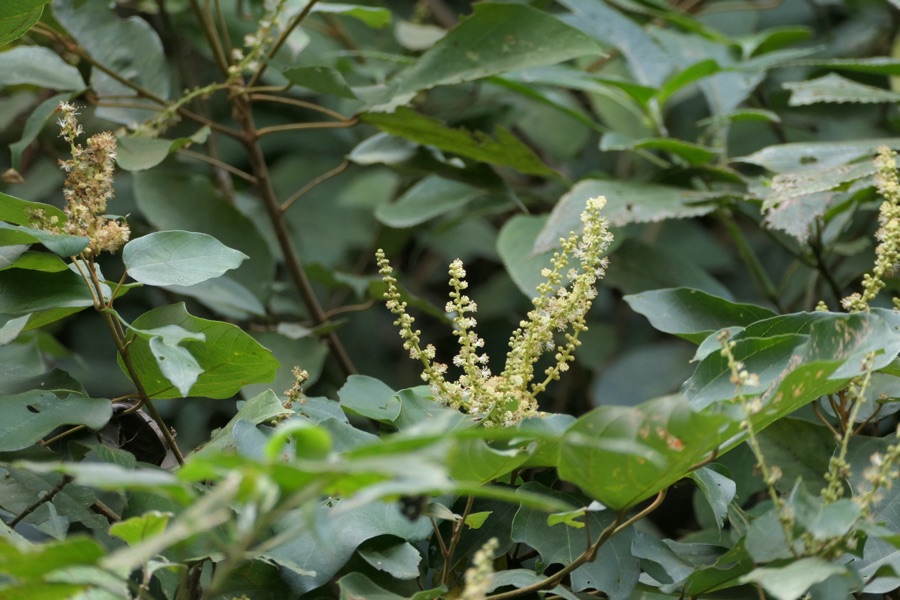
Photo: Dinesh Valke from Thane, India · CC BY-SA 2.0 · Wikimedia Commons

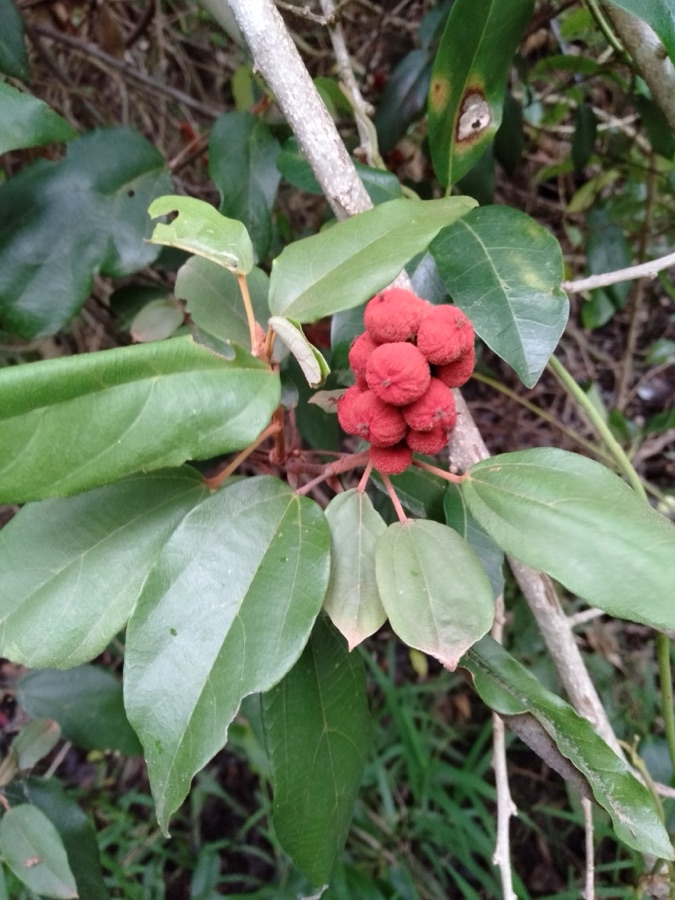
Photo: Z.L.Lutz · CC BY-SA 4.0 · Wikimedia Commons

Matra and anupana
AS THE CLASSICAL TEXTS AND THE API PRESCRIBE
| Churna | 0.5–2 g |
| Anupana | Takra · Ushnodaka |
| Kala | Pragbhakta |
The red glandular powder from the fruit surface. Purgative and anthelmintic; the matra is small.
Reported from Sharangadhara Samhita and the Ayurvedic Pharmacopoeia of India. Laisha states what the texts prescribe; it does not recommend. No quantity here is adjusted for a particular person — not for agni, koshtha, bala, age, pregnancy, kidney or liver function, or anything already being taken.
Rasapanchaka
| Rasa | KatuTikta |
| Guna | LaghuRukshaTikshna |
| Virya | Ushna |
| Vipaka | Katu |
| Prabhava | The texts treat kampillaka as krimighna and rechana together, and it is the dravya named for worms where a purgative action is wanted at the same time. |
| Doshakarma | Kaphavatahara. Being ushna and tikshna it increases pitta. |
Katu and tikta with ushna virya and katu vipaka.
Karma and part used
These are the actions the classical texts record. They are statements about what the tradition holds, and this library does not restate them as findings about a human body.
| Upayukta anga | Phala renu (the glandular powder of the fruit) |
| Why it matters | The red powder that coats the capsule is the dravya. It is collected by rubbing or shaking the fruits, and is also a dye — the same powder colours silk. |
Paryaya
Raktanga, red-bodied, names the powder. Rechi names the action — it is a purgative — which is the paryaya a student should connect to its use.
Names, by language
| English | Kamala |
| Sinhala | Hamparila |
| Nepali | Rohini |
| Hindi | Kamala |
| Kannada | Kumkuma mara |
| Tamil | Kapila podi |
| Telugu | Kumkuma chettu |
| Malayalam | Manjana |
| Marathi | Shendri |
| Gujarati | Kapilo |
| Bengali | Kamala guri |
| Punjabi | Kamila |
| Odia | Kamalagundi |
| Urdu | Kamila |
Classical references
Rasa, guna, virya, vipaka and karma are recorded as the classical texts give them, with the text and section named so a student can open the book and check. Where an exact chapter and verse could not be confirmed, this library names the section rather than inventing a number.
Formulations it appears in
| Kampillaka Churna | Named for the dravya. |
| Krimimudgara Rasa | Kampillaka is among the dravya. |
| Kampillakadi Lepa | Named for the dravya, used externally. |
Adulterants and substitutes
Because the article is a loose red powder, it is among the easiest in the materia medica to adulterate: brick dust, red ochre, sand and synthetic dyes have all been found in commercial kampillaka. Genuine powder floats on water and burns cleanly; the mineral adulterants sink and leave ash. This is a test a student can do with a glass of water.
Identity
Matched live against the GBIF backbone on 28 September 2026 at 99 per cent confidence. The dravya is not a plant part in the usual sense but the red glandular powder brushed off the surface of the fruit.
A WAY TO REMEMBER IT
Mallotus is mallotos, woolly. Philippensis, of the Philippines, where the type was collected. The red glandular powder on the fruit is the dravya.
What the tradition holds
Kampillaka is described in the Bhavaprakasha Nighantu and its use against worms is recorded there. That is what the tradition holds and where it is written down, not a finding about what the powder does in a body.
Constituents. The powder carries rottlerin and related phloroglucinol derivatives, which are the active and the irritant principle both.
What the evidence says
| Status | Traditional use is extensive and long recorded. Modern clinical evidence is limited. |
| Suggested | Health Canada publishes monographs covering Ayurvedic ingredients and permits specific traditional-use claims, which reflects a regulator accepting a documented tradition rather than a body of clinical trial evidence. |
| Not established | There is not enough good clinical evidence to establish an effect on any named health condition. Long traditional use is not a substitute for that evidence, and this library does not present it as one. |
| The honest gap | Published work largely concerns rottlerin as an isolated research compound rather than the powder as used. |
Safety
This is a purgative and an irritant, and the two together mean it is not a gentle article. Taken in more than a small quantity it causes griping, vomiting and severe diarrhoea. It is not for children or the frail, and not for undiagnosed abdominal pain. The adulteration risk is unusually high because the dravya is a loose coloured powder, and brick dust and synthetic dye have both been found in commercial samples — the water test described above is worth doing. Anyone on medication, pregnant, or managing a diagnosed condition should speak to a doctor or a qualified practitioner first.
| Side effects | Griping and abdominal cramp Nausea and vomiting Severe diarrhoea in quantity |
| Contraindications | Pregnancy. Children and the frail. Intestinal obstruction or undiagnosed abdominal pain. Inflammatory bowel disease. |
| Interactions | Any medicine taken by mouth — purgation reduces absorption. Medicines for the heart, particularly digoxin — potassium loss raises the risk. Diuretic medicines — salt loss adds together. |
| Pregnancy and breastfeeding | Not to be used in pregnancy or breastfeeding. |
Growing it
| Climate | Tropical, in forest and on forest margins across India. |
| Soil | Well-drained ground. |
| Planting | A small tree, raised from seed. |
| Harvest | Ripe capsules are collected and the red glandular powder is shaken or brushed off, then sieved. |
| What is not stated | This library has not verified region-specific spacing, variety and yield figures against a named agricultural authority for every growing country, and does not state them rather than guessing. |
Last updated · How Laisha writes and checks its pages · Report a mistake
Go further with Laisha Smarter
US$10 a month · one price worldwide · cancel any time
- Ask Laisha about any herb or formulation — up to 1,000 questions a month
- The full study tracks with practice questions
- Reports and exports as real files