Mashaparni
माषपर्णी
Teramnus labialis (L.f.) Spreng.
Fabaceae · Teramnus
Benefits & side effects
TRADITIONAL VIEW, WITH SAFETY LIMITS
Hindi name: Mashvan
What the texts say Mashaparni does
- Jivaniya — vitalising, life-sustaining
- Brimhaniya — nourishing, builds body tissue
- Balya — strengthening
- Vrishya — aphrodisiac, supports reproductive vigour
- Daha prashamana — relieves burning
What the evidence says. The classical record is clear about where Mashaparni belongs. Clinical evidence for it is very limited.
Side effects and limits
Mashaparni is a wild relative of the bean family's food pulses, and the classical and pharmacopoeial literature records no significant toxicity. That reflects little study rather than proven safety. Pregnant women, people on prescription medicines and anyone with a diagnosed condition should check with a doctor or qualified practitioner before use.
Avoid or ask first: No absolute contraindication is documented here. This is written deliberately rather than left blank.
A traditional classification, not a recommendation. The full safety record is below.
Stands in 4 groups
- Jivaniya — Life-sustaining
- Shukrajanana — Generating semen
- Vidarigandhadi — Vata disorders and the wasting states (named there as Mahasaha)
- Kakolyadi — Pitta, bleeding, and the building of tissue
A Samhita can only be read forwards, from the group to its members. This is the same list read backwards.
Photographs
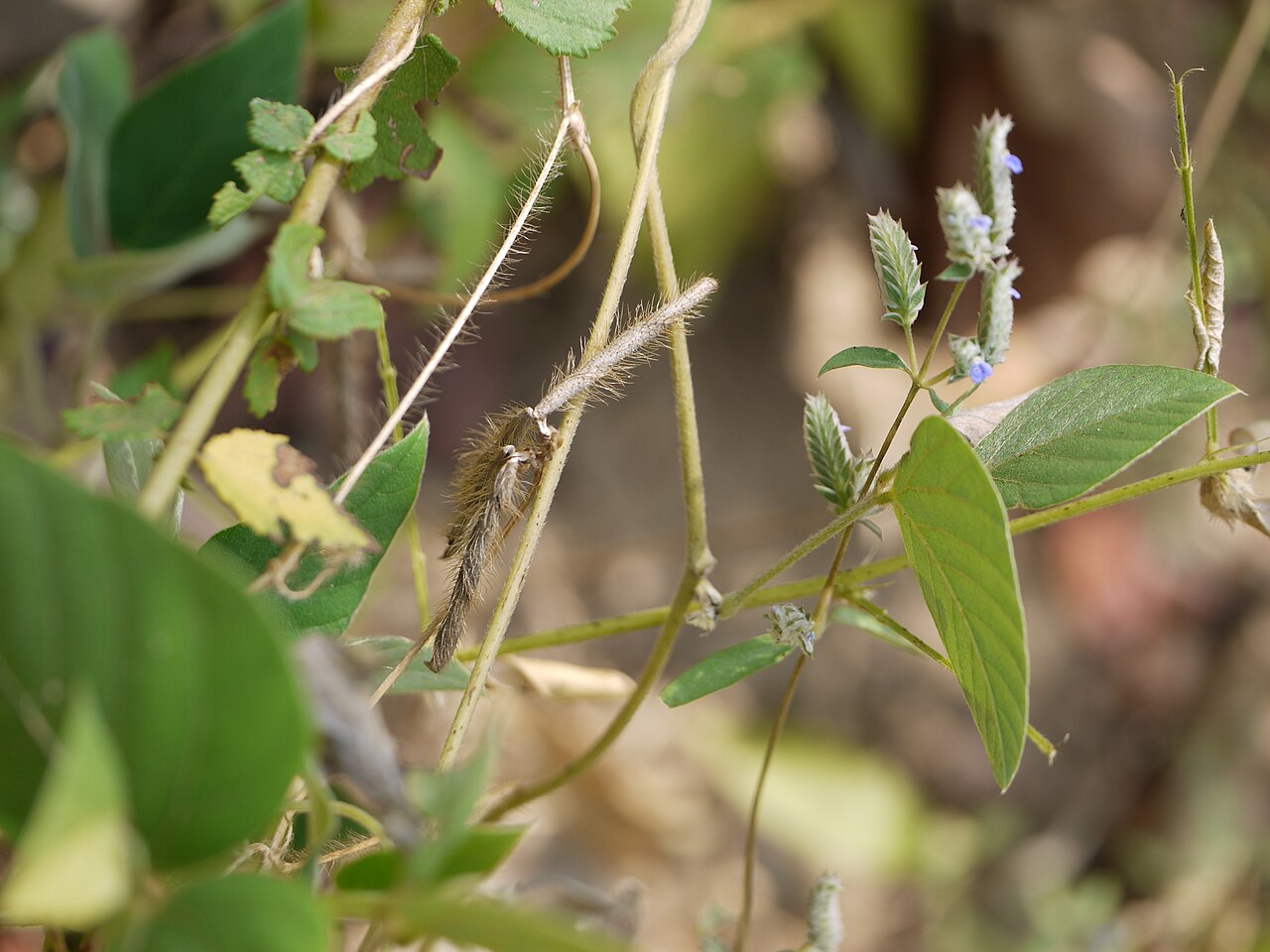
Photo: Dinesh Valke from Thane, India · CC BY-SA 2.0 · Wikimedia Commons

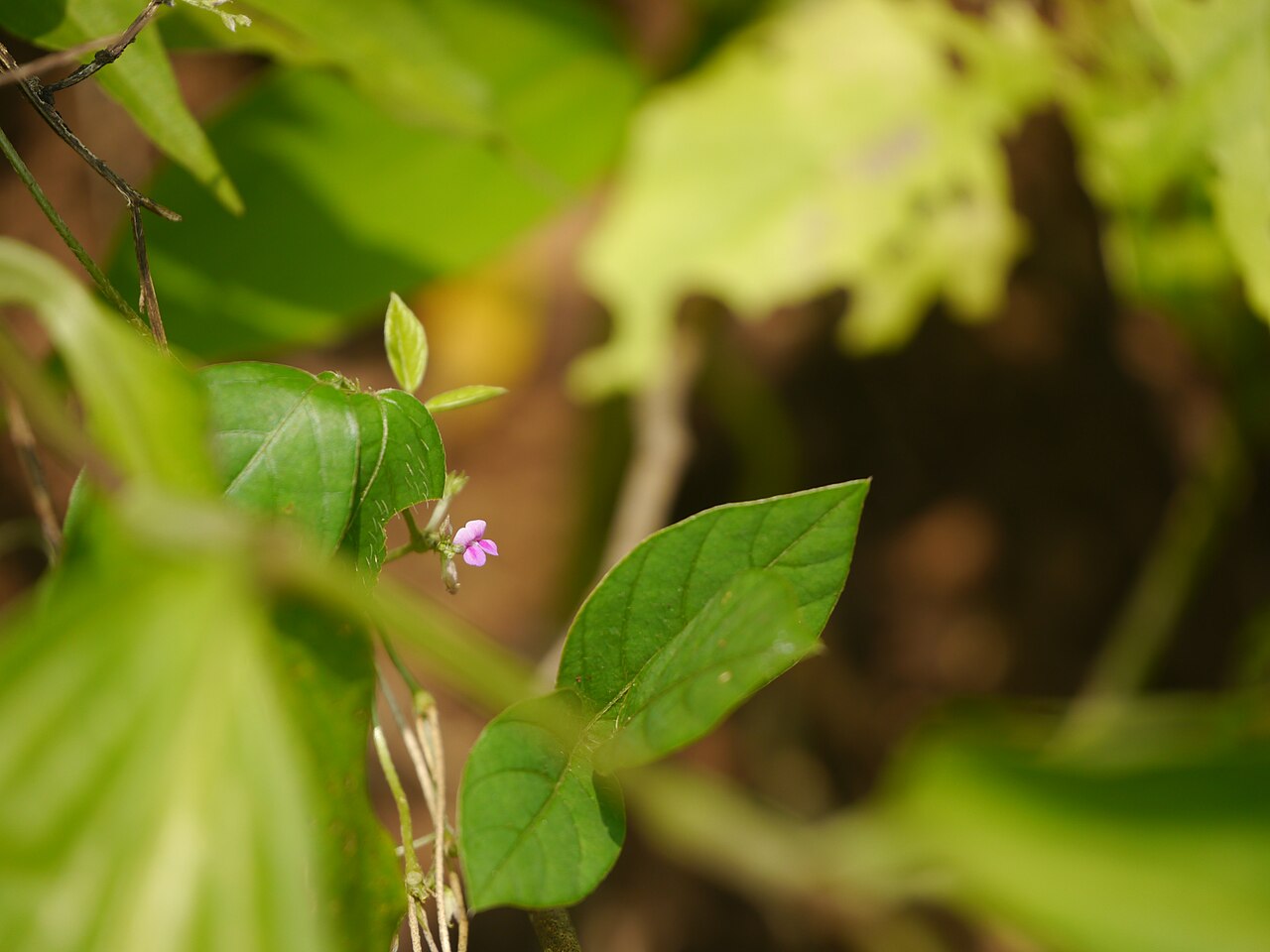
Photo: Dinesh Valke from Thane, India · CC BY-SA 2.0 · Wikimedia Commons

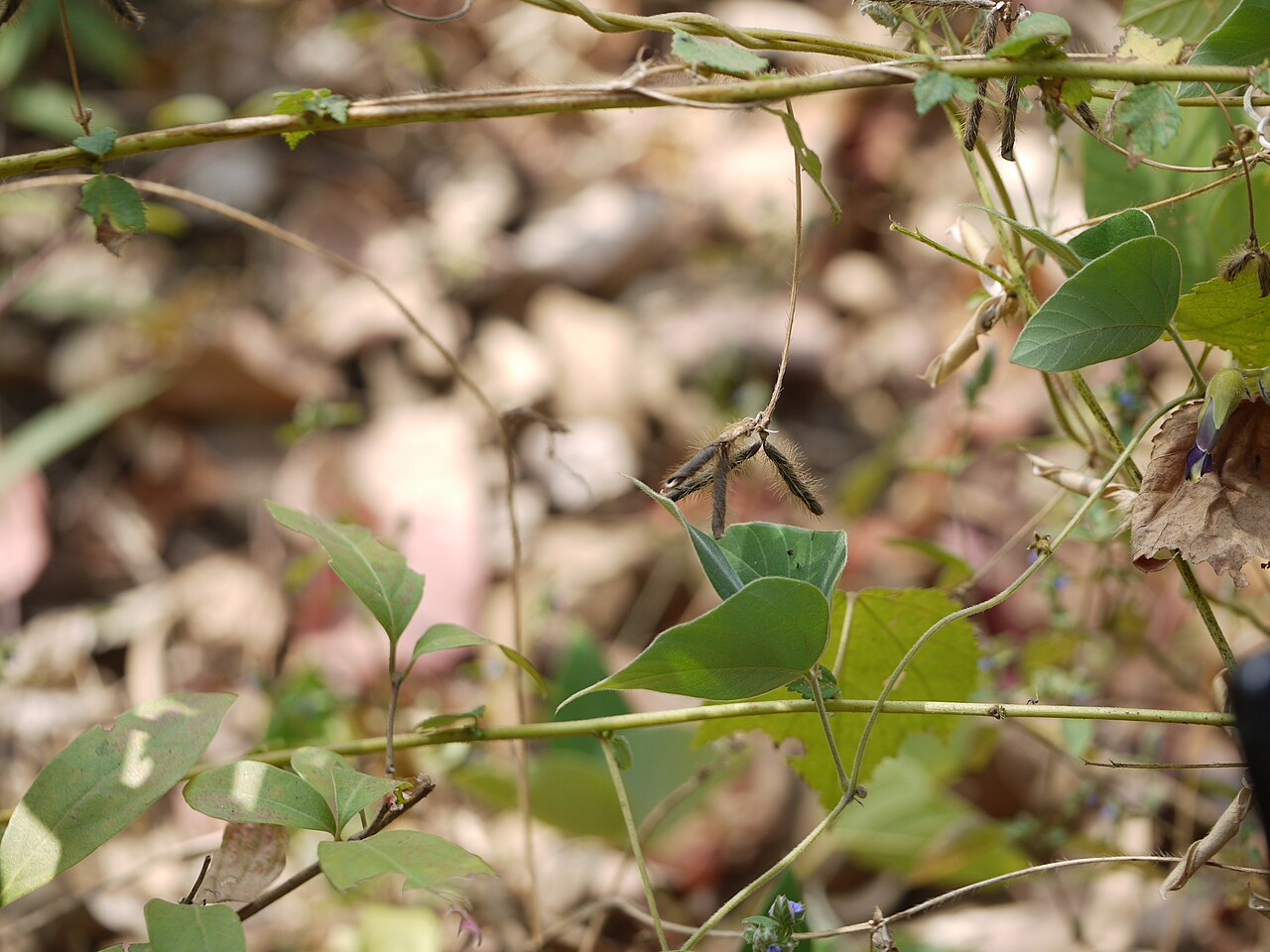
Photo: Dinesh Valke from Thane, India · CC BY-SA 2.0 · Wikimedia Commons

Matra and anupana
AS THE CLASSICAL TEXTS AND THE API PRESCRIBE
| Churna | 3–6 g |
| Kwatha | 50–100 ml |
| Anupana | Ksheera · Ushnodaka |
| Kala | Adhobhakta |
The classical figures for a Jivaniya herb, applying to the whole plant; normally prescribed together with Mudgaparni rather than alone.
Reported from Sharangadhara Samhita and the Ayurvedic Pharmacopoeia of India. Laisha states what the texts prescribe; it does not recommend. No quantity here is adjusted for a particular person — not for agni, koshtha, bala, age, pregnancy, kidney or liver function, or anything already being taken.
Rasapanchaka
| Rasa | MadhuraKashaya |
| Guna | GuruSnigdha |
| Virya | Sheeta |
| Vipaka | Madhura |
| Prabhava | Counted in Charaka's Jivaniya (life-sustaining) and Shukrajanana groups, each time beside Mudgaparni, and among the 'four parni' that open the Chyavanaprasha recipe. |
| Doshakarma | Vatapittahara. |
Sweet and astringent, cooling, sweet after digestion: the nourishing profile of Charaka's Jivaniya group, in which Mashaparni and Mudgaparni are the two legumes.
Karma and part used
The recorded actions are those of the Jivaniya and Shukrajanana groups to which Mashaparni belongs. They reflect the classical classification; they have not been shown in people and are not offered as effects.
| Upayukta anga | Panchanga (the whole plant) |
| Why it matters | The pharmacopoeial article is the whole plant (panchanga), root included. Because the plant is a thin climber gathered from the wild rather than grown, a lot of dried Mashaparni is a tangle of stems, leaves and roots, and other twining legumes are easily caught up in it. |
Paryaya
Mahasaha, 'very enduring', is used for more than one plant in the gana lists, and following it is one way Mashaparni gets confused with other dravya. The main name is the more reliable clue: it ties the plant to masha, the black gram, whose leaf it resembles.
Names, by language
| English | Wild black gram |
| Hindi | Mashvan |
| Kannada | Kadu uddu |
| Tamil | Kattulundu |
| Telugu | Adavi minumu |
| Malayalam | Kattuzhunnu |
| Marathi | Ranudid |
| Gujarati | Jangli adad |
| Bengali | Mashani |
| Odia | Banamasa |
| Urdu | Mashvan |
Classical references
Formulations it appears in
| Jivaniya Gana Kwatha | Counted among the ten herbs of the group as Charaka lists it. |
| Dashamularishta | An ingredient. |
| Chyavanaprasha | An ingredient. |
Adulterants and substitutes
Traders routinely swap Mashaparni and Mudgaparni, and other wild twining legumes are collected under either name. The most frequent hidden error is a formula that calls for both receiving the same plant twice. Since Teramnus labialis is a twining climber with narrow hairy pods while Vigna trilobata trails on the ground with three-lobed leaflets, whole fresh material can be sorted; dried, chopped material usually cannot.
Identity
Mashaparni is accepted in Indian practice as Teramnus labialis (L.f.) Spreng., a slender twining legume of tropical scrub and grassland with small pea-flowers and narrow hairy pods. Its range is far wider than India: the GBIF record carries common names from East Africa and the Caribbean, where it is known as blue wiss. Some regions use wild Vigna species under the same Sanskrit name. The name itself, 'leaf like masha', compares it with the black gram (Vigna mungo).
A WAY TO REMEMBER IT
Teramnus comes from a Greek word for a bedchamber or hidden room. The epithet labialis refers to the lipped flower. Mashaparni means 'with the leaf of masha', the black gram, so, as with its partner, the Sanskrit name gives the recognition clue.
What the tradition holds
Charaka places Mashaparni in two of his fifty groups, Jivaniya and Shukrajanana, and Sushruta in the Kakolyadi gana. In Charaka's Chyavanaprasha the 'four parni' herbs are read by commentators as shalaparni, prishniparni, mudgaparni and mashaparni. In all these places it appears beside Mudgaparni.
What the evidence says
| Status | The classical record is clear about where Mashaparni belongs. Clinical evidence for it is very limited. |
| Suggested | India's pharmacopoeia includes a monograph, which sets an accepted identity and quality standard for the material. A quality standard describes the herb; it does not show an effect. |
| Not established | No adequate clinical trial of Mashaparni for any condition has been identified. Its membership of the Jivaniya and Shukrajanana groups is a classical classification only. |
| The honest gap | Studies seldom say whether the plant tested was Teramnus labialis or a regional Vigna, or whether it was the whole plant or the root, so results cannot be tied to the pharmacopoeial article. |
Safety
Mashaparni is a wild relative of the bean family's food pulses, and the classical and pharmacopoeial literature records no significant toxicity. That reflects little study rather than proven safety. Pregnant women, people on prescription medicines and anyone with a diagnosed condition should check with a doctor or qualified practitioner before use.
| Contraindications | No absolute contraindication is documented here. This is written deliberately rather than left blank. |
| Interactions | No specific drug interaction is documented for Mashaparni. It has not been tested alongside modern medicines, so absence of a record is not evidence of safety. |
| Pregnancy and breastfeeding | No specific harm has been recorded, but no adequate study exists, so safety in pregnancy and breastfeeding is not established. |
Last updated · How Laisha writes and checks its pages · Report a mistake
Go further with Laisha Smarter
US$10 a month · one price worldwide · cancel any time
- Ask Laisha about any herb or formulation — up to 1,000 questions a month
- The full study tracks with practice questions
- Reports and exports as real files