Mudgaparni
मुद्गपर्णी
Vigna trilobata (L.) Verdc.
Fabaceae · Vigna
Benefits & side effects
TRADITIONAL VIEW, WITH SAFETY LIMITS
Hindi name: Mugvan
What the texts say Mudgaparni does
- Jivaniya — vitalising, life-sustaining
- Balya — strengthening
- Daha prashamana — relieves burning
- Jwaraghna — used in fever
- Vrishya — aphrodisiac, supports reproductive vigour
What the evidence says. The classical position is well documented. Clinical evidence for Mudgaparni itself is scarce.
Side effects and limits
Mudgaparni belongs to the same genus as the green gram and the cowpea, and no significant toxicity is recorded for it in the classical or pharmacopoeial literature. That is a statement about limited study, not a guarantee. Anyone who is pregnant, taking prescribed medicine or living with a diagnosed condition should consult a doctor or qualified practitioner before use.
Avoid or ask first: No absolute contraindication is documented here. This is written deliberately rather than left blank.
A traditional classification, not a recommendation. The full safety record is below.
Stands in 3 groups
- Jivaniya — Life-sustaining
- Shukrajanana — Generating semen
- Kakolyadi — Pitta, bleeding, and the building of tissue
A Samhita can only be read forwards, from the group to its members. This is the same list read backwards.
Photographs
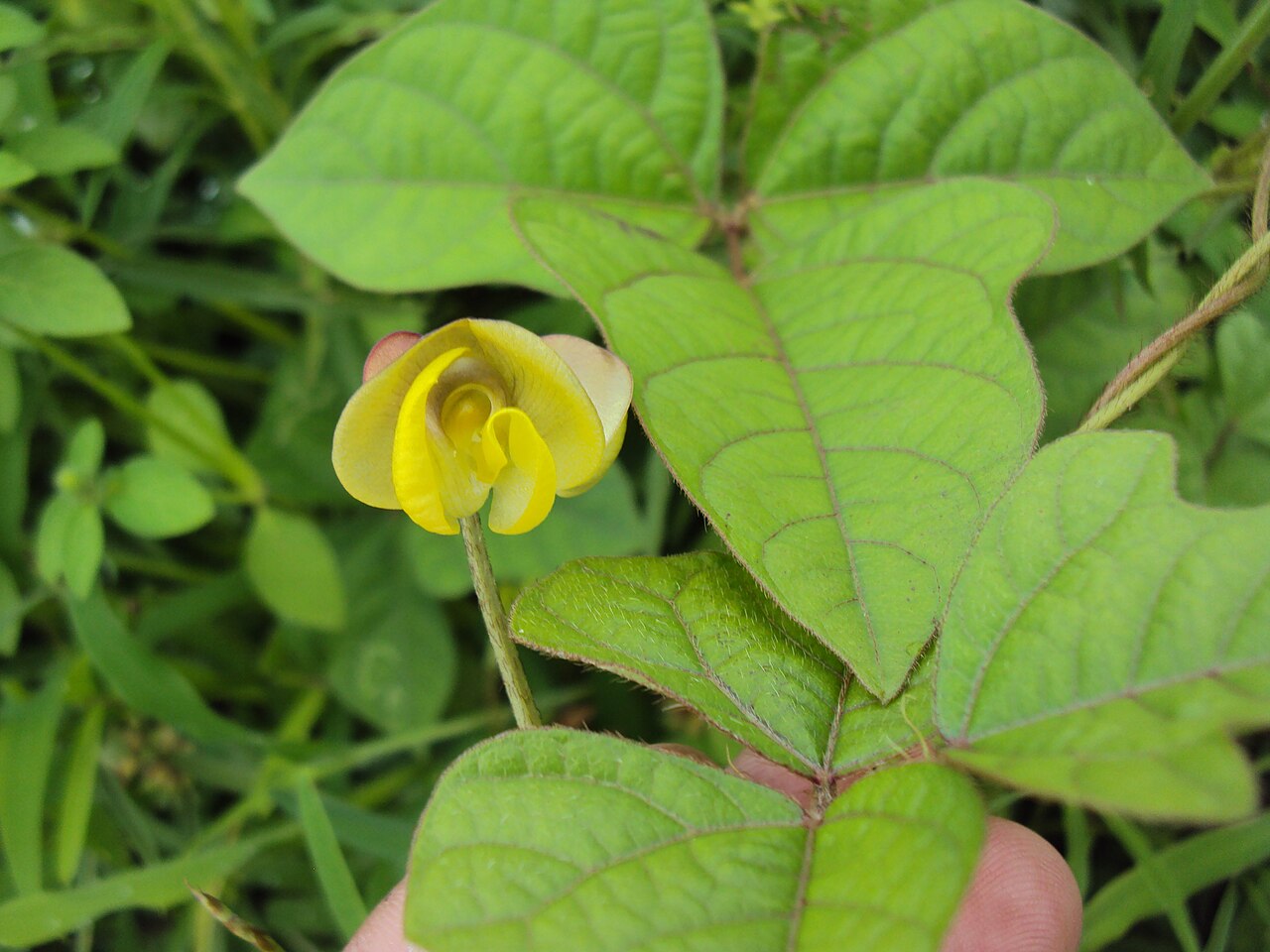
Photo: Vinayaraj · CC BY-SA 3.0 · Wikimedia Commons

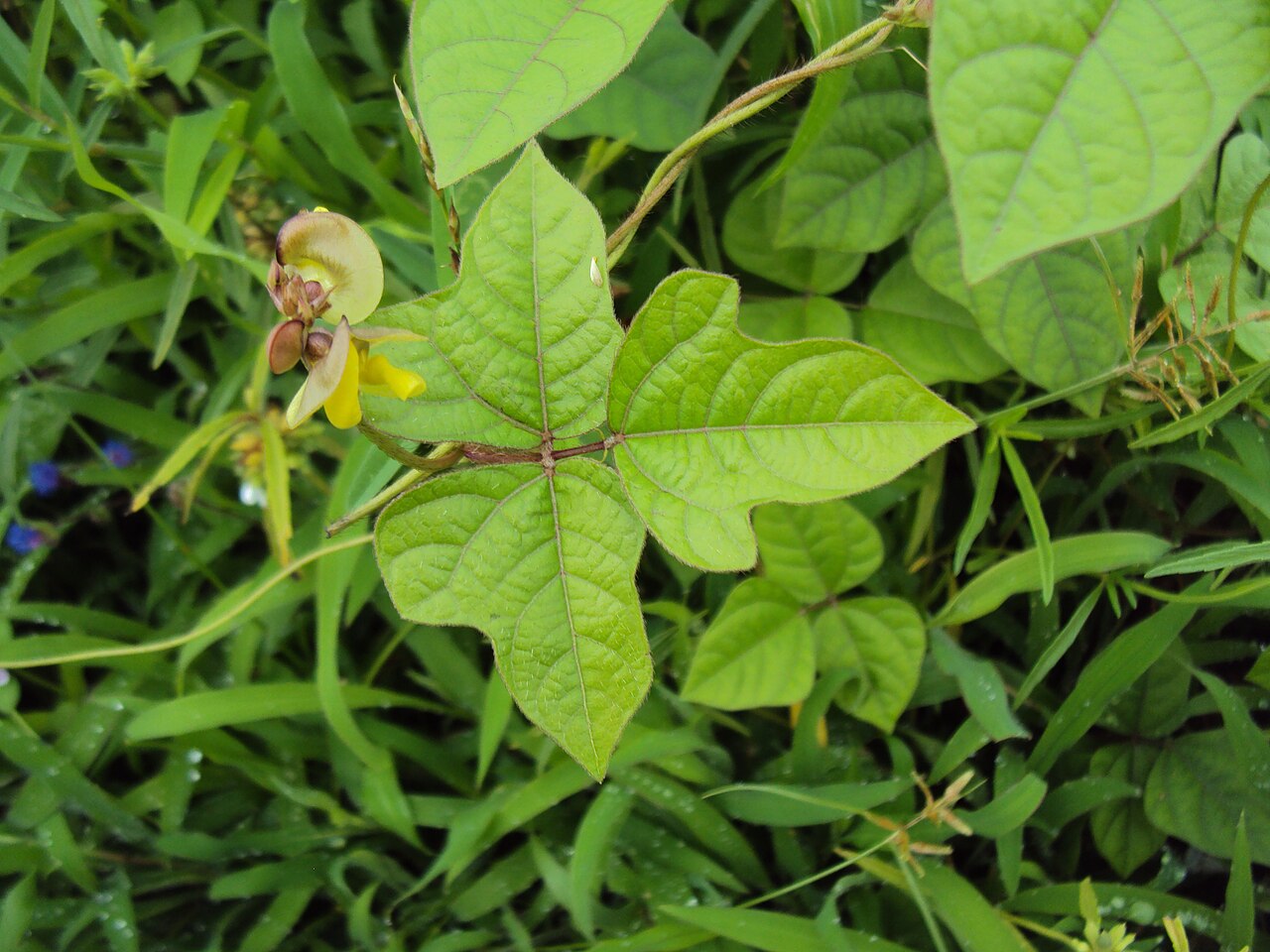
Photo: Vinayaraj · CC BY-SA 3.0 · Wikimedia Commons

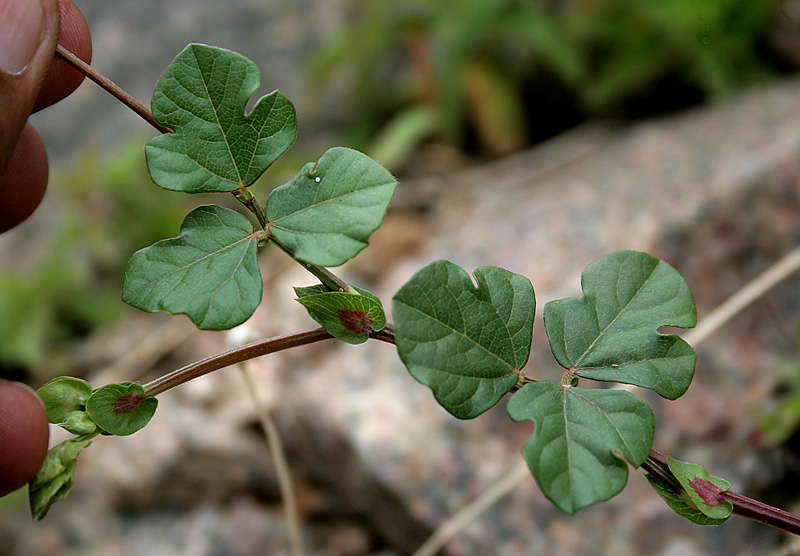
Photo: J.M.Garg · CC BY-SA 3.0 · Wikimedia Commons

Matra and anupana
AS THE CLASSICAL TEXTS AND THE API PRESCRIBE
| Churna | 3–6 g |
| Kwatha | 50–100 ml |
| Anupana | Ksheera · Ushnodaka |
| Kala | Adhobhakta |
Classical Jivaniya-herb figures for the whole plant; normally given with Mashaparni.
Reported from Sharangadhara Samhita and the Ayurvedic Pharmacopoeia of India. Laisha states what the texts prescribe; it does not recommend. No quantity here is adjusted for a particular person — not for agni, koshtha, bala, age, pregnancy, kidney or liver function, or anything already being taken.
Rasapanchaka
| Rasa | MadhuraKashaya |
| Guna | LaghuRuksha |
| Virya | Sheeta |
| Vipaka | Madhura |
| Prabhava | Listed in Charaka's Jivaniya and Shukrajanana groups beside Mashaparni, in Sushruta's Kakolyadi gana, and read by commentators as one of the 'four parni' in Charaka's Chyavanaprasha. |
| Doshakarma | Pittakaphahara. |
Sweet and astringent, cooling, sweet after digestion: the profile Charaka associates with the Jivaniya herbs.
Karma and part used
The actions recorded are those of the groups that include Mudgaparni. They state the classical view and are not presented as effects shown in people.
| Upayukta anga | Panchanga (the whole plant) |
| Why it matters | The whole plant, root included, is the pharmacopoeial article. Mudgaparni grows flat along the ground at field margins and is gathered wild; it is not a farmed crop, so supply depends on collectors who can recognise it. |
Paryaya
Mudgaparni is taught with Mashaparni: one has the leaf of green gram, the other the leaf of black gram. The pair are in fact both legumes, and Mudgaparni is a true Vigna, a cousin of the green gram it is named after.
Names, by language
| English | Wild gram |
| Hindi | Mugvan |
| Kannada | Kadu hesaru |
| Tamil | Kattupayaru |
| Telugu | Pillipesara |
| Malayalam | Kattupayar |
| Marathi | Ranmug |
| Gujarati | Jangli mag |
| Bengali | Mugani |
| Odia | Banamuga |
| Urdu | Mugvan |
Classical references
Formulations it appears in
| Jivaniya Gana Kwatha | One of the ten herbs Charaka names for the Jivaniya group. |
| Dashamularishta | An ingredient. |
| Chyavanaprasha | An ingredient. |
Adulterants and substitutes
The market often supplies Mashaparni for Mudgaparni and the reverse, and other prostrate legumes of field edges are gathered as either. The substitution is less harmful than most because the two have similar classical profiles, but a formula that names both and receives one twice is not the formula as written. Fresh plants are easy to separate by the three-lobed leaflets and yellow flowers of Vigna trilobata.
Identity
Mudgaparni is Vigna trilobata (L.) Verdc., a small trailing bean of dry fields, roadsides and grassland, published earlier as Phaseolus trilobus. Linnaeus based the name on Indian material; the type is an illustration by Plukenet (1691) of a 'Madras trefoil' with three-lobed leaflets. English names recorded in GBIF include jungle mat bean and three-lobe-leaved cowpea, and in Telugu it is pillipesara. The Sanskrit name compares the leaf with that of mudga, the green gram (Vigna radiata), a close relative in the same genus.
A WAY TO REMEMBER IT
Vigna commemorates Domenico Vigna, a seventeenth-century Italian botanist. Trilobata means three-lobed, for the leaflets. Mudgaparni means 'with the leaf of mudga', the green gram: here the name really is the identification key.
What the tradition holds
Charaka names Mudgaparni in his Jivaniya and Shukrajanana groups, and Sushruta in the Kakolyadi gana. It is also read as one of the four parni herbs at the head of Charaka's Chyavanaprasha recipe. These are the places the tradition records it.
What the evidence says
| Status | The classical position is well documented. Clinical evidence for Mudgaparni itself is scarce. |
| Suggested | Its Ayurvedic Pharmacopoeia of India monograph defines what the article should be and how its quality is checked. That standard concerns identity and purity, not therapeutic effect. |
| Not established | No well-designed human study of Mudgaparni for any condition has been identified, and its Jivaniya classification is not evidence of an effect. |
| The honest gap | Laboratory papers on Vigna trilobata often study it as a forage or food plant; such work, and studies that do not state the part used, cannot be equated with the classical whole-plant article. |
Safety
Mudgaparni belongs to the same genus as the green gram and the cowpea, and no significant toxicity is recorded for it in the classical or pharmacopoeial literature. That is a statement about limited study, not a guarantee. Anyone who is pregnant, taking prescribed medicine or living with a diagnosed condition should consult a doctor or qualified practitioner before use.
| Contraindications | No absolute contraindication is documented here. This is written deliberately rather than left blank. |
| Interactions | No specific drug interaction is documented for Mudgaparni. Interaction studies with modern medicines have not been done. |
| Pregnancy and breastfeeding | No harm has been recorded, but there is no adequate study, so use in pregnancy or breastfeeding cannot be called safe. |
Last updated · How Laisha writes and checks its pages · Report a mistake
Go further with Laisha Smarter
US$10 a month · one price worldwide · cancel any time
- Ask Laisha about any herb or formulation — up to 1,000 questions a month
- The full study tracks with practice questions
- Reports and exports as real files