Rishabhaka
ऋषभक
Malaxis muscifera (Lindl.) Kuntze
Orchidaceae · Malaxis
Benefits & side effects
TRADITIONAL VIEW, WITH SAFETY LIMITS
What the texts say Rishabhaka does
- Jivaniya — vitalising, life-sustaining
- Brimhaniya — nourishing, builds body tissue
- Shukrajanana — promotes the production of semen
- Balya — strengthening
What the evidence says. Rishabhaka is well recorded in the classical texts and barely studied today. Published work almost never confirms which Malaxis it examined.
Side effects and limits
A product listing Rishabhaka almost always contains Vidari kand in its place, as the Pharmacopoeia allows. The orchid itself has no published safety record, and it is not even certain which of two Malaxis species it is. The label, not the classical name, tells you what you are taking. Anyone pregnant, on medication or managing a diagnosed condition should speak to a doctor or a qualified practitioner first.
Avoid or ask first: No absolute contraindication for Rishabhaka is recorded in the sources used here. That is a gap in study rather than an assurance of safety.
A traditional classification, not a recommendation. The full safety record is below.
Stands in 5 groups
- Jivaniya — Life-sustaining
- Shukrajanana — Generating semen
- Vidarigandhadi — Vata disorders and the wasting states
- Kakolyadi — Pitta, bleeding, and the building of tissue
- Ashtavarga — The eight - the Himalayan group of the Jivaniya and Kakolyadi drugs
A Samhita can only be read forwards, from the group to its members. This is the same list read backwards.
Photographs
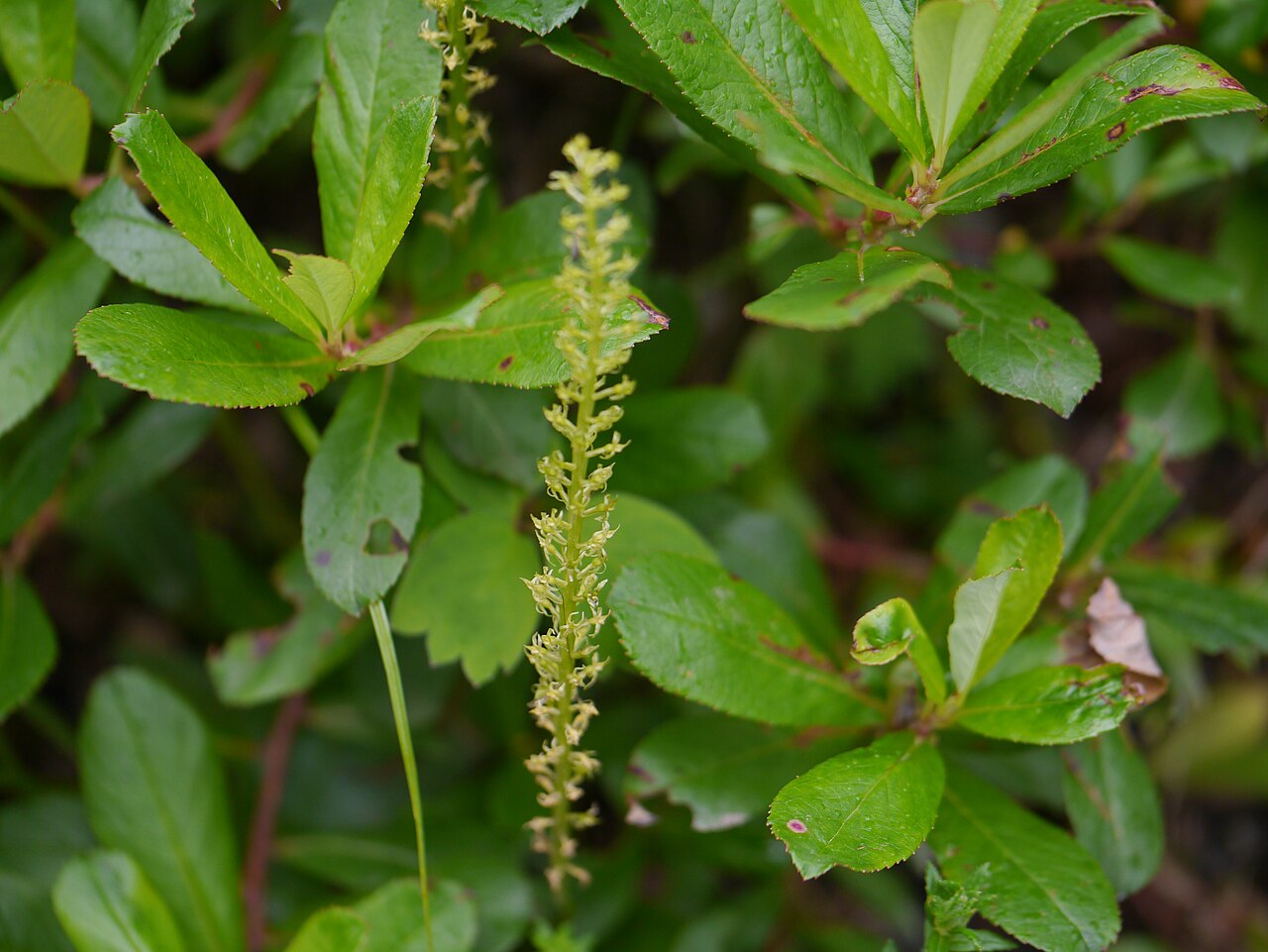
Photo: Dinesh Valke from Thane, India · CC BY-SA 2.0 · Wikimedia Commons

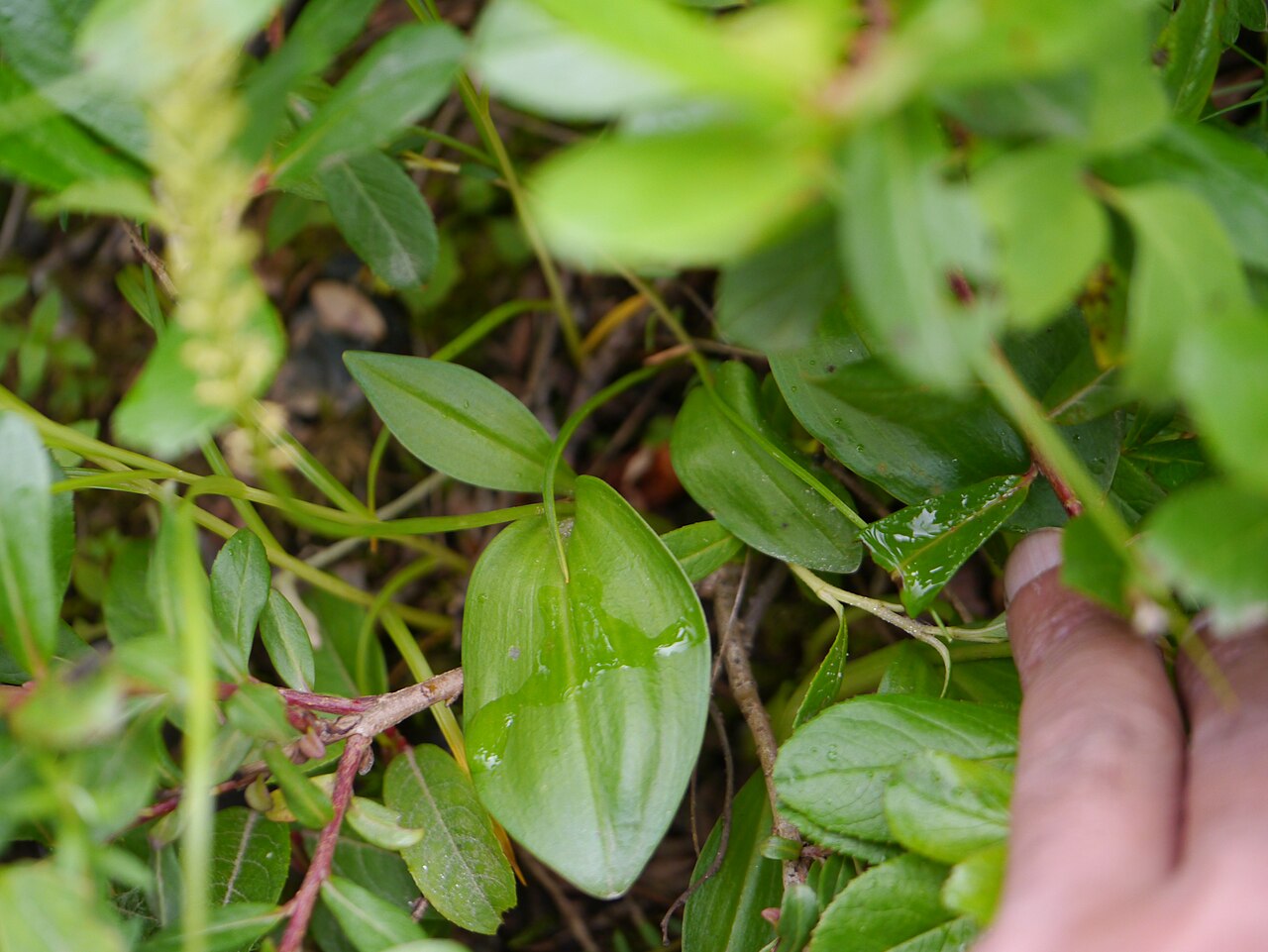
Photo: Dinesh Valke from Thane, India · CC BY-SA 2.0 · Wikimedia Commons

Matra and anupana
AS THE CLASSICAL TEXTS AND THE API PRESCRIBE
| Churna | 3–6 g |
| Anupana | Ksheera · Madhu |
| Kala | Adhobhakta |
The Ashtavarga churna range as the texts give it. Because Rishabhaka is dispensed as Vidari kand, this is in practice a range for the substitute, not for the orchid.
Reported from Sharangadhara Samhita and the Ayurvedic Pharmacopoeia of India. Laisha states what the texts prescribe; it does not recommend. No quantity here is adjusted for a particular person — not for agni, koshtha, bala, age, pregnancy, kidney or liver function, or anything already being taken.
Rasapanchaka
| Rasa | Madhura |
| Guna | GuruSnigdha |
| Virya | Sheeta |
| Vipaka | Madhura |
| Prabhava | Rishabhaka is the second drug of Charaka's Jivaniya list and one of the Ashtavarga that Charaka's own Chyavanaprasha names. |
| Doshakarma | Vatapittahara. |
The tradition gives Rishabhaka madhura rasa, guru and snigdha guna, sheeta virya and madhura vipaka, exactly as it does Jivaka. That the two members of the pair cannot be told apart even by their properties is part of why they are always handled together.
Karma and part used
The recorded actions are jivaniya, brimhaniya, shukrajanana and balya. Charaka places Rishabhaka in the Jivaniya and Shukrajanana groups but, unlike Jivaka, not among the snehopaga. These are the tradition's statements and are not offered here as findings.
| Upayukta anga | Kanda (the pseudobulb) |
| Why it matters | The pseudobulb. The classical name points at its shape, likened to a bull's horn, but once dried and broken this shape is lost and the pieces cannot be told from Jivaka. |
Paryaya
Vrishabha repeats the idea of the bull that is already in Rishabhaka. Dhira (the steady one) and Vira (the strong one) praise the drug rather than describe it. Matsyakhya, named after a fish, is the odd one out, and the texts do not explain it. The synonyms are a reminder that the plant was known by its reputation more than by its form.
Names, by language
| English | — |
| Hindi | Rishabhak |
| Kannada | Rishabhaka |
| Tamil | Rishabhakam |
| Telugu | Rishabhakamu |
| Malayalam | Rishabhakam |
| Marathi | Rishabhak |
| Gujarati | Rishabhak |
| Bengali | Rishabhak |
| Odia | Rushabhaka |
| Urdu | Rishabhak |
Classical references
Formulations it appears in
| Chyavanaprasha | Named in Charaka's recipe (Chikitsasthana 1.1, verses 62–74) right after Jivaka. A modern product that follows the Pharmacopoeia substitutes Vidari kand for it. |
| Jivaniya Gana Kwatha | Rishabhaka is the second member of the group and is rarely prescribed apart from Jivaka. |
Adulterants and substitutes
The official substitute for Rishabhaka, as for Jivaka, is Vidari kand (Pueraria tuberosa), listed in the Ayurvedic Pharmacopoeia of India, Part II. When real orchid material is traded it is often the other Malaxis. Because the reference lists themselves disagree about which species is which, a supplier can mislabel a sample while following a published source.
Identity
Rishabhaka is usually given as Malaxis muscifera, the second of the two Himalayan Malaxis orchids paired as Jivaka and Rishabhaka. Not every list agrees. Charak Samhita Online gives the same name, Microstylis wallichii, for both members of the pair, and the National Medicinal Plants Board listing cited by Virk and colleagues assigns Malaxis acuminata to Rishabhaka and Microstylis muscifera to Jivaka, the reverse of the usual order. Students should expect to meet both assignments.
A WAY TO REMEMBER IT
Malaxis is Greek for softening. Muscifera means fly-bearing, for the small flowers. Rishabha is Sanskrit for a bull, and the texts compare the pseudobulb to a bull's horn. That comparison is the only shape-based clue the classical description offers.
What the tradition holds
Rishabhaka always travels with Jivaka: Charaka names them one after the other in the Jivaniya group, Sushruta lists them together in the Kakolyadi gana, and they sit side by side in the Chyavanaprasha recipe. The texts record it for strength, nourishment and the reproductive tissue, never as a drug used alone.
What the evidence says
| Status | Rishabhaka is well recorded in the classical texts and barely studied today. Published work almost never confirms which Malaxis it examined. |
| Suggested | Most modern papers on Rishabhaka are about identification, wild scarcity and propagation of the orchid. They describe a sourcing problem. None of this is evidence of an effect in the body. |
| Not established | There is no adequate human trial of Malaxis muscifera or of any other plant offered as Rishabhaka for any condition. |
| The honest gap | Since one standard list treats Rishabhaka as Malaxis acuminata and another as Malaxis muscifera, a result reported for 'Rishabhaka' cannot be assigned to one species without a voucher specimen, and such vouchers are rarely deposited. |
Safety
A product listing Rishabhaka almost always contains Vidari kand in its place, as the Pharmacopoeia allows. The orchid itself has no published safety record, and it is not even certain which of two Malaxis species it is. The label, not the classical name, tells you what you are taking. Anyone pregnant, on medication or managing a diagnosed condition should speak to a doctor or a qualified practitioner first.
| Contraindications | No absolute contraindication for Rishabhaka is recorded in the sources used here. That is a gap in study rather than an assurance of safety. |
| Interactions | No specific drug interaction is documented for Rishabhaka. Little has been studied, and the substitute is what is usually taken, so the silence is not reassuring in itself. |
| Pregnancy and breastfeeding | Not established. There is no information specific to Rishabhaka; the material in a product is usually Vidari kand, which has its own record. |
Last updated · How Laisha writes and checks its pages · Report a mistake
Go further with Laisha Smarter
US$10 a month · one price worldwide · cancel any time
- Ask Laisha about any herb or formulation — up to 1,000 questions a month
- The full study tracks with practice questions
- Reports and exports as real files