Vata
वट
Ficus benghalensis L.
Moraceae · Ficus
Benefits & side effects
TRADITIONAL VIEW, WITH SAFETY LIMITS
Hindi name: Bargad
What the texts say Vata does
- Grahi — digestive that absorbs excess fluid and binds the stool
- Vranaropana — heals wounds
- Raktastambhana — checks bleeding (haemostatic)
- Varnya — improves complexion
- Garbhasthapana — supports and stabilises pregnancy
What the evidence says. The banyan has a long written tradition and a sizeable laboratory literature, but no human trial of the bark is reported in the main recent review.
Side effects and limits
- Constipation from the tannins
- Digestive upset
- Skin irritation from the latex
Avoid or ask first: No absolute contraindication for banyan bark is recorded in the sources used here; the entry says so rather than leaving the field empty.
A traditional classification, not a recommendation. The full safety record is below.
Stands in 2 groups
- Mutrasangrahaniya — Binding the urine
- Nyagrodhadi — Wounds, burns, Pitta, and Prameha (named there as Nyagrodha)
A Samhita can only be read forwards, from the group to its members. This is the same list read backwards.
Photographs
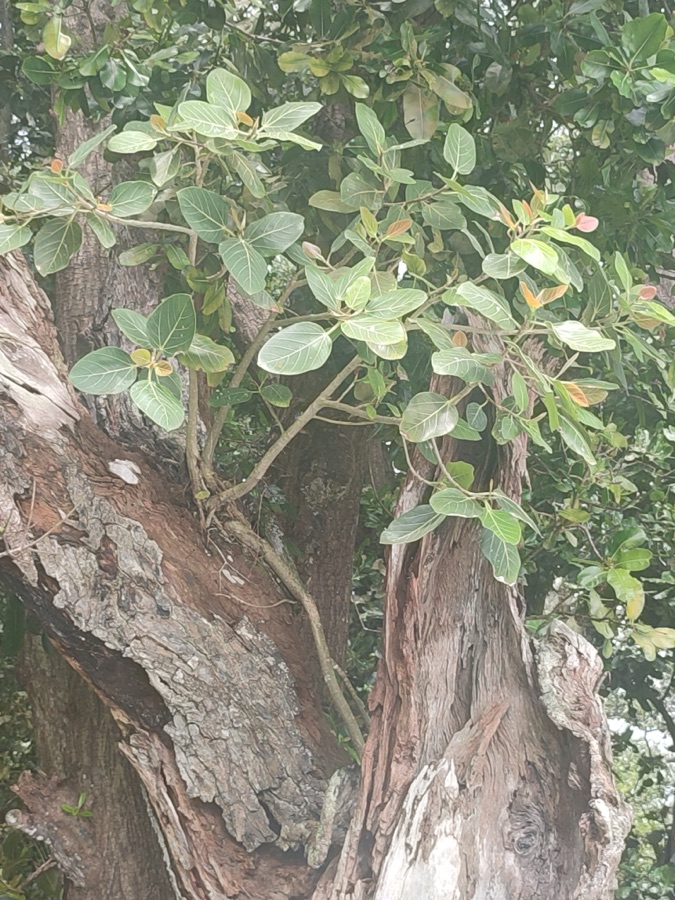
Photo: Quentin Groom · CC0 · Wikimedia Commons

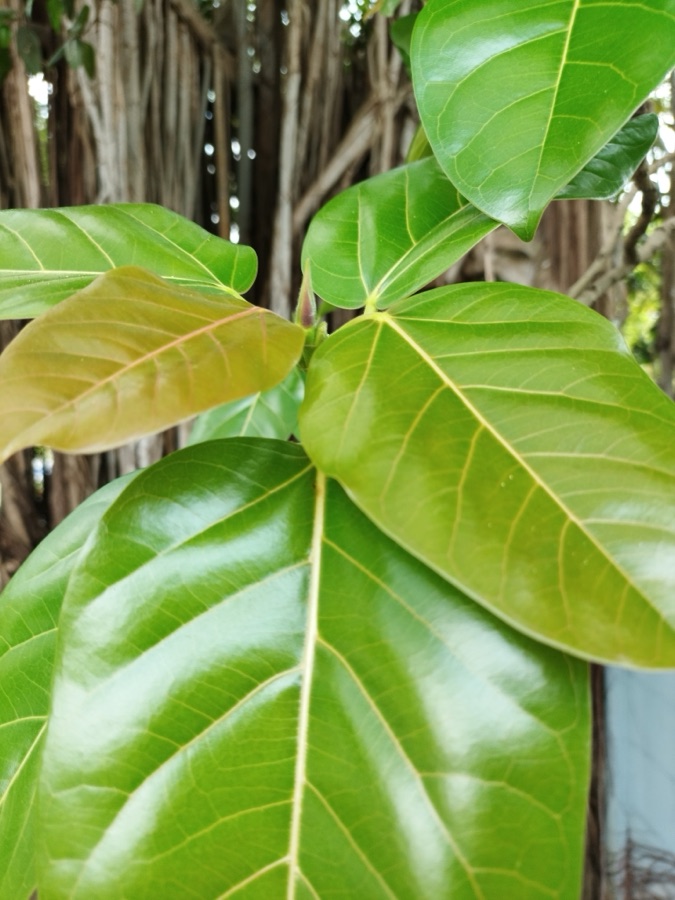
Photo: Felix E. Klee · CC0 · Wikimedia Commons

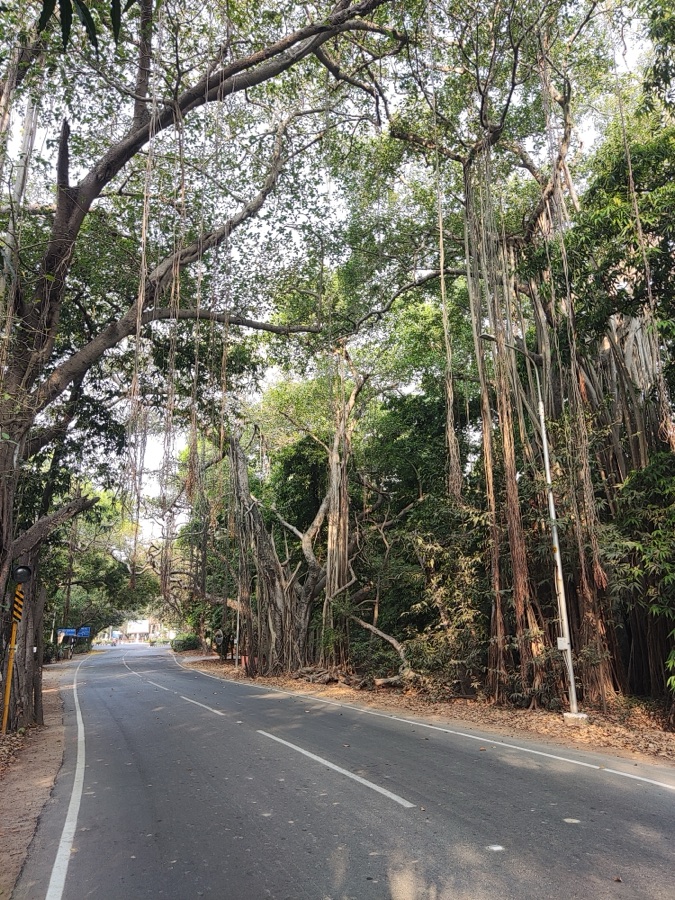
Photo: Shyamal · CC BY-SA 4.0 · Wikimedia Commons

Matra and anupana
AS THE CLASSICAL TEXTS AND THE API PRESCRIBE
| Twak kwatha | 50–100 ml |
| Churna | 3–6 g |
| Anupana | Madhu · Tandulodaka |
| Kala | Adhobhakta |
The banyan is seldom given alone. It is usually one bark of the Kshiri Vriksha group or of Panchavalkala, and many of its classical uses are local applications, washes and pessaries rather than doses taken by mouth.
Reported from Sharangadhara Samhita and the Ayurvedic Pharmacopoeia of India. Laisha states what the texts prescribe; it does not recommend. No quantity here is adjusted for a particular person — not for agni, koshtha, bala, age, pregnancy, kidney or liver function, or anything already being taken.
Rasapanchaka
| Rasa | Kashaya |
| Guna | GuruRuksha |
| Virya | Sheeta |
| Vipaka | Katu |
| Prabhava | No prabhava peculiar to the banyan is recorded. The tradition's interest is in the group effect: Sushruta's verse on the Nyagrodhadi gana speaks of wounds, uterine and vaginal disorders, the joining of broken bone, bleeding and burning, and the banyan stands at the head of that list. |
| Doshakarma | Pacifies kapha and pitta. The bark is heavy and drying, so in excess the texts expect it to provoke vata — the usual price of a strongly astringent drug. |
Kashaya is the only taste the nighantu gives the bark. With sheeta virya and katu vipaka this is the profile the four milky trees share, and Bhavaprakasha's Vatadi Varga is named after this tree because it opens the list.
Karma and part used
Garbhasthapana is the karma that sets the banyan apart from the other three milky trees in this library. It rests on Charaka's chapter on conception and pregnancy, where banyan leaf buds appear twice: in the pumsavana rite, and among the measures for bleeding later in pregnancy. These are classical statements about what the tradition did, not observations made in a body.
| Upayukta anga | Twak (the stem bark) Jata (the aerial root) Ksheera (the latex) Shunga (the leaf bud) |
| Why it matters | Stem bark is the main article. The hanging aerial root (jata), the white latex and the pinkish leaf bud (shunga) are separate articles with their own uses, and the bud in particular turns up in the texts on its own rather than as part of the bark group. |
Paryaya
Bahupada, many-footed, names the aerial roots that come down and become trunks. Nyagrodha — growing downward — says the same thing and is the name the classical texts use for the whole group.
Names, by language
| English | Banyan |
| Sinhala | Nuga |
| Nepali | Bar |
| Hindi | Bargad |
| Kannada | Aladamara |
| Tamil | Alamaram |
| Telugu | Marri |
| Malayalam | Peral |
| Marathi | Vad |
| Gujarati | Vad |
| Bengali | Bat |
| Punjabi | Bohar |
| Odia | Bara |
| Urdu | Bargad |
Classical references
The banyan's rasa, guna, virya and vipaka come from the Bhavaprakasha Nighantu; its group memberships come from Sushruta and Charaka, cited to chapter and, where checked, to verse. Where only a chapter could be confirmed the chapter is given and no verse number is invented.
Formulations it appears in
| Nyagrodhadi Kwatha | The decoction of the Nyagrodhadi gana, which takes its name from this tree. |
| Nalpamaradi Taila | An external oil built on the barks of the fig trees, the banyan among them. |
Adulterants and substitutes
Two problems are specific to the banyan. First, aerial root is cheaper and easier to cut than trunk bark, and the two are sold for each other although the texts treat them as separate articles. Second, the bark of other Ficus species is collected under the name; the tradition tolerates this more than it would elsewhere because the four milky trees are so often prescribed together, but a formula that names nyagrodha alone is not satisfied by any fig. A third, easily missed confusion is verbal: vatsaka (kutaja, Holarrhena) sits next to these trees in many formulas and is not vata.
Identity
Ficus benghalensis, checked against the GBIF backbone on 28 September 2026 (a 99 per cent match). The banyan is the first-named of the Kshiri Vriksha, the milky trees, and India's national tree. A young banyan often starts life perched on another tree; the old one is recognised by the pillar-like roots that drop from its branches and thicken into extra trunks, so that a single tree can look like a grove.
A WAY TO REMEMBER IT
Ficus benghalensis, the fig of Bengal — Europeans met it there, through the banian traders who sat under it, which is where banyan comes from.
What the tradition holds
The banyan heads Sushruta's Nyagrodhadi gana and stands in Charaka's Mutrasangrahaniya group. In Charaka's chapter on gynaecological disorders its bark decoction is used locally for discharge, and its bark enters Panchavalkala, the five-bark mixture used for wounds and washes. This records where the tradition writes about the tree; it is not a finding about what the bark does.
Constituents. The bark is rich in tannins. A 2021 review lists leucocyanidin and leucopelargonidin glycosides, lupeol and its acetate, alpha-amyrin acetate, beta-sitosterol and meso-inositol among named compounds. The latex carries rubber-like material and enzymes.
What the evidence says
| Status | The banyan has a long written tradition and a sizeable laboratory literature, but no human trial of the bark is reported in the main recent review. |
| Suggested | Extracts of bark, root, leaf and fruit have been tested in cells and rodents, including acute toxicity work in rats and mice that found no deaths at the levels tried. Health Canada's compendium recognises some Ayurvedic ingredients for traditional-use claims, which reflects acceptance of a documented tradition, not trial evidence. |
| Not established | Nothing about the banyan's effect on any human condition is established. Animal toxicity studies do not tell us how a person will tolerate a decoction taken for weeks, and the review authors themselves call for further work. |
| The honest gap | Much of the work tests one part of one species, while the tradition mostly uses the banyan inside a mixture of four or five barks; the mixture is what is prescribed and the mixture is what is least studied. |
Safety
No serious harm from the banyan at traditional use is recorded, which reflects an absence of reports rather than a proof of safety. The bark is heavy in tannin, so a strong decoction can constipate and can reduce the absorption of iron and of other medicines taken alongside it. The white latex irritates skin and is particularly unwelcome in the eye. Before using it, anyone who is pregnant, takes regular medicines or has a diagnosed illness should talk to a doctor or a qualified practitioner.
| Side effects | Constipation from the tannins Digestive upset Skin irritation from the latex |
| Contraindications | No absolute contraindication for banyan bark is recorded in the sources used here; the entry says so rather than leaving the field empty. |
| Interactions | No specific drug interaction is documented for banyan bark in the sources used here. Interaction testing has simply not been done, so the doctor prescribing any other medicine should be told about it. Oral iron and other medicines taken at the same time: the bark's tannins can bind them in the gut, so separating the doses is the cautious course. |
| Pregnancy and breastfeeding | Although the texts use the leaf bud in the context of pregnancy, no modern study has established that banyan preparations are safe in pregnancy or while breastfeeding; a qualified practitioner should be consulted first. |
Growing it
| Climate | Tropical and subtropical; enormous and long-lived. |
| Soil | Wide range, well-drained. |
| Planting | A tree, raised from seed or cuttings. Spreads by aerial roots that become trunks. |
| Harvest | Bark is taken in strips from part of the trunk so the tree survives. Aerial roots are cut without harm to the tree. |
| What is not stated | Spacing and yield figures for the banyan have not been checked against an agricultural authority, and none are given; in practice bark comes from standing trees, not plantations. |
Last updated · How Laisha writes and checks its pages · Report a mistake
Go further with Laisha Smarter
US$10 a month · one price worldwide · cancel any time
- Ask Laisha about any herb or formulation — up to 1,000 questions a month
- The full study tracks with practice questions
- Reports and exports as real files