How to Grow Ashwagandha
Withania somnifera · Also called: Indian ginseng, Winter cherry, Asgandh, Askandha, Amukkara, Asgandh nagori, Poison gooseberry, Withania
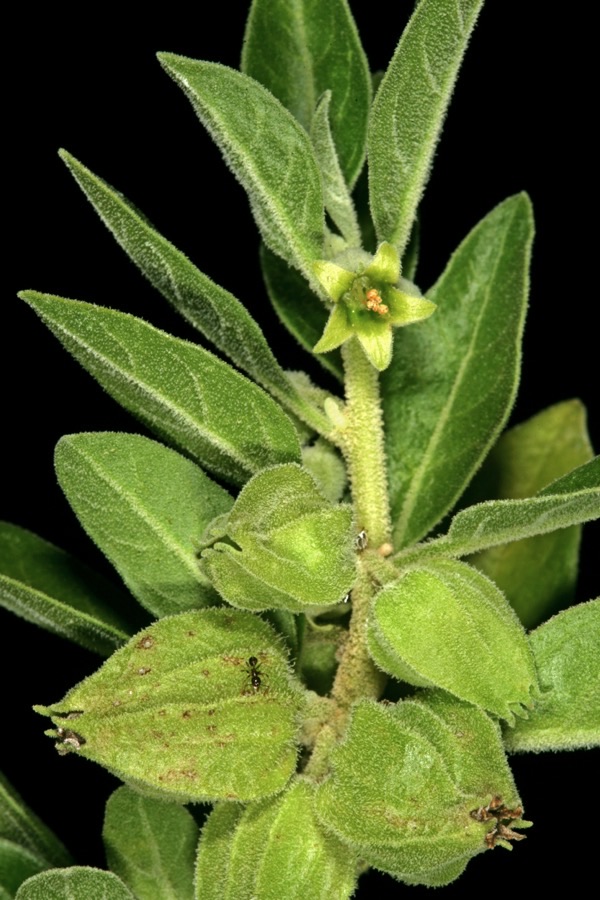
Photo: SAplants, CC BY-SA 4.0 (Wikimedia Commons)
Ashwagandha suits the farmer with light, poor, dry land and not much water. It is a rainfed crop over much of India, it will finish on one or two irrigations, and it grows on ground where a cereal would barely be worth sowing. What has changed in recent years is the buyer. This was a local medicinal crop sold into Ayurvedic trade; it is now a global supplement ingredient, which means the price is set far away and the quality is tested in a laboratory rather than judged by eye. That is a real opportunity and a real trap. The roots that pay best are thick, straight, pale and clean, and every part of how the crop is sown, thinned, lifted and dried is aimed at producing them.
Growing Ashwagandha, Stage by Stage
- 1. Get the land ready — Light, sandy, well-drained, poor ground, worked fine.
- 2. Sow the seed — Small seed, sown shallow and thin, as the rains arrive.
- 3. Weed, water and feed — Weed twice, water almost never, feed hardly at all.
- 4. Watch for trouble — Wilt in the soil, mites and caterpillars on the leaves.
- 5. Harvest: lift the whole plant — Loosen the soil first and pull the root out whole.
- 6. Wash, cut, dry and keep the roots — Clean, cut to a length, and dry hard in shade. This is where the grade is made.
- 7. Sell it to a buyer who tests — You are selling into a laboratory market now, not a village one.
Common Problems & Troubleshooting
If you see: A good-looking crop that yields only thin, stringy, branching roots.
It likely means: Usually the stand was too thick and never thinned, or the land was too rich, or both. Thin roots come from crowded, well-fed plants.
Do this: Thin the crop at about four weeks so plants stand roughly ten centimetres apart.
If you see: Roots snapping off in the ground during harvest, leaving the best part behind.
It likely means: The plants were pulled out of hard dry ground without loosening it first.
Do this: Loosen the soil along the row with a spade or plough before pulling anything.
If you see: Dried roots going mouldy, smelling musty, or a whole lot refused by the buyer.
It likely means: They were not dried hard enough, or they were bagged while still holding moisture, or the store is damp.
Do this: Dry until a root snaps cleanly instead of bending, which is the only reliable test.
If you see: Plants yellowing and dying in patches, worst where a nightshade crop grew before.
It likely means: A soil-borne wilt. Ashwagandha shares these diseases with tomato, potato, chilli and brinjal because they are all one family.
Do this: Never plant ashwagandha after tomato, potato, chilli or brinjal.
If you see: Roots that have dried dark brown or grey instead of pale, and a lower price because of it.
It likely means: Dried in fierce direct sun, dried too slowly, or washed late so soil had already dried onto them.
Do this: Dry in clean shade with air moving rather than in direct sun.
If you see: A buyer refusing the lot after testing, or paying much less than agreed.
It likely means: Something was found in the root: pesticide residue, heavy metals, mould or too much moisture. This crop is sold into a tested market.
Do this: Ask a licensed dealer before applying anything, and say the root is dried and taken as medicine.
Yield & Market Value
Growing the crop is only part of the job. The last part is knowing what a normal harvest looks like where you are, and knowing what your ashwagandha is worth before you agree a price with anybody.
Remember It This Way
If you forget every other page of this guide, keep these lines. They are the whole crop, in order, short enough to carry in your head.
- The root is the crop. Everything else is a side income.
- Never after tomato, potato, chilli or brinjal.
- Poor light soil. Rich land gives leaf, not root.
- Sow shallow and thin. Mix the seed with sand.
- Thin at four weeks. Crowded plants give stringy roots.
- Water it hardly at all, and stop well before lifting.
- Loosen the soil before you pull, or the root snaps.
- Wash it at once. Dried-on soil never comes off.
- Dry in shade until it snaps. Sun darkens it.
- Keep a record of everything you spray. They test.
Test Yourself: Identification
What does the plant look like?
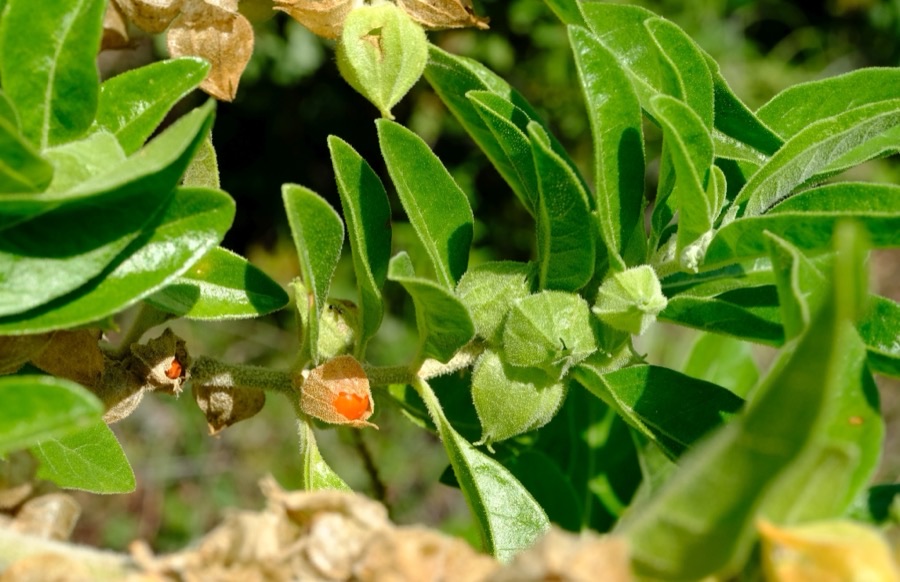
What do the fruits look like?
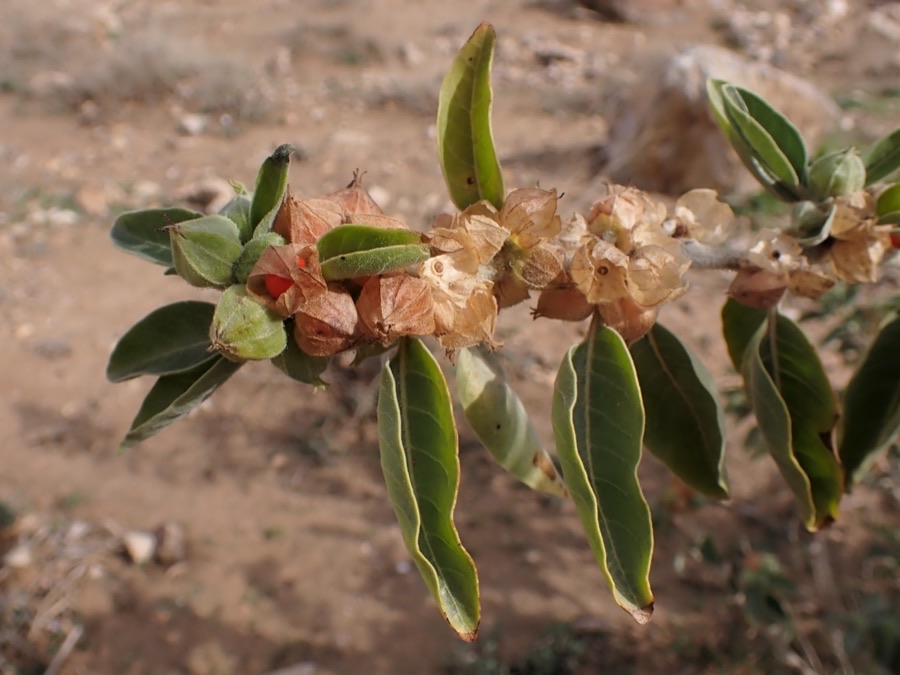
When is the crop ready to lift?
Honest Limits of This Guide
- Timings here are given by season and by the state of the plant rather than in named months, because although most of the world's ashwagandha is grown in India, the guide is written for anyone. Count from your own rains.
- The photographs show the plant growing wild rather than a commercial field, because usable pictures of an Indian ashwagandha crop are not available under a licence this library can use. It is the same species, and the hairy leaves, the papery fruit cases and the orange berries are exactly what to look for in a sown field.
- Variety advice is deliberately local and no varieties are named here. Selected types differ in root thickness and in active content, and which one suits a district is a question for a local supplier or research station.
- Active content is mentioned because buyers test for it, but this guide does not give target figures. Those are set by the buyer and by the country the product is going to, and they change.
- The medicinal uses of this plant are deliberately not described. This is a guide to growing and selling a crop, not advice about taking it.
- No chemical treatments are named here. The root is dried and taken as medicine, buyers test for residues and heavy metals, and what is permitted differs by country and by buyer.
In Ayurveda
This plant is also a dravya of Ayurveda. Ashwagandha in Dravyaguna: its botanical identity, rasa, virya and karma, the part used, the dose the texts give, and its safety record.
Sources
- GBIF Backbone Taxonomy species-match record for Withania somnifera (L.) Dunal — Global Biodiversity Information Facility (GBIF), Copenhagen (source)
- EPPO Global Database — Withania somnifera (EPPO code WITSO) — European and Mediterranean Plant Protection Organization (EPPO), Paris (source)
- Indian Council of Agricultural Research and National Medicinal Plants Board guidance on ashwagandha cultivation — Indian Council of Agricultural Research (ICAR), New Delhi (source)
- Withania somnifera — CABI Compendium datasheet — CABI, Wallingford (source)
- FAO guidance on post-harvest handling, drying and storage of medicinal and aromatic plant material — Food and Agriculture Organization of the United Nations (FAO), Rome (source)
Last updated · How Laisha writes and checks its pages · Report a mistake
Go further with Laisha Smarter
US$10 a month · one price worldwide · cancel any time
- Your own crop calendar for this crop, stage by stage
- Pest and disease alerts with IRAC/FRAC-group spray plans
- Ask Laisha about your field — up to 1,000 questions a month
| Free | Smarter | |
|---|---|---|
| Grow guides, pest pages, articles | Read all | Read all |
| Ask Laisha | 5 a day | Up to 1,000 a month |
| Exam practice | The sample on each page | Every question, timed papers |
| Crop calendar and pest alerts | — | For your own fields |
| Calculators and tools | — | All |
| Uploads and reports | — | 100 a month, real files |