How to Grow Avocado
Persea americana · Also called: aguacate, avocado pear, alligator pear, palta, abacate, avocatier, zaboca, butter fruit
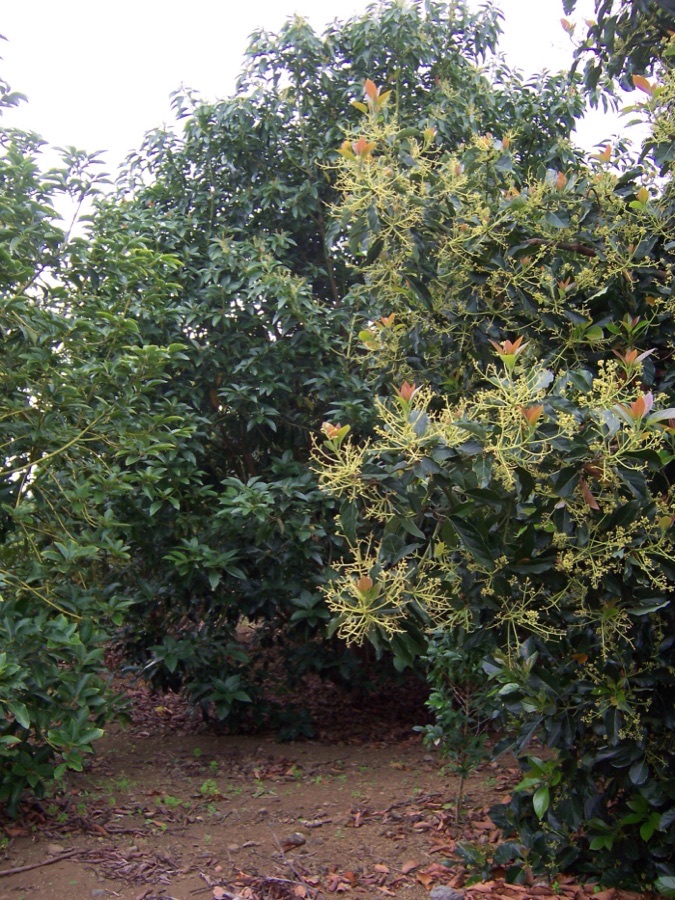
Photo: B.navez, CC BY-SA 3.0 (Wikimedia Commons)
Avocado is a real, fast-growing global fruit crop, feeding a fresh-eating, guacamole and cold-pressed oil trade that has expanded sharply across the last two decades. World production reached approximately 11.2 million tonnes in 2024, with Mexico alone growing about a quarter of that total, 2.76 million tonnes. Laisha's curated crop-priority research finds avocado among the top ten crops grown in 10 of the world's 195 countries, spanning the Caribbean, the Andes, Central America, the Eastern Mediterranean and the South Pacific — and, like this library's orange guide finds for its own crop, avocado is not the single biggest crop in any one of those 10 countries. Like orange, mango and olive, avocado is a genuine multi-decade tree crop grown almost exclusively from a grafted scion of a named variety, never true seed. Two real, separate threats shape modern planting decisions worldwide: Phytophthora root rot, a soil-borne disease found in more than 70 countries and this crop's own single leading real cause of tree loss, and laurel wilt, a newer, regionally devastating disease that has already reshaped commercial growing in parts of the southeastern United States. As with every crop in this library, any agrochemical used on this crop must be bought only from a licensed dealer, used exactly as its label says, and never guessed at from a name half-remembered from a neighbour.
Global Importance
Mexico grows about a quarter of the world's avocados, and the crop ranks among the top ten in 10 countries but leads in none. Production now spreads from the Andes and Central America to the Mediterranean, Africa and subtropical Australia, where most growers farm 5 to 15 hectares.
Market Segments
Most avocados are sold whole and fresh, judged on size, skin and the absence of rots after ripening; dark-skinned Hass dominates trade, while smooth green West Indian types serve local tropical markets. Fruit that misses fresh grade goes to guacamole and pulp, and some to oil pressing.
Growth Habit
Avocado is an evergreen tree of three races. West Indian types suit the lowland tropics, take 5 to 8 months from fruit set to maturity and are the most cold-tender; Guatemalan types take 10 to 15 months; Mexican types are the hardiest, with mature trees surviving about -8 to -3 °C. Hass is a Guatemalan-Mexican type. Commercial trees are grafted, since seedlings vary.
Growing Avocado, Stage by Stage
- 1. Pick avocado land with perfect drainage and the right race for your climate — Drainage decides avocado farming. The trees do not tolerate flooding, and wet soil brings Phytophthora root rot. Choose deep, free-draining ground or plant on mounds where soil is under about 1 m deep; aim for slightly acid soil near pH 5.5. Match the race to the cold: West Indian for frost-free lowlands, Guatemalan or Mexican types where it is cooler.
- 2. Buy grafted avocado trees and plan A and B flower types — Buy certified grafted trees of a named variety on a rootstock chosen for root rot pressure. Varieties are A type or B type by the time of day their flowers open as female and as male. Some fruit well alone, but planting both types that bloom together improves cross-pollination where no other avocados grow nearby.
- 3. Prepare the planting site and plant the avocado tree — Mix phosphate and well-rotted manure into the planting spot in advance, as Australian growers do, then plant without disturbing the root ball and keep the graft union above soil. Spacing ranges from about 6 m by 6 m in intensive orchards, thinned later, to 9 m by 7 m; home trees need 7 to 9 m from buildings and other trees.
- 4. Train young avocado trees and keep their roots healthy — Grafted avocados start fruiting after 3 to 4 years. Keep a mulched, weed-free circle under young trees, remove rootstock shoots, and shape a low frame that will be easy to pick. Do not let young trees sit wet, since root rot kills them fastest.
- 5. Water avocado by soil moisture, never to waterlogging — Water little and often so the root zone stays moist but airy; Australian growers keep soil suction between about -10 and -40 kPa at 30 cm depth, measured with tensiometers. Water stress in the first eight weeks of fruit growth makes fruit smaller.
- 6. Weed the base and feed avocado by leaf analysis — Feed young trees little and often and adjust mature trees by leaf analysis taken from mature leaves on non-fruiting shoots at the end of summer. Australian target ranges include about 2.4 to 2.8 percent nitrogen and 40 to 60 mg/kg boron and 40 to 80 mg/kg zinc, with sodium and chloride kept below 0.25 percent.
- 7. Avocado flowering: A and B types and less than 1 percent fruit set — Each avocado flower opens twice, first as female and later as male. Wind brings self-pollination and bees and wasps bring cross-pollination. Fewer than 1 percent of flowers become fruit, and heavy early drop is normal. Some varieties need warm nights to set fruit well.
- 8. Prune avocado trees to control height and alternate bearing — Prune to keep trees low enough to pick and to let light into the canopy. Many varieties bear heavily one year and lightly the next; well-fed, well-watered trees alternate less, and leaving fruit hanging too long on the tree makes alternate bearing worse.
- 9. Scout avocado for root rot, laurel wilt, sunblotch and fruit pests — Root rot from Phytophthora is the main killer in every growing area. Laurel wilt spread by an ambrosia beetle is a newer threat where it has arrived. Fruit-spotting bugs and thrips mark fruit, and anthracnose shows after ripening. Any spray is chosen with a licensed dealer by IRAC or FRAC group.
- 10. Test avocado maturity by dry matter before harvest — Avocados do not ripen on the tree. Pick on dry matter or oil: Australia sets a minimum of 21 percent dry matter, and Mexican growers have their own published standard. A home check is to pick one large fruit and see whether it softens properly in 3 to 8 days without shrivelling or turning rubbery.
- 11. Clip avocados with a stem button and handle gently — Clip each fruit leaving a short stem button, which reduces stem-end rot, and set it gently into the bag. Early varieties and uneven trees are often picked in two rounds. Keep picked fruit shaded and cool it quickly.
- 12. Cool, ripen and sell avocados — Pre-cool fruit soon after picking. Ripen with ethylene at about 16 to 24 °C; hotter than that, fruit ripens unevenly. Before ripening, most Florida varieties store at 4 °C but West Indian types not below 13 °C, or the skin and flesh darken from chilling injury.
Fertiliser Programme
Avocado is fed per tree, little and often on young trees, and mature trees are adjusted by leaf analysis. Australian growers sample mature leaves on non-fruiting shoots at the end of summer and aim for about 2.4 to 2.8 percent nitrogen, with boron and zinc watched closely and sodium and chloride kept low.
Common Problems & Troubleshooting
If you see: A tree in slow, general decline, with small, pale, sparse leaves and poor vigour despite good feeding and water, worst in a wet or poorly drained part of the orchard, with fine feeder roots dying back below ground.
It likely means: Phytophthora root rot, caused by the soil-borne water mould Phytophthora cinnamomi — this crop's own single leading real cause of tree damage and death worldwide, present in more than 70 countries.
Do this: Check drainage first, plant on mounds in any wet ground, and ask your plant-pathology service to confirm Phytophthora before treating.
If you see: Sudden wilting and browning of leaves that stay attached to the branch rather than falling, spreading quickly through the canopy, with dark staining visible inside the wood just beneath the bark of affected branches.
It likely means: Laurel wilt, caused by the fungus Harringtonia lauricola and spread by the invasive redbay ambrosia beetle, Xyleborus glabratus — a real, newer disease that has already reshaped commercial growing in parts of the southeastern United States.
Do this: Report a suspected case to your local plant health authority immediately, since early confirmation and removal are the only real tools that limit its spread.
If you see: Depressed, longitudinal yellow, red or white streaks on fruit skin, or rectangular cracking patterns on the bark of older branches, on a tree that otherwise often looks completely healthy.
It likely means: Avocado sunblotch viroid (ASBV), the smallest known viroid that infects plants — a real, genuinely silent disease, since many infected trees show no visible signs at all while still losing real yield.
Do this: Buy only certified, indexed avocado budwood and trees, since sunblotch is carried in buds and seed and many infected trees look healthy.
If you see: Small, dark, dome-shaped insects clustered motionless along stems and the undersides of leaves, often alongside a sticky residue on nearby leaves and fruit.
It likely means: Pyriform scale, Protopulvinaria pyriformis — a real, documented pest of this crop recorded across Australia, South Africa, Israel, Italy, France, Spain, Cuba, Florida and Peru, named in real published sources as this fruit's own worst insect pest in at least one of those countries.
Do this: Check avocado stems and leaf undersides for scale every fortnight, since the insects sit still and build up unseen; rotate IRAC groups if you treat.
If you see: Dark, sunken, spreading patches appearing on fruit only after it is picked and begins to soften, even on fruit that looked completely sound at harvest.
It likely means: Anthracnose, caused by the fungus Colletotrichum gloeosporioides — a real, genuinely deceptive disease that infects fruit while it is still small and hard, then stays hidden until ripening begins.
Do this: Keep the canopy open, clip fruit with a stem button, cool it fast, and if your service advises protective sprays, choose them by FRAC group.
If you see: A silvery, lead-coloured scarring on the surface of leaves and fruit skin, with affected leaves sometimes taking on a dull, metallic sheen.
It likely means: Greenhouse thrips, Heliothrips haemorrhoidalis — a real, documented major pest of avocado specifically in southern California, and a genuinely widespread pest of subtropical and tropical crops generally.
Do this: Look over avocado leaves and young fruit for silvering in dry weather and act only when damage spreads.
Real Farm Economics
An avocado orchard gives no fruit for 3 to 4 years after grafted trees go in. In Australia, mature orchards under best practice reach about 18 to 23 tonnes per hectare, against an industry average near 7 tonnes when young trees are counted. Root rot and, in some regions, laurel wilt can wipe out that investment.
Yield & Market Value
Avocado yields swing widely: Australian best practice gives about 18 to 23 tonnes per hectare from mature orchards, while a mature Florida home tree averages 50 to 75 kg a year. Avocado is not in Laisha's live price service yet, so ask packers how they grade before you pick.
Remember It This Way
Eight lines for an avocado orchard, from drained site to ripened fruit.
- Graft it onto a chosen rootstock. Its own seed will not grow true.
- Plant an opposite-type partner. One flower type alone sets less fruit.
- Every flower opens twice, female once, male once, never together.
- It will not soften on the tree. Pick it first, then let it ripen.
- Drainage matters more than almost anything else you will decide.
- Watch for wilting leaves and dark wood — the one disease with no cure.
- Leaves, bark and pit are toxic to animals, not to the person eating the fruit.
- One lucky mail carrier's tree from the 1920s is why most avocados today are Hass.
Test Yourself: Identification
What crop is this, a tall evergreen tree with a dense, broad canopy growing in a planted orchard?
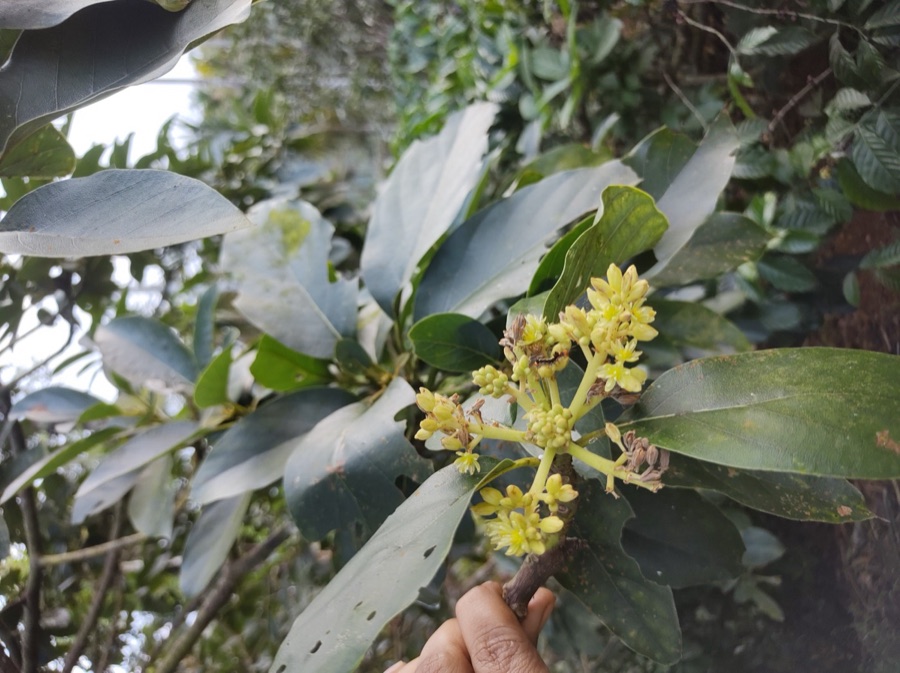
What is this small cluster of pale, greenish-yellow flowers growing near a shoot tip among broad, dull-green leaves?
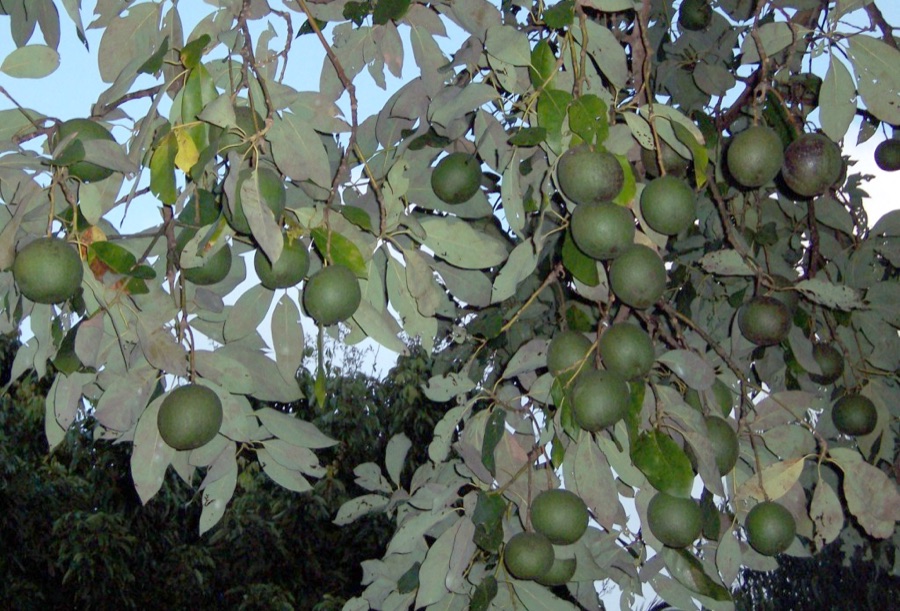
What are these large, rounded green fruits still attached to the tree by a short, firm stem?

The rest of this Avocado guide is inside Laisha
Every stage, the full fertiliser programme, the economics and the pest diagnosis for Avocado live in the app — alongside photo-based diagnosis, live market prices, and an agronomist you can actually ask.
Open Laisha — ten days freeTen days free, no card. After that 10 US dollars a month, one price worldwide.
2 more sections of this guide continue inside.
Related Laisha Tools
- Global Market Price Outlook — Check today's price and trend
- Crop Calendar — Build a season-long sowing plan
- Pest & Disease Intelligence — Risk reasoning and a global pest & disease library
- Crop Health — Photo-based first read on a field problem
- Soil Health — Track soil test results across seasons
Sources
- GBIF Backbone Taxonomy species-match record for Persea americana Mill. (usage key 3034046) — Global Biodiversity Information Facility (GBIF), Copenhagen (source)
- World Checklist of Vascular Plants (WCVP) search results for Persea americana, queried live through GBIF's own hosted copy of the checklist — Royal Botanic Gardens, Kew, hosted via GBIF (dataset f382f0ce-323a-4091-bb9f-add557f3a9a2) (source)
- Avocado — Wikipedia, citing FAOSTAT production data (source)
- Hass avocado — Wikipedia (source)
- Persin — Wikipedia (source)
- Laurel wilt — Wikipedia (source)
- Phytophthora cinnamomi — Wikipedia (source)
- Avocado sunblotch viroid — Wikipedia (source)
- Colletotrichum gloeosporioides — Wikipedia (source)
- Heliothrips haemorrhoidalis — Wikipedia (source)
- Laisha's own curated global crop build-priority research, built on FAOSTAT's own 'Avocados' item category — Laisha (internal curated research, sourced from FAOSTAT QCL 2025) (source)
- Laisha's own curated agrochemical mode-of-action and hazard-band reference — Laisha (internal curated research) (source)
- Avocado Production in Australia (Whiley A.W.), in Avocado Production in Asia and the Pacific, RAP Publication 2000/09 — FAO Regional Office for Asia and the Pacific, Bangkok (source)
- Avocado Growing in the Florida Home Landscape (Crane J.H., Balerdi C.F. and Maguire I.), CIR1034 — University of Florida IFAS Extension, Gainesville (source)
Last updated · How Laisha writes and checks its pages · Report a mistake
Go further with Laisha Smarter
US$10 a month · one price worldwide · cancel any time
- Your own crop calendar for this crop, stage by stage
- Pest and disease alerts with IRAC/FRAC-group spray plans
- Ask Laisha about your field — up to 1,000 questions a month
| Free | Smarter | |
|---|---|---|
| Grow guides, pest pages, articles | Read all | Read all |
| Ask Laisha | 5 a day | Up to 1,000 a month |
| Exam practice | The sample on each page | Every question, timed papers |
| Crop calendar and pest alerts | — | For your own fields |
| Calculators and tools | — | All |
| Uploads and reports | — | 100 a month, real files |