How to Grow Carrot
Daucus carota · Also called: carrot, carrots, gajar, zanahoria, carotte, karotte, wortel, morot
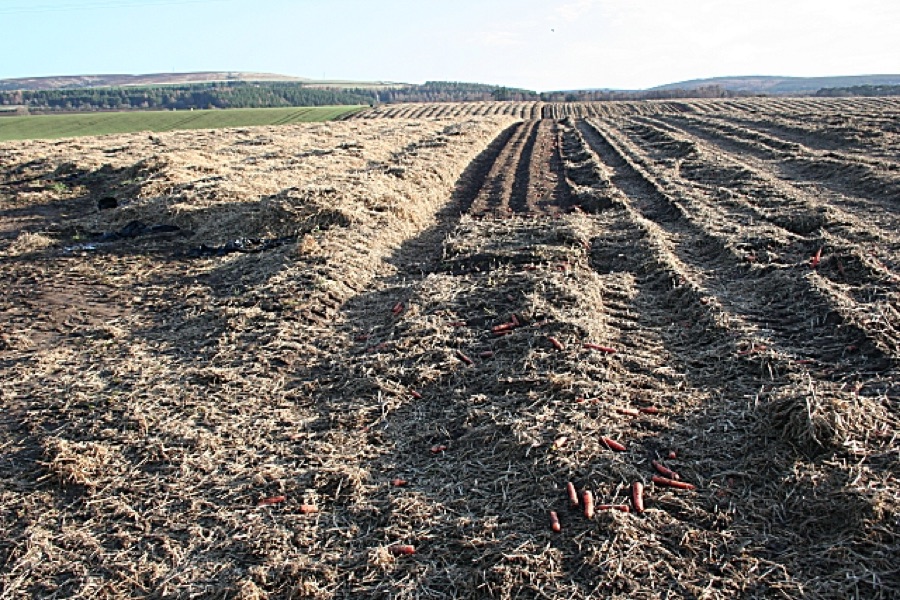
Photo: Anne Burgess, CC BY-SA 2.0 (Wikimedia Commons)
Carrot (bundled with turnip in the same FAOSTAT production category, 'Carrots and turnips', a real, honest data limitation this guide states plainly rather than hiding — globalImportance) is a real top-ten crop, by Laisha's curated research, in 7 of the world's 195 countries, and the single biggest crop of all in none of them — its highest real rank anywhere is fourth place, in Iceland. A published source records combined 2024 world production at approximately 45 million tonnes, led overwhelmingly by China at roughly 19.0 million tonnes, about 42 percent of the entire world total on its own, followed by Uzbekistan, Russia and the United States. Unlike this library's cabbage guide, carrot is genuinely never transplanted at commercial scale — it is direct-seeded straight into the field and later thinned, a real, distinctive agronomic fact this guide's stages are built around. Carrot also carries a genuinely important real nutrition story worth stating plainly given this library's smallholder-nutrition mission: a published source records raw carrot delivering 93 percent of an adult's daily vitamin A reference value per 100 grams, overwhelmingly as beta-carotene, the same real plant compound that gives the root its orange colour — making carrot one of the single most concentrated real, affordable vitamin A sources any smallholder can grow. Its single most damaging real pest worldwide is carrot fly (Chamaepsila rosae, also validly called Psila rosae — the same live, two-authority naming disagreement this guide documents honestly in troubleshooting), and its single most devastating real disease is Alternaria leaf blight. Carrot seed is slow and fussy: it can take 10 to 21 days to come up, and it germinates best when the soil sits between about 16 and 25 degrees Celsius, so a good stand is won or lost in the first three weeks. Any spray you use on carrot comes from a licensed dealer and is used exactly as its own label says.
Global Importance
World statistics do not count carrot on its own. FAOSTAT files carrot and turnip together under one heading, 'Carrots and turnips', so every tonnage below is a shared figure. Read it as the size of the cool-season root trade, not as carrot alone. Even so, the pattern is clear: carrot is a crop of cool, irrigated, mechanised valleys in China and Central Asia, of northern Europe, and of North America, and it is grown at garden scale almost everywhere else.
Market Segments
Who buys the root decides how you sow it. A fresh-market bunch, a cut-and-peel pack, a processing contract for diced carrot, and a contract for sliced 'coins' each want a different variety type and a different number of plants in each metre of row. One extension guide sows about 20 to 26 plants per metre for fresh market, about 20 per metre for dicing, and up to about 52 per metre for coins, where small, even roots are the goal.
Growth Habit
Carrot is a biennial grown as an annual. In its first season it stores sugar in one swollen taproot; only after a cold spell does it send up a flower stalk. Commercial growers never transplant it. Seed goes into the bed it will be lifted from, no deeper than about 6 millimetres, often with a precision seeder that drops three close lines of seed in each row, and the field then waits up to three weeks for the first feathery leaves.
Growing Carrot, Stage by Stage
- 1. Pick deep, stone-free land and match the variety to the buyer — Choose a deep sandy loam or organic soil at about pH 6.3 to 6.8, free of stones and of known root-knot nematode or cavity spot. A small-grain crop the season before suits carrot well. Pick a fresh, dicing or coin variety type before you buy seed.
- 2. Make a fine, shallow seedbed and sow in place — Sow straight into a crumbly bed no deeper than about 6 millimetres. Seed comes up best between about 16 and 25 degrees Celsius and may still take 10 to 21 days. Pelleted seed and drip lines help the stand; a crust stops it.
- 3. Thin to the plant count your market wants — Where seed was sown thickly, pull extra seedlings at the first true leaf so each root has room: roughly 8 to 10 centimetres apart for a full-size root, closer for small processing roots. Precision seeding cuts this work.
- 4. Feed lean, test first — Work in most of the season's nitrogen, phosphate and potash before sowing, guided by a soil test, and side-dress a little nitrogen only if leaves go pale. Too much nitrogen gives big tops and thin, hairy roots.
- 5. Water little and often, never in a flood — Carrot roots split when a dry spell is broken by a heavy soaking. Drip or regular light sprinkling keeps the top soil moist for germination and holds the bed even until lifting.
- 6. Win the first six weeks against weeds — Carrot seedlings are thin and slow, and weeds that emerge with them steal light within weeks. Start clean, cultivate shallow between rows, and hill a little soil over the shoulders later to stop green tops.
- 7. Insects: carrot fly, weevil and leafhopper — Carrot fly maggots tunnel the root; carrot weevil becomes active once the soil warms to about 16 degrees Celsius; leafhoppers carry aster yellows. Barriers, distance from last year's carrot-family fields and early weed control do most of the work.
- 8. Diseases: leaf blight above ground, cavity spot below — Alternaria and Cercospora leaf blights strip the tops so the harvester cannot grip them. Scout 50 leaves across each variety; one programme treats when about a quarter show spots. Cavity spot and nematodes hide in the root and are managed by rotation.
- 9. Judge ripeness on a pulled root — Pull a few roots and measure them. One extension guide grades fresh carrot at over about 13 centimetres long and 2 to 4 centimetres across the shoulder. Days on the seed packet are only a starting point.
- 10. Lift gently, cool fast, store cold and wet — Loosen the bed, lift by the tops, cool to 4 degrees Celsius or lower quickly, then hold topped roots at 0 to 1 degree Celsius and 98 to 100 percent humidity, where they can keep for 7 to 9 months. Keep them away from apples and pears, whose ethylene makes carrot bitter.
Fertiliser Programme
Carrot is a light feeder on nitrogen and a heavier one on phosphate and potash when the soil test is low. One extension programme gives a whole-season total of about 56 to 90 kilograms of nitrogen per hectare, most of it worked in before sowing and the rest side-dressed only if the crop is pale. Phosphate and potash run from about 170 kilograms per hectare on a low-testing soil down to nothing on a very high one. The same guide adds sulphur and a small dose of boron. Fresh manure stays off the field, because it forks the root.
Common Problems & Troubleshooting
If you see: Foliage turning rusty red to scarlet with some yellowing, and creamy-yellow, legless maggots up to about 10 millimetres long with rusty-brown tunnels visible just under the root's skin when dug up and checked.
It likely means: Carrot fly, a real fly validly called either Chamaepsila rosae (EPPO's own preferred name) or Psila rosae (GBIF's own accepted name) — a genuine, live, two-authority naming disagreement this guide states honestly rather than picking one silently, the same pattern this library's cabbage guide documents for its own crop. This is this crop's own single most damaging real pest worldwide.
Do this: Erect a real physical barrier at least 60 centimetres (2 feet) high around the planting, since this fly genuinely flies low.
If you see: Dark, irregular spots on leaves and leaf stalks, often starting at the leaf margin, spreading quickly under warm, humid conditions and killing foliage outright.
It likely means: Alternaria leaf blight, caused by the real fungus Alternaria dauci, described in a published source as this crop's own most devastating disease.
Do this: Walk a V- or W-shaped route through each variety and look at 5 leaves on 5 neighbouring plants in at least 10 places; if about 12 of those 50 leaves carry spots, the disease is building and needs action.
If you see: Sunken, elongated lesions directly on the root's own surface, only visible once the root is dug up and washed, with no clear above-ground warning sign beforehand.
It likely means: Cavity spot, caused by the real soil organisms Pythium violae and Pythium sulcatum, a genuine root disease rather than a leaf disease.
Do this: Rotate away from carrot and other umbellifers on land with a known cavity spot history.
If you see: Forked, hairy or distorted roots at harvest, or unusual side-rooting, rather than a clean single taproot, with a patch of the field sometimes growing more poorly than the rest.
It likely means: Root-knot nematode, caused by real, microscopic soil-dwelling worms of the genus Meloidogyne, a genuine soil pest rather than an insect or fungus.
Do this: Rotate away from carrot and other known host crops on land with a known nematode history.
If you see: A mature root that has cracked open lengthwise, usually after a period of heavy rain or sudden heavy watering following a real dry spell.
It likely means: Growth cracking, a disorder of water supply and not an infection. A root that slowed in dry soil swells again too fast when water returns, and the skin tears along its length.
Do this: Keep watering as even as your own system allows right through to harvest, avoiding the dry-then-sudden-heavy pattern that most reliably triggers this real problem (Stage 5).
If you see: Small, angular, water-soaked leaf spots that dry to a pale tan colour, sometimes with a yellow halo, spreading across leaves and leaf stalks in warm, wet weather.
It likely means: Bacterial leaf blight, caused by the real bacterium Xanthomonas campestris, a further real leaf disease genuinely distinct from Alternaria leaf blight even though the two can look similar at a glance.
Do this: Ask a local extension service to confirm which of the two real leaf diseases is present, since they call for slightly different real management.
Real Farm Economics
Carrot money is made in the packhouse and the cold store as much as in the field. The tonnage per hectare varies about ten-fold between countries, but what decides a carrot grower's income is the share of roots that grade out straight, unsplit and unforked, and how long they can be held at 0 degrees Celsius waiting for a better price. No single published cost-and-returns budget for carrot was found that would fit growers worldwide.
Yield & Market Value
A carrot crop is sold by grade. Straight roots of the right length and shoulder width fill the bags; forked, split, green-shouldered or cavity-spotted roots go to feed or waste. Before you agree a price, know what share of your field makes the top grade, and whether you can hold the rest in cold storage instead of selling on a glutted day.
Remember It This Way
Eight lines for a carrot field, from bare bed to cold store. Say them before you sow and again before you lift.
- It never sees a tray. Seed goes straight into the field it will grow up in.
- One straight root, one straight rule: clear the stones before you clear anything else.
- Thin it hard and early, or every root in the row grows small and crowded.
- Feed it lean. Too much nitrogen grows leaves, not the root you are selling.
- A low germination number on the packet is normal for this crop, not bad seed.
- One hundred grams gets you most of a day's vitamin A. That is a real number, not a marketing line.
- Watch the leaf tops turn red before you ever see the fly that did it.
- 'Baby carrot' is a cut, not a variety. Remember that before you promise a buyer something you cannot grow.

The rest of this Carrot guide is inside Laisha
Every stage, the full fertiliser programme, the economics and the pest diagnosis for Carrot live in the app — alongside photo-based diagnosis, live market prices, and an agronomist you can actually ask.
Open Laisha — ten days freeTen days free, no card. After that 10 US dollars a month, one price worldwide.
3 more sections of this guide continue inside.
Related Laisha Tools
- Global Market Price Outlook — Check today's price and trend
- Crop Calendar — Build a season-long sowing plan
- Pest & Disease Intelligence — Risk reasoning and a global pest & disease library
- Crop Health — Photo-based first read on a field problem
- Post-Harvest Loss Prevention — Real storage science by crop
Sources
- GBIF Backbone Taxonomy species-match record for Daucus carota L. — Global Biodiversity Information Facility (GBIF), Copenhagen (source)
- GBIF Backbone Taxonomy species-match attempt for Daucus carota subsp. sativus — Global Biodiversity Information Facility (GBIF), Copenhagen (source)
- EPPO Global Database taxon record for Daucus carota subsp. sativus, code DAUCS — European and Mediterranean Plant Protection Organization (EPPO), Paris (source)
- EPPO Global Database taxon record for Daucus carota, code DAUCA — European and Mediterranean Plant Protection Organization (EPPO), Paris (source)
- GBIF Backbone Taxonomy species-match records for Psila rosae and Chamaepsila rosae — Global Biodiversity Information Facility (GBIF), Copenhagen (source)
- GBIF Backbone Taxonomy species-match record for Alternaria dauci — Global Biodiversity Information Facility (GBIF), Copenhagen (source)
- GBIF Backbone Taxonomy species-match record for Pythium violae — Global Biodiversity Information Facility (GBIF), Copenhagen (source)
- Wikipedia: Carrot — Wikimedia Foundation, citing FAOSTAT and other primary sources (source)
- Wikipedia: Apiaceae — Wikimedia Foundation, citing botanical sources (source)
- Wikipedia: Carrot fly — Wikimedia Foundation, citing entomological and horticultural sources (source)
- Global Crop Priority Research — Laisha internal reference data set, built on FAOSTAT-style country data (source)
- Global Seed Certification Standards, carrot entries — Laisha internal reference data set, compiled from the primary legal instruments it cites (source)
- Laisha's own curated agrochemical mode-of-action and toxicity colour-band reference — Laisha (internal curated research) (source)
- Mid-Atlantic Commercial Vegetable Production Recommendations, Chapter F: Carrots — University of Maryland Extension, with the Mid-Atlantic land-grant universities (source)
Last updated · How Laisha writes and checks its pages · Report a mistake
Go further with Laisha Smarter
US$10 a month · one price worldwide · cancel any time
- Your own crop calendar for this crop, stage by stage
- Pest and disease alerts with IRAC/FRAC-group spray plans
- Ask Laisha about your field — up to 1,000 questions a month
| Free | Smarter | |
|---|---|---|
| Grow guides, pest pages, articles | Read all | Read all |
| Ask Laisha | 5 a day | Up to 1,000 a month |
| Exam practice | The sample on each page | Every question, timed papers |
| Crop calendar and pest alerts | — | For your own fields |
| Calculators and tools | — | All |
| Uploads and reports | — | 100 a month, real files |