How to Grow Lemon & lime
Citrus limon · Also called: limón, limão, limone, Zitrone, citron, nimbu, chuna, citron vert
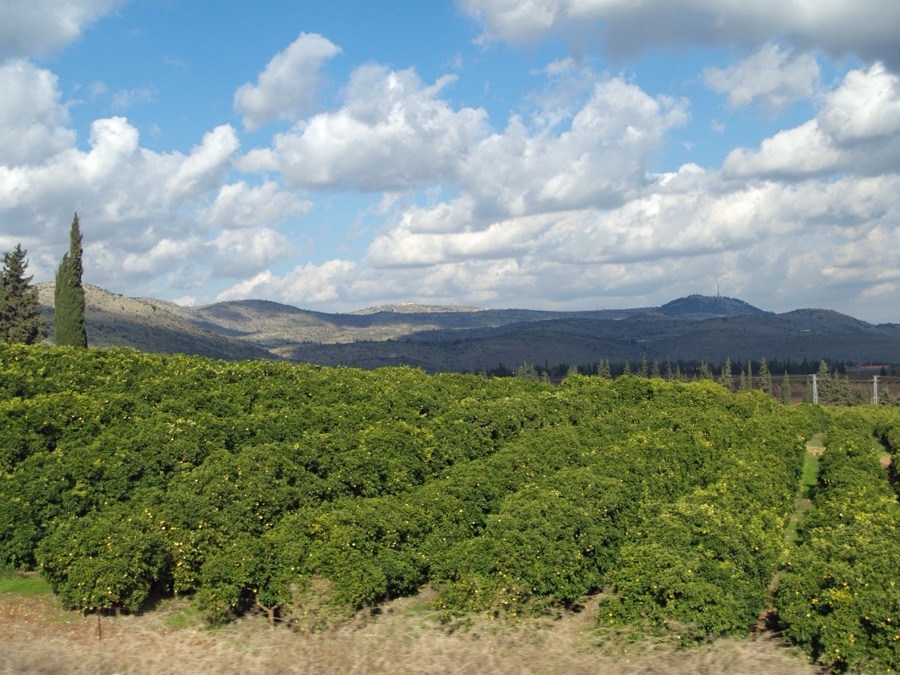
Photo: David Shankbone, CC BY-SA 3.0 (Wikimedia Commons)
Lemon and lime together form one of the world's most widely grown and recognised citrus groups, feeding a real, enormous fresh-fruit, juice, zest and preservation trade that spans warm subtropical and tropical regions on every inhabited continent. FAOSTAT tracks their production as one combined category, 'Lemons and limes', which reached approximately 23 million tonnes worldwide in 2024, with India producing approximately 3.8 million tonnes and Mexico approximately 3.3 million tonnes, together about 31 percent of the world total, ahead of China, Argentina and Brazil. Lemon and lime are grown for sour juice, peel and oil rather than for eating out of hand, so a grower is paid for juice content, rind condition and colour. Three different trees share the name: true lemon (Citrus limon), the small-fruited Key or acid lime (Citrus aurantiifolia), and the larger, seedless Persian or Tahiti lime (Citrus x latifolia). Key lime is the most cold-tender; its wood dies below about -2 °C. Lemon and lime rank among the top ten crops in 8 countries, from the Caribbean to the Indian Ocean. Any agrochemical must come from a licensed dealer and be used as its label says.
Global Importance
FAOSTAT counts lemons and limes as one crop, about 23 million tonnes in 2024. India, growing mostly small acid limes, and Mexico, the big exporter of Persian lime and producer of Key lime, together grow close to a third; China, Argentina, a major lemon processor, and Brazil follow.
Market Segments
Lemons and limes sell fresh by colour, size and juice, to juice and concentrate plants, and to processors who extract peel oil and pectin. The colour rule runs backwards for lime: a green lime is wanted and a yellow one is past its best, while lemon is sold yellow or degreened to yellow.
Growth Habit
Key lime is a small, bushy, thorny tree, rarely over about 3.7 m, that flowers through the year with a main spring flush and comes true from seed because its seeds carry several clone embryos. Persian lime is seedless and grafted. Lemon is a larger, vigorous, often thorny tree that also flowers repeatedly. None of them needs a second variety to set fruit.
Growing Lemon & lime, Stage by Stage
- 1. Pick lemon or lime land by frost risk — Match the type to your coldest night. Key lime leaves are hurt around -1 to 0 °C and the wood dies below about -2 °C, so it belongs only in frost-free tropical or coastal sites; lemon and Persian lime take a little more cold. All three need full sun, shelter from cold wind, and soil that never floods.
- 2. Buy budded lemon and lime planting material on a suitable rootstock — Persian lime and named lemons must be budded. Key lime is often grown from seed, which comes true, but a budded tree bears sooner and can sit on a rootstock chosen for your soil, such as one tolerant of foot rot or of high-pH chalky ground. Buy certified disease-free trees where a scheme exists.
- 3. Plant lime and lemon trees on a mound if water lies — Plant at the start of your planting season with the bud union well above ground. Where the water table is high or the ground floods, plant on a wide mound 0.6 to 1.2 m high. Water at planting, every other day for the first week, then once or twice a week for the first couple of months.
- 4. Shape young lemon and lime trees and weed the base — Budded trees usually fruit within three years, and seedling Key limes a year or two later. Keep a weed-free circle under young trees, remove shoots from below the bud union, and shape a low frame; Key lime's thorns make a low, open tree easier to pick.
- 5. Water lemon and lime through flowering and fruit growth — Water young trees regularly for their first two years. Mature trees on deep soil need extra water mainly in long dry spells, but sudden heavy watering after drought on acid lime can split fruit. Never let water stand around the trunk, which invites foot rot.
- 6. Feed lemon and lime little and often — Feed young trees with small, frequent doses that grow with the canopy; Florida advice uses a 6-6-6 type mix with magnesium and gives mature Key limes 0.7 to 0.9 kg per application three or four times a year. Indian acid lime schedules step up the dose yearly. Spray zinc and other micronutrients where leaves show deficiency.
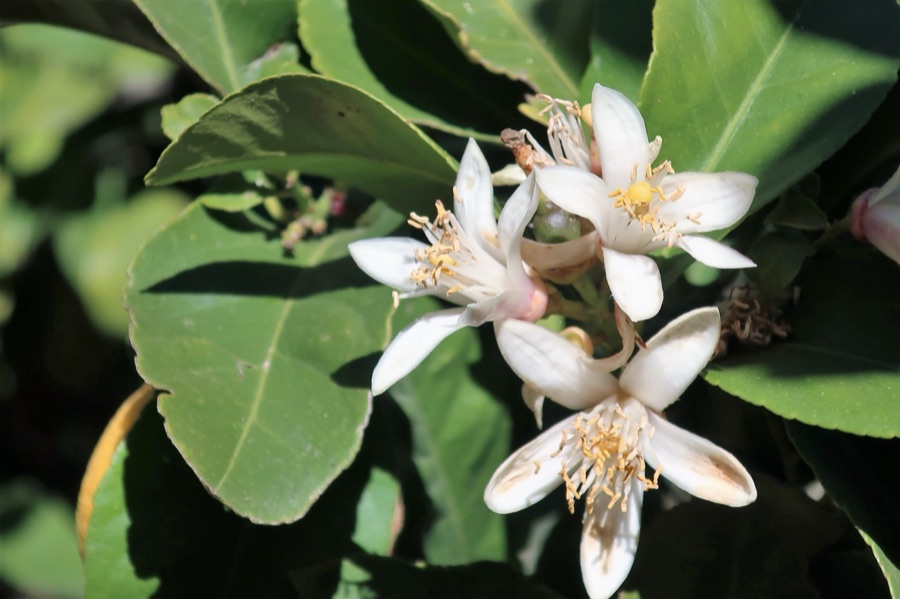
- 7. Lemon and lime flowering and fruit set — Key lime flowers in small fragrant white clusters through the year, mostly in spring, and sets fruit without a pollinizer. Lemons also flower in several flushes, so one tree can carry flowers, small fruit and ripe fruit together. Protect bees by spraying only when flowers are closed and only when needed.
- 8. Prune lemon and lime trees lightly after the main harvest — Remove dead, crossing and low-hanging branches, rootstock suckers and twigs killed by withertip, and keep the tree low enough to pick from the ground. Lemon grows vigorously and needs more cutting back than lime. Clean tools between trees where canker is present.
- 9. Watch lemon and lime for psyllid, canker, withertip and mites — Asian citrus psyllid spreads huanglongbing, which has no cure. Key lime is highly susceptible to citrus canker and to lime anthracnose, or withertip, which kills blossoms and shoots, while Persian lime is almost immune to withertip. Rust mites prefer lemon. Any spray is chosen by IRAC or FRAC group with a licensed dealer.
- 10. Pick limes green and lemons by size and juice — Limes are picked green and full-sized; yellow limes are overripe. Key lime fruits mature year-round, with a main season in early summer in Florida. Lemons are picked by size and juice and can be degreened to yellow. Pick in the afternoon, when fruit is less turgid, to cut oil spotting and stylar-end breakdown.
- 11. Clip lemons and limes and handle them gently — Clip each fruit with a short stem so the rind does not tear, and lay it in the bag rather than dropping it. Rough handling of turgid fruit bursts oil glands in the rind and juice sacs at the blossom end, which turns into brown sunken spots and rot, especially on large Persian limes.
- 12. Grade, wax, store and sell lemons and limes — Sort by colour, size and blemish, keeping green limes away from heat so they do not yellow. Indian acid lime guidance waxes and packs fruit to extend shelf life. Sell juice-grade fruit to processors, and ask buyers how they pay for juice content.
Fertiliser Programme
Lemon and lime are fed little and often. Florida advice for Key lime starts young trees on small, frequent doses of a 6-6-6 type mix with magnesium and gives mature trees about 0.7 to 0.9 kg per application three or four times a year; Indian acid lime schedules step the dose up each year.
Common Problems & Troubleshooting
If you see: Blotchy, asymmetrical yellow mottling on leaves that does not mirror itself across the leaf's own midrib the way a simple nutrient deficiency does, alongside small, lopsided, bitter fruit that stays partly green even when fully mature.
It likely means: Huanglongbing, also called citrus greening, caused most commonly by the bacterium Candidatus Liberibacter asiaticus and spread by the Asian citrus psyllid — the same real, incurable, cross-citrus disease this library's orange guide covers in depth, genuinely affecting lemon and lime too.
Do this: Get a suspected lemon or lime tree tested by your plant health service quickly, and remove confirmed trees so they stop feeding psyllids the bacterium.
If you see: Small, roughly 4-millimetre insects with a fawn and brown mottled body and a whitish, waxy coating, feeding in a distinctive head-down, tail-up posture on new shoots and young leaves.
It likely means: The Asian citrus psyllid, Diaphorina citri — the same real insect that spreads Huanglongbing across every citrus species it feeds on, lemon and lime genuinely included.
Do this: Check the soft new flushes on lemon and lime trees every week, since psyllids lay eggs only on new growth; if you treat, rotate IRAC groups.
If you see: Raised, brown, water-soaked lesions with a distinctive yellow halo on leaves, stems and fruit, often starting at a wound or an insect entry point.
It likely means: Citrus canker, caused by the bacterium Xanthomonas citri. A real, published susceptibility table names Key lime and lemon among citrus hosts in its own 'highly susceptible' group — and a real, distinct family of canker strains, called A* strains, genuinely infect Key lime alone among citrus hosts.
Do this: On Key lime and lemon, which are highly susceptible, keep leafminer down on new flushes and plant windbreaks, since wind-blown rain spreads canker into wounds.
If you see: A tree on a susceptible rootstock that declines suddenly, sometimes within days of the first visible wilting, or a slower, months-long dieback with chlorotic, honeycombed leaves on other rootstocks.
It likely means: Citrus tristeza virus (CTV), a real, aphid-spread virus this library's orange guide records killing more than 80 million citrus trees worldwide since 1970 — a real, shared threat across the whole genus, not only orange.
Do this: Ask which rootstocks tolerate tristeza where you farm before ordering lemon or lime trees.
If you see: A fine, dusty, rusty-brown bronzing or russeting on the fruit rind and the underside of leaves, worse during humid weather.
It likely means: Citrus rust mite, Phyllocoptruta oleivora, a real, documented pest whose own real order of host preference among citrus is, in a published source's own words, 'lemons, grapefruit, oranges, and tangerines' — lemon genuinely its most preferred host of all.
Do this: Look at lemon rinds and leaf undersides with a hand lens in humid weather, since lemon is the rust mite's favourite host; rotate IRAC groups if you treat.
If you see: A tree with stunted, sparse, small leaves and generally poor vigour despite good feeding and water, worst on older, established trees rather than young ones.
It likely means: Citrus root nematode, Tylenchulus semipenetrans, a real, microscopic soil pest feeding on roots, named among the real pests published Indian horticultural guidance records for this crop.
Do this: Have a soil and root sample from a weak lemon or lime tree checked for nematodes before blaming feeding.
If you see: Pale, narrow, undersized new leaves, especially noticeable at a new growth flush, in an even, uniform pattern rather than the blotchy, asymmetrical mottling of Huanglongbing.
It likely means: Little leaf malady, a real, well-documented zinc deficiency in citrus, distinct from any pest or pathogen.
Do this: Spray zinc on the new flush of affected lime trees as your local schedule advises; Indian acid lime guidance times zinc sprays through the year.
Real Farm Economics
A budded lime or lemon tree starts fruiting in about three years and, because it flowers in flushes, can bring fruit to market for much of the year. A vigorous mature Key lime in Florida gives about 13 to 23 kg a year. Disease is the big cost risk: canker and withertip hit Key lime harder than Persian lime.
Yield & Market Value
A mature Key lime tree gives about 13 to 23 kg of fruit a year in Florida home plantings; orchard yields per hectare depend on type and spacing. Lemon and lime are not in Laisha's live price service yet, so ask buyers whether they pay for fresh grade or juice before you sell.
Remember It This Way
Eight lines for a lemon or lime orchard, from frost-free site to graded fruit.
- One name, three real trees — true lemon, Key lime and Persian lime.
- Graft a known species and variety. Never guess which one you planted.
- A rootstock called 'lemon' or 'lime' may genuinely be neither.
- Lime is picked green on purpose. Yellow means it waited too long.
- Lemon waits for its own real colour. Lime is judged for staying away from one.
- Watch every leaf for a pattern that never mirrors itself — Huanglongbing has no cure.
- Key lime bites back with real thorns. Persian lime does not.
- Wash your hands after squeezing limes before you step into real sun.

The rest of this Lemon & lime guide is inside Laisha
Every stage, the full fertiliser programme, the economics and the pest diagnosis for Lemon & lime live in the app — alongside photo-based diagnosis, live market prices, and an agronomist you can actually ask.
Open Laisha — ten days freeTen days free, no card. After that 10 US dollars a month, one price worldwide.
3 more sections of this guide continue inside.
Related Laisha Tools
- Global Market Price Outlook — Check today's price and trend
- Crop Calendar — Build a season-long sowing plan
- Pest & Disease Intelligence — Risk reasoning and a global pest & disease library
- Crop Health — Photo-based first read on a field problem
- Soil Health — Track soil test results across seasons
Sources
- GBIF Backbone Taxonomy species-match record for Citrus limon (L.) Osbeck (usage key 7647136) — Global Biodiversity Information Facility (GBIF), Copenhagen (source)
- World Checklist of Vascular Plants (WCVP) search results for Citrus limon, queried live through GBIF's own hosted copy of the checklist — Royal Botanic Gardens, Kew, hosted via GBIF (dataset f382f0ce-323a-4091-bb9f-add557f3a9a2) (source)
- EPPO Global Database record for Citrus x limon (EPPO code CIDLI) — European and Mediterranean Plant Protection Organization (EPPO) (source)
- GBIF Backbone Taxonomy species-match record for Citrus aurantiifolia (Christm.) Swingle (usage key 3190164) — Global Biodiversity Information Facility (GBIF), Copenhagen (source)
- World Checklist of Vascular Plants (WCVP) search results for Citrus aurantiifolia, queried live through GBIF's own hosted copy of the checklist — Royal Botanic Gardens, Kew, hosted via GBIF (dataset f382f0ce-323a-4091-bb9f-add557f3a9a2) (source)
- EPPO Global Database record for Citrus x aurantiifolia (EPPO code CIDAF) — European and Mediterranean Plant Protection Organization (EPPO) (source)
- GBIF Backbone Taxonomy species-match record for Citrus latifolia (Yu.Tanaka ex Yu.Tanaka) Yu.Tanaka (usage key 3831655) — Global Biodiversity Information Facility (GBIF), Copenhagen (source)
- World Checklist of Vascular Plants (WCVP) search results for Citrus latifolia, queried live through GBIF's own hosted copy of the checklist — Royal Botanic Gardens, Kew, hosted via GBIF (dataset f382f0ce-323a-4091-bb9f-add557f3a9a2) (source)
- EPPO Global Database record for Citrus x latifolia (EPPO code CIDLA) — European and Mediterranean Plant Protection Organization (EPPO) (source)
- Lemon (Citrus × limon) — Wikipedia, citing FAOSTAT production data (source)
- Lime (fruit) — Wikipedia, citing FAOSTAT production data (source)
- Key lime — Wikipedia (source)
- Persian lime — Wikipedia (source)
- Meyer lemon — Wikipedia (source)
- Rangpur (fruit) — Wikipedia (source)
- Citrus volkameriana (Volkamer lemon) — Wikipedia (source)
- Phytophotodermatitis — Wikipedia (source)
- Citrus canker — Wikipedia (source)
- Citrus greening disease (Huanglongbing) — Wikipedia (source)
- Diaphorina citri (Asian citrus psyllid) — Wikipedia (source)
- Citrus tristeza virus — Wikipedia (source)
- Phyllocoptruta oleivora (citrus rust mite) — Wikipedia (source)
- Sweet orange cultivation guidelines — Tamil Nadu Agricultural University (TNAU) Agritech Portal (source)
- Acid lime cultivation guidelines — Tamil Nadu Agricultural University (TNAU) Agritech Portal (source)
- Laisha's own curated global crop build-priority research, built on FAOSTAT's own 'Lemons and limes' item category — Laisha (internal curated research, sourced from FAOSTAT QCL 2025) (source)
- Laisha's own curated agrochemical mode-of-action and hazard-band reference — Laisha (internal curated research) (source)
- Laisha's own curated seed-certification standards research — Laisha (internal curated research) (source)
- Key Lime Growing in the Florida Home Landscape (Crane J.H., HS/FC47, CH092) — University of Florida IFAS Extension, Gainesville (source)
Last updated · How Laisha writes and checks its pages · Report a mistake
Go further with Laisha Smarter
US$10 a month · one price worldwide · cancel any time
- Your own crop calendar for this crop, stage by stage
- Pest and disease alerts with IRAC/FRAC-group spray plans
- Ask Laisha about your field — up to 1,000 questions a month
| Free | Smarter | |
|---|---|---|
| Grow guides, pest pages, articles | Read all | Read all |
| Ask Laisha | 5 a day | Up to 1,000 a month |
| Exam practice | The sample on each page | Every question, timed papers |
| Crop calendar and pest alerts | — | For your own fields |
| Calculators and tools | — | All |
| Uploads and reports | — | 100 a month, real files |