How to Grow Rhubarb
Rheum rhabarbarum · Also called: Garden rhubarb, Pie plant, Rabarber, Rhabarber, Rhubarbe, Ruibarbo, Revent, Common rhubarb
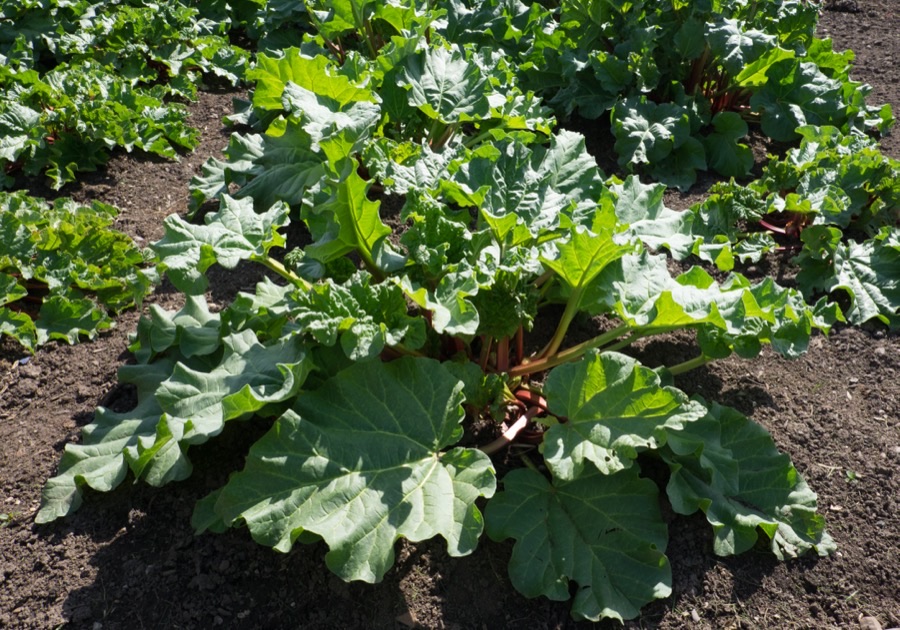
Photo: DeFacto, CC BY-SA 4.0 (Wikimedia Commons)
Rhubarb is one of the least demanding perennial crops a grower in a cold climate can keep. One planting of crowns will crop for ten years or more, it comes up before almost anything else in spring, and it fills the hungry gap when there is nothing else fresh to sell. It also has a trick that very few vegetables offer: covered up and grown in complete darkness, it produces pale, tender, early stalks that fetch several times the price of ordinary ones, and this forcing costs nothing but a bucket and some patience. Set against that are two hard limits. It needs a genuinely cold winter, which rules out a great deal of the world. And its leaves are poisonous, which makes it the only crop in this library where part of the plant must be treated as waste rather than as a second harvest.
Growing Rhubarb, Stage by Stage
- 1. Get the land ready — Deep, rich, well-drained ground in an open place, prepared properly once.
- 2. Plant divided crowns as your planting material — A piece of an established plant, each with a bud.
- 3. Weed, water and feed, and pull nothing in the first year — A whole season of patience buys ten years of crop.
- 4. Force an early crop, if you want the premium — Cover a crown in the dark and it gives pale tender stalks weeks early.
- 5. Watch for trouble — Very little troubles rhubarb except wet feet and flowering.
- 6. Harvest by pulling, and stop in good time — Twist the stalk out, cut the leaf off in the field, and never strip the plant.
- 7. Keep it cool and sell it, and divide every few years — It wilts fast, and the crowns need splitting before they get tired.
Common Problems & Troubleshooting
If you see: Stalks getting steadily thinner and more numerous year after year.
It likely means: The crown is old and crowded, or it has been pulled too hard, or it is hungry. All three are fixed by the same things.
Do this: Divide and replant the crowns every five to ten years.
If you see: A thick stalk rising from the centre of the plant carrying a large head of creamy flowers.
It likely means: The plant is trying to set seed. It is commonest on old crowns, stressed plants and some varieties more than others.
Do this: Cut the flower stalk out at its base as soon as you see it, before the flowers open.
If you see: Crowns that never shoot in spring and are soft, brown and foul-smelling when dug up.
It likely means: Crown rot following wet soil. Rhubarb will take cold and drought far better than it will take water standing around the crown in winter.
Do this: Plant on free-draining ground and on a slight ridge where the soil is heavy.
If you see: A plant that was cropping well and then collapses, with few leaves and weak growth the following year.
It likely means: It was pulled too hard. A rhubarb plant feeds its crown with its leaves, and a plant stripped bare has nothing left to do it with.
Do this: Never take more than about half the stalks at one time.
If you see: Short stumps of stalk left on the crown going brown and soft, with the rot spreading inwards.
It likely means: The stalks were cut instead of pulled. A cut leaves a stub that dies back into the crown and lets rot in.
Do this: Take hold low down and pull with a gentle twist so the stalk comes away cleanly.
If you see: Plants that survive but grow weakly and never crop properly, in a place with mild winters.
It likely means: The winter is not cold enough. Rhubarb needs a real dormant cold period before it will shoot strongly in spring.
Do this: Be honest about the climate before planting a large area.
Yield & Market Value
Growing the crop is only part of the job. The last part is knowing what a normal harvest looks like where you are, and knowing what your rhubarb is worth before you agree a price with anybody.
Remember It This Way
If you forget every other page of this guide, keep these lines. They are the whole crop, in order, short enough to carry in your head.
- The leaves are poisonous. Cut them off and leave them.
- It needs a real cold winter. No winter, no crop.
- Plant crowns, not seed. Buds at soil level, not buried.
- Pull nothing in the first year. Nothing at all.
- Pull, with a twist. Never cut a stalk at the base.
- Take the outer stalks. Leave at least half the plant.
- Cut out every flower stalk the day you see it.
- Stop pulling at midsummer so the crown can rebuild.
- Cover a crown in the dark for early stalks worth far more.
- Divide the crowns every five to ten years.
Test Yourself: Identification
What does the crop look like growing?
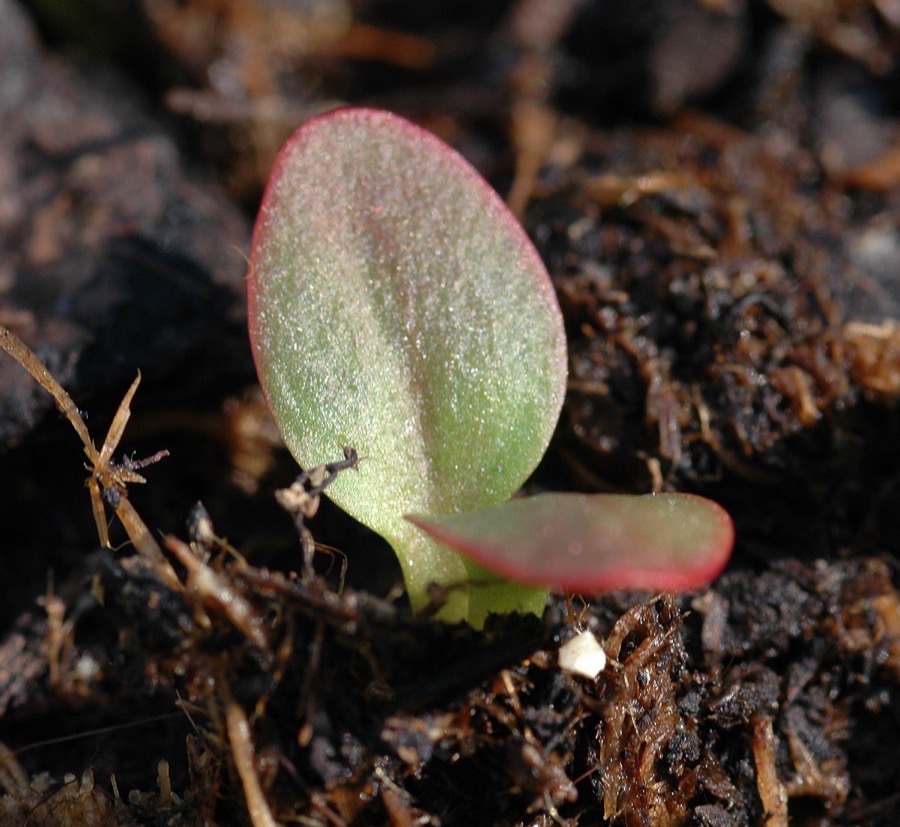
What does the plant look like when it starts in spring?
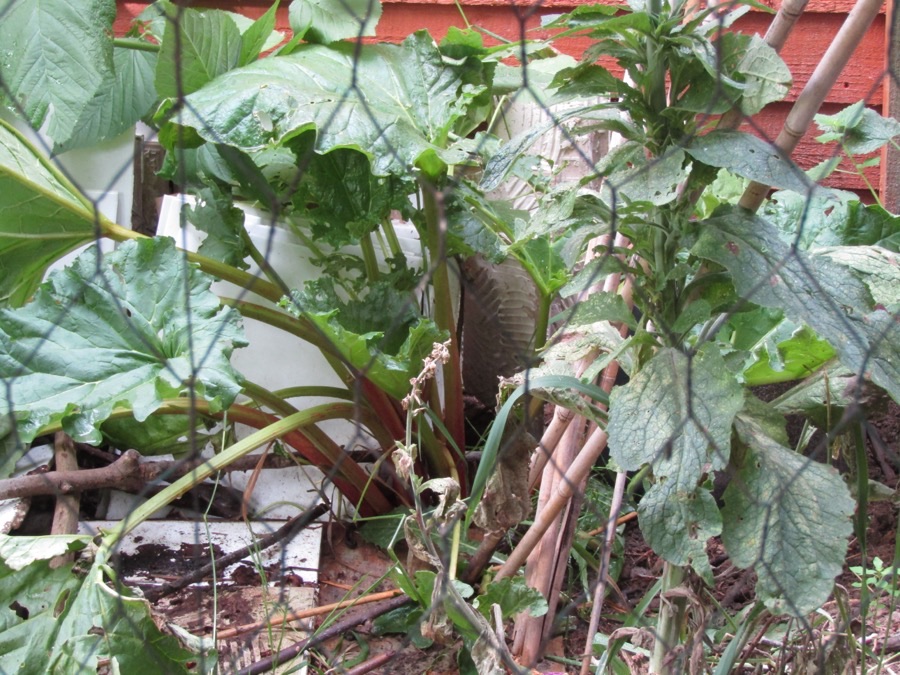
What part is harvested?
Honest Limits of This Guide
- Timings here are given by season and by the state of the plant rather than in named months, because rhubarb is grown in both hemispheres, though only in climates with a real winter. Count from your own dormant season.
- The warning about the leaves is given plainly and without a dose. The leaf blades contain enough oxalic acid and related compounds to make people seriously ill, this guide says do not eat them and do not feed them to animals, and it does not attempt to say how much would be harmful.
- This crop genuinely needs a cold winter. It is included because it is a good and easy crop where the climate allows, not because it can be grown everywhere, and a grower in a warm climate should trial a few crowns before planting a field.
- The photographs show garden and allotment plantings rather than a commercial field, because usable pictures of a commercial rhubarb crop or a forcing shed are not available under a licence this library can use. The forcing section is written in words rather than shown.
- Variety advice is deliberately local. Varieties differ in stalk colour, in earliness and in how readily they run to flower, and which suits a district is a question for a local supplier.
- No chemical treatments are named here. The stalks are eaten, the crop has few serious pests in any case, and what is permitted differs by country and by buyer.
Sources
- GBIF Backbone Taxonomy species-match record for Rheum rhabarbarum L. — Global Biodiversity Information Facility (GBIF), Copenhagen (source)
- EPPO Global Database — Rheum rhabarbarum (EPPO code RHERH) — European and Mediterranean Plant Protection Organization (EPPO), Paris (source)
- Rheum rhabarbarum — CABI Compendium datasheet — CABI, Wallingford (source)
- FAO guidance on perennial vegetable production — Food and Agriculture Organization of the United Nations (FAO), Rome (source)
- FAO guidance on post-harvest handling of perishable vegetables — Food and Agriculture Organization of the United Nations (FAO), Rome (source)
Last updated · How Laisha writes and checks its pages · Report a mistake
Go further with Laisha Smarter
US$10 a month · one price worldwide · cancel any time
- Your own crop calendar for this crop, stage by stage
- Pest and disease alerts with IRAC/FRAC-group spray plans
- Ask Laisha about your field — up to 1,000 questions a month
| Free | Smarter | |
|---|---|---|
| Grow guides, pest pages, articles | Read all | Read all |
| Ask Laisha | 5 a day | Up to 1,000 a month |
| Exam practice | The sample on each page | Every question, timed papers |
| Crop calendar and pest alerts | — | For your own fields |
| Calculators and tools | — | All |
| Uploads and reports | — | 100 a month, real files |