How to Grow Triticale
× Triticosecale · Also called: wheat-rye hybrid, spring triticale, winter triticale, pszenżyto, xTriticosecale, triticale grain
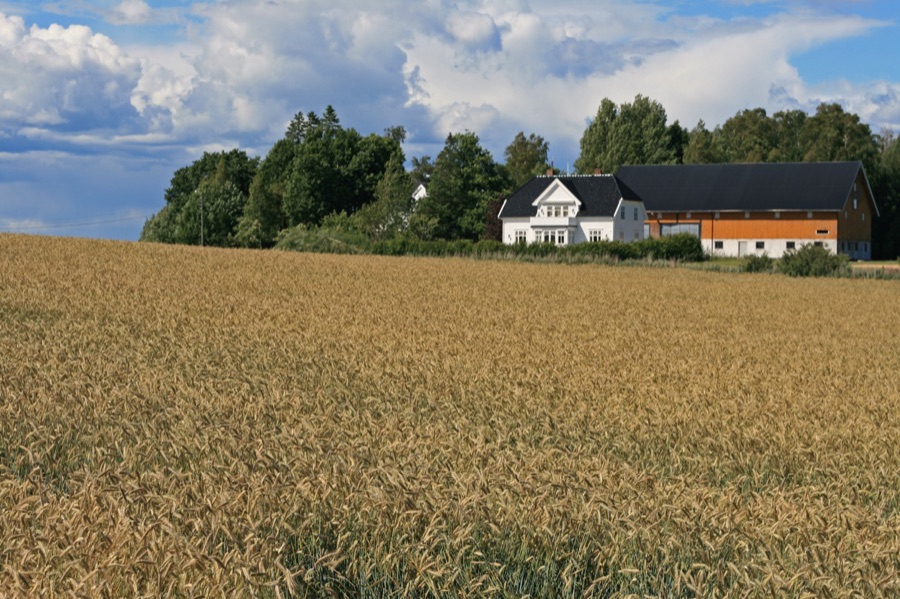
Photo: Mahlum, Public domain (Wikimedia Commons)
Triticale exists for one practical reason: to join wheat's yield and grain quality to rye's toughness on cold, dry, acid or otherwise marginal land where wheat struggles. It is a top-ten crop in 19 of the world's 195 countries, almost all of them in cool, temperate Europe, and Poland alone grows several times more than any other nation. Unlike this library's wheat (Triticum aestivum) and rye (Secale cereale) guides, triticale is a man-made cross of those two crops, bred over nearly a century to fill a gap neither parent filled as well alone. FAO's review of the crop records that many kinds tolerate acid soils and aluminium toxicity, a trait closer to rye than to wheat, and that most of the grain is fed to livestock. It also took from rye a more open flower, so it catches ergot more readily than wheat, and clean seed and grain sorting are part of growing it. Any spray must come from a licensed dealer and be used exactly as labelled.
Global Importance
Triticale is mainly a European feed grain. FAO's 2004 review records that in 2002 about 88 percent of the world's triticale was grown in Europe, 9 percent in Asia and 3 percent in Oceania, and that Poland's winter triticale passed 800,000 hectares in 2001, up from 20,000 hectares in 1985. Laisha's own curated dataset finds Poland still far ahead today.
Market Segments
One triticale harvest genuinely feeds a narrower, more lopsided set of real markets than this library's wheat guide describes for its own crop — and knowing honestly which one you are actually growing for, before you sow, is the single most important market decision this guide can help with.
Growth Habit
Triticale comes in spring, facultative and winter types. FAO's review records that winter types need four to eight weeks of temperatures above freezing but below 9 °C before they will head. Its seed is 10 to 20 percent bigger than wheat's, so spring types can be sown deeper into stored moisture, and modern kinds were shortened with dwarfing genes taken from both parents.
Growing Triticale, Stage by Stage
- 1. Choose land where wheat struggles — Triticale does best against wheat on acid, aluminium-toxic, dry or poor soils. It still needs a firm, well-drained seedbed and a break from other cereals for disease.
- 2. Pick a spring, facultative or winter type — Match the type to your winter, buy certified seed with an ergot limit, and set the drill for seed 10 to 20 percent larger than wheat.
- 3. Sow by seeds per square metre — In Alberta dryland trials, top yield came at 350 to 480 seeds per square metre, and dry areas should still sow at least 200 to 250. Sow winter triticale early and no deeper than about 2.5 cm so it hardens well for winter.
- 4. Set nitrogen by expected rainfall — The Alberta optimum averaged 110 kg of nitrogen per hectare but ran from 0 to over 160. Apply it early in the season.
- 5. Water — Triticale handles drought better than wheat, but warm, wet weather at flowering opens the ear to Fusarium and ergot, and it dislikes standing water.
- 6. Weed early, with labels that list triticale — Triticale seedlings build roots before leaves and can grow slowly in cool weather, so early weeds hurt. Use only herbicides labelled for triticale; it can be less tolerant of some mixes than wheat.
- 7. Check ears at flowering for ergot, head blight and rust — Walk the field from flowering onward. Ergot, Fusarium head blight and rust cause most of the avoidable loss, and ergot is the main safety issue.
- 8. Harvest promptly, with the combine set for big seed — Harvest as soon as the grain is dry; it sprouts in the ear more readily than hard wheat. Set the combine so the large germ is not cracked, since many kinds thresh harder than wheat.
- 9. Clean out ergot and store at 14 percent or less — Remove ergot bodies, then store the grain at 14 percent moisture or less in a dry, ventilated place; the soft kernel attracts storage insects.
Fertiliser Programme
Triticale needs nitrogen like wheat, but its large root system mines poor soil well. In Alberta dryland trials over 21 site-years, the economic optimum averaged 110 kg of nitrogen per hectare, yet the best rate ran from 0 to over 160 kg depending on that season's rain, so Alberta advises setting nitrogen by expected rainfall rather than by soil nitrate alone. Apply it early; late nitrogen makes the crop lodge.
Common Problems & Troubleshooting
If you see: Black, hard spurs in place of some kernels in the triticale ear, easy to spot at harvest and in the grain sample.
It likely means: Ergot, caused by the fungus Claviceps purpurea. These bodies, called sclerotia, are genuinely poisonous, and this crop's own real safety warning names them directly. Triticale is genuinely more susceptible to this disease than wheat, inherited from its rye parent's own more open flowering habit.
Do this: Clean every ergot body out of any food, feed or seed lot before it leaves the farm. Heating and processing do not destroy the poison.
If you see: Individual spikelets or whole sections of the ear bleached prematurely white while the rest of the ear is still green, sometimes with a pink to salmon-coloured tinge, and shrivelled, lightweight grain inside at harvest.
It likely means: Fusarium head blight, a fungal infection of the ear that occurs during warm, humid weather at flowering, which can leave an invisible toxin in the grain even from a mild-looking infection.
Do this: Avoid sowing triticale directly after maize where possible, since maize residue is a major host for the same fungus and raises local spore pressure at flowering.
If you see: Orange, yellow or reddish-brown pustules on triticale leaves or stems that smear coloured dust on your fingers.
It likely means: A rust fungus. Triticale genuinely inherited a real stem rust resistance gene, called Sr27, from its rye parent, described by a published source as, when it works, blocking rust 'more' completely than most other resistance genes of its kind.
Do this: Let your extension or plant-protection office know. Rust is a regional problem, and a variety's resistance can fail when new rust strains arrive.
If you see: Parts of a triticale stand leaning or lying flat before harvest, worst where nitrogen went on late or heavy.
It likely means: Lodging, usually from late or heavy nitrogen, or a tall older variety without dwarfing genes.
Do this: Harvest those areas first, then set next season's nitrogen earlier and to the rain you expect.
If you see: Grains in the ear bursting with small shoots after a wet spell at ripeness.
It likely means: Pre-harvest sprouting. A government source records triticale as more prone to it than hard wheat, and FAO's review notes that sprouting is a main reason triticale flour makes weak dough.
Do this: Combine as soon as the grain will thresh, then dry it to 14 percent moisture or less.
If you see: Lower leaves yellowing and a pale, thin stand, mostly on worn-out or sandy ground.
It likely means: The crop is short of nitrogen, very common in soil that has grown cereals year after year, or on the genuinely marginal land this crop is often chosen for.
Do this: Topdress nitrogen early, sized to the rain you expect rather than a fixed rate.
Real Farm Economics
Triticale earns most as feed and forage. FAO's review records that its grain feeds pigs and poultry about as well as wheat, that cattle perform on it much as on maize or barley, and that as whole-crop silage, hay or grazing it yields as much as barley or oats, or more. Its case is strongest on acid, dry or low-input land where wheat fails, and it sells mostly into a feed market that pays less than food grain.
Yield & Market Value
Triticale yield swings widely with rain and inputs. FAO's review records national averages of 6.8, 6.3 and 5.5 tonnes per hectare in Switzerland, Belgium and France in 2002, against about 1 tonne in low-input rainfed fields. Know whether your buyer wants feed grain, food grain or forage, and what a normal yield is in your area, before you agree a price.
Remember It This Way
If you forget every other page of this guide, keep these lines. They are the whole crop, in order, short enough to carry in your head.
- Man-made, not wild. A real cross of wheat and rye, bred over a century.
- Grown mostly for animal feed, not for bread. Confirm your real buyer first.
- Toughness on hard land came from rye. So did a real risk: ergot.
- Ergot spurs in the ear: clean the grain before anyone eats or feeds it.
- Match nitrogen to the rain you expect, and put it on early.
- Watch the ear at flowering for both ergot and Fusarium.
- Combine early and gently. It sprouts in rain, and its big germ cracks.
- Certified seed carries a real ergot limit too, not only a germination number.
Test Yourself: Identification
Which crop forms this even, upright cereal stand with narrow grass leaves, often on land too acid or dry for good wheat?
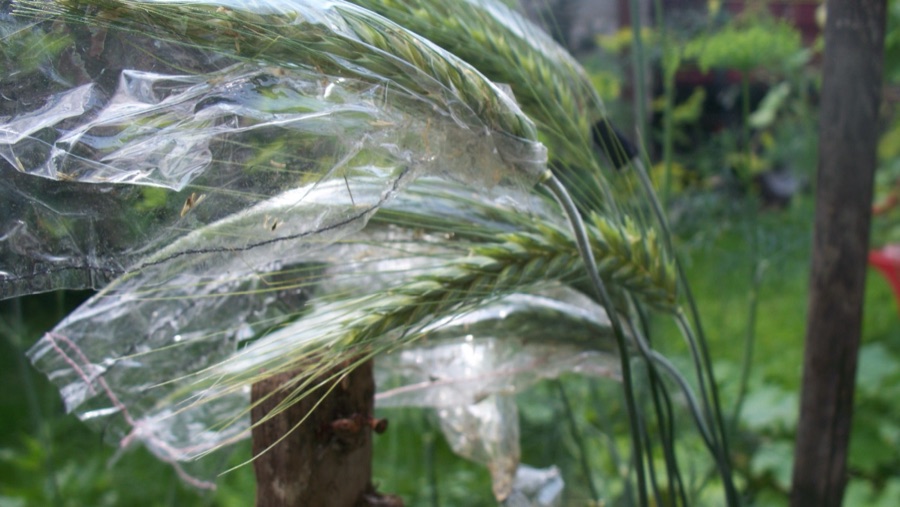
Which cereal's ear, or seed head, is this?
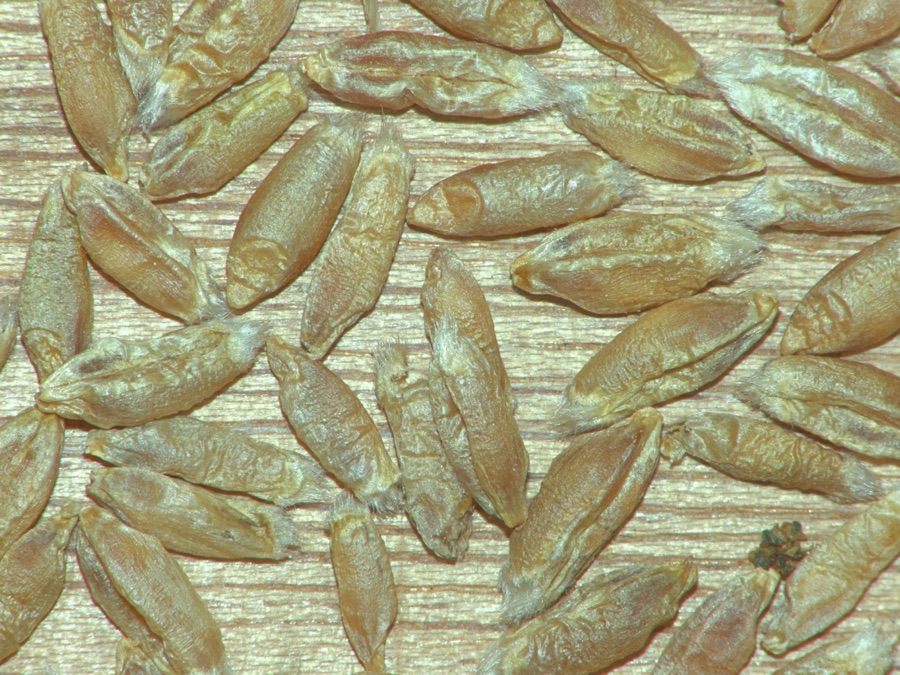
Which cereal's large grains are these, each with a long germ end, just threshed and cleaned?
Honest Limits of This Guide
- Sowing advice here mixes FAO's worldwide adaptation zones with Alberta trial data. Match a spring, facultative or winter type to your own winter, and sow when your local service advises.
- This crop's own real, agriculturally dominant hexaploid type carries a species name (× Triticosecale neoblaringhemii) that GBIF's own Backbone Taxonomy files as DOUBTFUL, while a different, mostly historical octoploid type's own name is the one formally ACCEPTED — a real, honest taxonomic quirk this guide states rather than smooths over.
- No per-hectare cost figure for triticale that holds across countries was found. The Alberta nitrogen and seeding numbers are dryland Canadian results, not a universal rate.
- Neither India's Minimum Seed Certification Standards nor FAO's Quality Declared Seed system has a triticale entry, so no figure from either is given.
- Products are never named here, only mode-of-action groups. A licensed dealer and the pack label are the authority on what to use.
- From sowing to harvest takes about 90 days for spring triticale and up to nine months, winter included, for winter types, but variety and local climate change both.
Related Laisha Tools
- Global Market Price Outlook — Check today's price and trend
- Crop Calendar — Build a season-long sowing plan
- Pest & Disease Intelligence — Risk reasoning and a global pest & disease library
- Crop Health — Photo-based first read on a field problem
- Seed Quality Intelligence — Check a seed lot before you plant it
- Post-Harvest Loss Prevention — Real storage science by crop
Sources
- GBIF Backbone Taxonomy species-match records for × Triticosecale Wittm. ex A.Camus (genus, usage key 2703325), × Triticosecale rimpaui (M.Graebn.) Wittm. ex A.W.Hill (species, usage key 9457183) and × Triticosecale neoblaringhemii A.Camus (species, usage key 4108754) — Global Biodiversity Information Facility (GBIF), Copenhagen (source)
- World Checklist of Vascular Plants (WCVP) search results for Triticosecale rimpaui, queried live through GBIF's own hosted copy of the checklist — Royal Botanic Gardens, Kew, hosted via GBIF (dataset f382f0ce-323a-4091-bb9f-add557f3a9a2) (source)
- EPPO Global Database entry for x Triticosecale sp., EPPO code TTLSS — European and Mediterranean Plant Protection Organization (EPPO), Paris (source)
- Triticale — Wikipedia (source)
- Ergot (Claviceps purpurea) — Wikipedia (source)
- Triticale production guide — Manitoba Agriculture, Government of Manitoba, Canada (source)
- Laisha's own curated global crop build-priority research, built on FAOSTAT's own 'Triticale' item category — Laisha (internal curated research, sourced from FAOSTAT QCL 2025) (source)
- Global Seed Certification Standards, triticale entries across the EU cereal seed directive and Canada's Seeds Regulations — Laisha internal reference data set, compiled from the primary legal instruments it cites (source)
- Laisha's own curated agrochemical mode-of-action and toxicity colour-band reference — Laisha (internal curated research) (source)
- Triticale improvement and production (FAO Plant Production and Protection Paper 179), chapter: Triticale production and management (Salmon, Mergoum and Gómez Macpherson) — Food and Agriculture Organization of the United Nations (FAO), Rome, 2004 (source)
- Dryland Agronomic Practices for Spring Triticale Production in Alberta (Agdex 118/10-1) — Alberta Agriculture and Rural Development (McKenzie and Pauly), 2013 (source)
Last updated · How Laisha writes and checks its pages · Report a mistake
Go further with Laisha Smarter
US$10 a month · one price worldwide · cancel any time
- Your own crop calendar for this crop, stage by stage
- Pest and disease alerts with IRAC/FRAC-group spray plans
- Ask Laisha about your field — up to 1,000 questions a month
| Free | Smarter | |
|---|---|---|
| Grow guides, pest pages, articles | Read all | Read all |
| Ask Laisha | 5 a day | Up to 1,000 a month |
| Exam practice | The sample on each page | Every question, timed papers |
| Crop calendar and pest alerts | — | For your own fields |
| Calculators and tools | — | All |
| Uploads and reports | — | 100 a month, real files |