Milk Fever, Ketosis and Acidosis in Dairy Cows: The Transition Period Explained
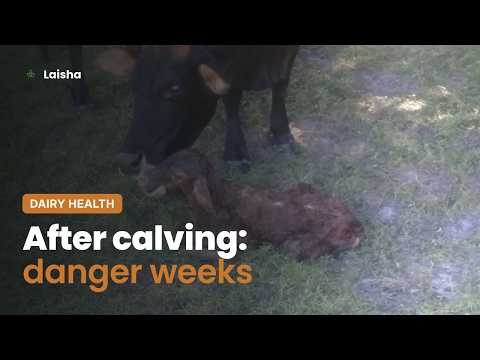
Most diseases of high-yielding dairy cows strike in the transition period, three weeks either side of calving, when milk drains calcium and energy faster than the cow can replace them. This guide covers the transition period and its three pressures (calcium, energy, immunity), milk fever (why it happens, who is at risk, the three stages and what to do while you wait for the vet), the downer cow and nursing, ketosis and fatty liver (two types, signs, the blood BHB test), subacute rumen acidosis and the displaced abomasum, grass tetany (low blood magnesium), and herd prevention: body condition at calving, the close-up dry cow diet and urine pH, intake after calving, and monitoring.
Chapters
- 0:00Why calving is the danger zone
- 1:00The transition period
- 2:08Milk fever
- 4:05The downer cow
- 5:14Ketosis and fatty liver
- 6:49Acidosis and the displaced abomasum
- 7:57Grass tetany
- 9:13Prevention across the herd
- 10:35Recap
Transcript
Within a few days of calving, a dairy cow goes from dry and pregnant to giving thirty litres of milk or more a day. That jump drains calcium, glucose and energy faster than her appetite can replace them.
Most diseases of high-yielding dairy cows, called metabolic or production diseases, strike in exactly this window. They cost farmers through treatment, lost milk, poor fertility and culling.
In this video: the transition period, milk fever and the downer cow, ketosis and fatty liver, rumen acidosis and the displaced abomasum, grass tetany, and how to prevent them across the herd.
We name no drugs and no doses.
Diagnosis and treatment are for your veterinarian,
and your veterinarian always comes first.
The transition period runs from about three weeks before to three weeks after calving. In those six weeks, three pressures arrive at once.
First, calcium.
Colostrum and milk pull calcium out of the blood faster than the gut and the bones can be switched on to replace it.
Second, energy.
Feed intake falls in the last days before calving and recovers only over several weeks, while milk yield climbs steeply. The cow fills the gap by burning body fat. This is called negative energy balance.
Third, immunity.
Her defences are depressed around calving, which is why retained placenta, uterine infection and mastitis cluster here.
And these problems are linked.
A cow with milk fever is more likely to develop a displaced abomasum, retained placenta, ketosis and mastitis in the following weeks. A herd with one transition problem usually has several.
Milk fever, also called parturient paresis, is a sudden fall in blood calcium at the start of lactation. Despite its name, there is no fever: body temperature is usually normal or low.
Most cases occur within seventy-two hours of calving, the majority in the first day.
The size of the drain is easy to see. An adult cow has only about three grams of calcium in her blood plasma,
and each litre of colostrum carries roughly two grams.
So ten litres of colostrum removes several times her blood calcium in a single day.
Milk fever is not a lack of calcium in the body. It is a failure to mobilise it fast enough.
Risk rises with age and milk yield, and in Jerseys and other Channel Island breeds.
First-calf heifers are rarely affected.
Watch for three stages.
In stage one, the cow is still standing, but excitable, with fine muscle tremors, twitching ears and shuffling hind feet. It is easily missed.
In stage two, she goes down onto her chest, dull, often with her head turned into her flank, cold ears and a dry muzzle.
In stage three, she lies flat on her side, bloats and loses consciousness.
Without treatment, death can follow within hours.
A cow with milk fever is an emergency, so call your veterinarian at once.
Calcium given into the vein must go in slowly, because given too fast it can stop the heart.
While you wait, prop her up on her chest, not flat on her side, to reduce bloat.
And never drench anything into a cow that cannot swallow properly, because it can go into her lungs.
Some cows stay down. A downer cow is still lying down more than about twenty-four hours after treatment for milk fever, often bright and alert, eating and trying to rise.
Most begin as milk fever cases, and the longer the delay to treatment, the higher the risk.
Calving injuries to nerves and hips can also keep a cow down.
Whatever the first cause, lying itself does the most damage.
When a heavy cow lies on a hind leg for about six hours or more on a hard surface, the muscle is crushed, and then it cannot support her.
Nursing is the treatment.
Move her onto deep bedding, sand or pasture.
Prop her on her chest, and roll her from side to side every few hours. Give water and tasty feed, and protect her from the weather. Your veterinarian will decide on lifting aids and pain relief.
And welfare comes first: a cow that cannot stand must never be transported,
and many countries make this the law.
Ketosis follows severe negative energy balance.
The cow mobilises so much body fat that her liver cannot burn it all, and makes ketone bodies instead.
There are two common types. The first appears around three to six weeks after calving, near peak yield, when the cow is simply not fed enough energy. The second appears in the first one to two weeks, typically in cows that were too fat at calving. It goes with a fatty liver, and responds less well to treatment.
The signs: she eats less, often refusing concentrates before forage, her milk drops, she loses weight fast, and the dung is firm and dry.
Some people notice a sweet smell on her breath or milk. In a minority of cases, nervous signs appear:
licking, chewing, apparent blindness, circling or aggression.
Ketosis can also follow any disease that cuts intake, such as a displaced abomasum, metritis or lameness, so always look for the first problem.
Subclinical ketosis, with no visible signs, is far more common, and it still lowers milk yield and fertility.
A cow-side blood meter finds it. A blood beta-hydroxybutyrate of about one point two millimoles per litre or more means subclinical ketosis, and about three or more usually goes with clinical disease.
Two more problems ride alongside.
Subacute rumen acidosis means repeated periods of low rumen pH,
commonly five point five or below. It comes from rations high in fast-fermenting starch and low in effective fibre, from cows sorting their feed, or from large, infrequent concentrate meals.
It rarely makes a cow look sick on the day. Instead, the herd shows variable intake, low milk fat, loose dung with fibre particles, and lameness from laminitis.
A displaced abomasum is the fourth stomach, filled with gas, moving out of place, usually to the left, and usually in the first month after calving. The cow eats less and gives less milk, and your veterinarian hears a high-pitched ping when tapping her left side.
Milk fever, ketosis, uterine infection, retained placenta, low intake and low-fibre diets all raise the risk.
Correction is often surgical.
Grass tetany is low blood magnesium.
Unlike calcium, magnesium cannot be released quickly from bone, so a cow depends on what she eats each day. It strikes lactating cows grazing lush, fast-growing pasture, heavily fertilised with potash and nitrogen, often in cold, wet weather.
Potassium blocks magnesium absorption from the rumen.
And even a day or two without feed, from bad weather or handling, sharply lowers blood magnesium.
The signs: an alert, nervous cow, ears pricked, muscles twitching, a stiff, staggering walk. A sudden noise can trigger convulsions, and death may come within an hour, so many cows are simply found dead.
Handle a suspected case quietly, and call your veterinarian immediately.
Prevention means a daily supply of magnesium through the risk period, in the ration, the minerals or the water, as your adviser recommends.
Feed hay or straw alongside lush grass, provide salt, and avoid potash fertiliser on grazing pastures in spring.
Most of this is prevented weeks before calving.
Manage body condition. Aim for a score of about three to three and a half, on a five-point scale, at calving.
Fat cows eat less after calving, mobilise more fat, and develop fatty liver and ketosis.
Feed the close-up dry cow for calcium. A diet low in potassium, with a negative balance of cations and anions, makes the blood slightly acidic, and that helps the cow mobilise calcium at calving. A urine pH of about six to seven shows the diet is working.
Below about five point five, the acid load is too high. Your nutritionist designs this diet.
Maximise intake after calving: fresh feed, enough space at the feed bunk, cow comfort and low stress.
Monitor.
Test fresh cows for ketones, sample about twelve cows in a group, and watch the share above the threshold, not the average.
On milk records, a fat to protein ratio above about one point four in early lactation flags a ketosis risk.
And keep calving pens clean and roomy, and treat sick cows early.
To recap.
The three weeks either side of calving are the danger zone:
a calcium drain, an energy gap and weaker immunity,
and one disease leads to the next.
Milk fever means tremors, then a cow down with her head to her flank. It is an emergency: call your veterinarian,
and keep her on her chest.
Nurse a downer cow on deep bedding, and roll her every few hours.
Ketosis means falling appetite and milk, so test fresh cows and do not let cows calve fat.
Against acidosis, keep effective fibre. Against grass tetany, give daily magnesium on lush pasture. For more on animal health and farming, visit laisha.ai. Thank you for watching.
Last updated · How Laisha writes and checks its pages · Report a mistake
Go further with Laisha Smarter
US$10 a month · one price worldwide · cancel any time
- Ask Laisha about what you watched — up to 1,000 questions a month
- Your own crop calendar and pest alerts
- Every calculator and tool