Ashwagandha
अश्वगन्धा
Withania somnifera (L.) Dunal
Solanaceae · Withania
One name, more than one plant
Matched to the accepted name in the GBIF backbone at 99% confidence. Solanaceae is the nightshade family, which matters: several relatives are toxic, and a plant collected in the wild by somebody who is not certain is the commonest route to harm in herbal medicine.
Benefits & side effects
TRADITIONAL VIEW, WITH SAFETY LIMITS
Hindi name: Asgandh
What the texts say Ashwagandha does
- Balya — strengthening
- Rasayana — rejuvenative
- Vrishya — aphrodisiac, supports reproductive vigour
- Vatahara — pacifies vata
- Nidrajanana — induces sleep
What the evidence says. Limited and mixed.
Side effects and limits
- Drowsiness
- Stomach upset
- Diarrhoea
- Vomiting
Avoid or ask first: Autoimmune conditions — not recommended.; Thyroid disorders — not recommended.; Before surgery — not recommended.
A traditional classification, not a recommendation. The full safety record is below.
Stands in 2 groups
- Brimhaniya — Nourishing and bulk-building (named there as Ashvagandha)
- Balya — Strength-giving (named there as Ashvagandha)
A Samhita can only be read forwards, from the group to its members. This is the same list read backwards.
Photographs
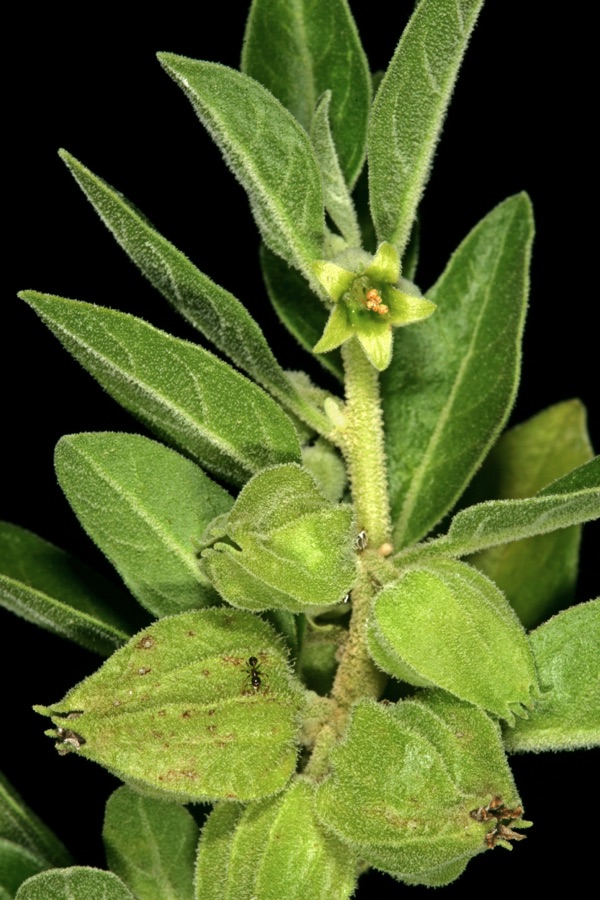
Photo: SAplants · CC BY-SA 4.0 · Wikimedia Commons

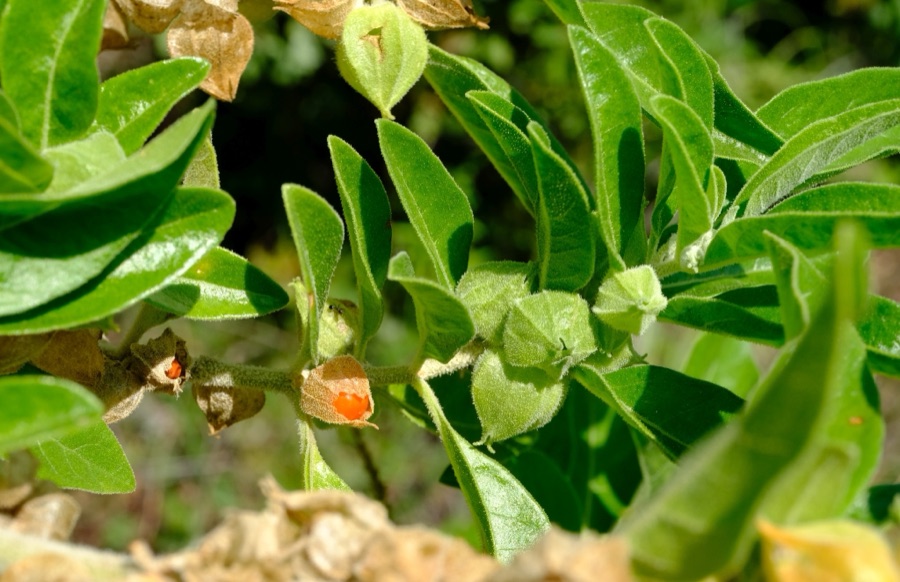
Photo: botaneek · CC BY-SA 4.0 · Wikimedia Commons

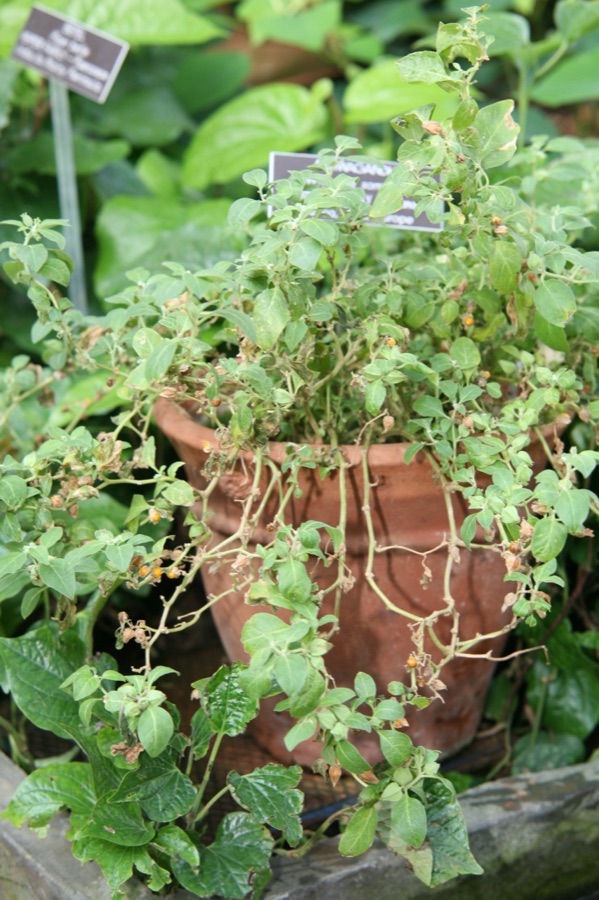
Photo: Cliff from I now live in Arlington, VA (Outside Washington DC), USA · CC BY 2.0 · Wikimedia Commons

Matra and anupana
AS THE CLASSICAL TEXTS AND THE API PRESCRIBE
| Churna | 3–6 g |
| Anupana | Dugdha · Ghrita · Ushnodaka |
| Kala | Ratri or pragbhakta |
Classically given with dugdha as balya and rasayana. API assay: total withanolides not less than 0.2 per cent.
Reported from Sharangadhara Samhita and the Ayurvedic Pharmacopoeia of India. Laisha states what the texts prescribe; it does not recommend. No quantity here is adjusted for a particular person — not for agni, koshtha, bala, age, pregnancy, kidney or liver function, or anything already being taken.
Pharmacopoeial standard
Ayurvedic Pharmacopoeia of India, Part I
| Marker | Total withanolides |
| Assay | Not less than 0.2 per cent |
| Total ash | Total ash not more than 7 per cent |
| Acid-insoluble ash | Not more than 1 per cent |
| Alcohol-soluble extractive | Alcohol-soluble extractive not less than 15 per cent |
| Water-soluble extractive | Water-soluble extractive not less than 20 per cent |
| Foreign matter | Foreign matter not more than 2 per cent |
Root only. Leaf and stem raise the ash and lower the withanolides, and leaf-adulterated material is common.
These are the pharmacopoeial limits for the article, not a test Laisha has run on anything. They are here so a practitioner can ask a supplier for a certificate of analysis and know what the numbers on it should say.
Rasapanchaka
| Rasa | TiktaKatuMadhura |
| Guna | LaghuSnigdha |
| Virya | Ushna |
| Vipaka | Madhura |
| Prabhava | Classified as rasayana and as balya. Charaka places it among the balya dravya, and the texts treat its action as prabhava rather than derivable from the rasapanchaka alone. |
| Doshakarma | Vatakaphahara. Being ushna and snigdha it can increase pitta, which the texts note. |
Tikta and katu with madhura. Madhura vipaka with ushna virya is the combination the texts credit for its balya action.
Karma and part used
These are the actions the classical texts record. They are statements about what the tradition holds, and this library does not restate them as findings about a human body.
| Upayukta anga | Mula (the root) |
| Why it matters | Traditional use is of the root. The leaf and berry are not the same material and are not interchangeable with it. |
Paryaya
Ashwa means horse and gandha means smell: the fresh root smells of it, and that is the feature the name records. Vajini and Hayagandha say the same thing in other words.
Names, by language
| English | Indian winter cherry |
| Nepali | Ashwagandha |
| Hindi | Asgandh |
| Kannada | Amangura |
| Tamil | Amukkara |
| Telugu | Pennerugadda |
| Malayalam | Amukkuram |
| Marathi | Askandha |
| Gujarati | Asundh |
| Bengali | Ashwagandha |
| Punjabi | Asgand |
| Odia | Aswagandha |
| Urdu | Asgand |
Classical references
Rasa, guna, virya, vipaka and karma are recorded as the classical texts give them, with the text and section named so a student can open the book and check. Where an exact chapter and verse could not be confirmed, this library names the section rather than inventing a number.
Formulations it appears in
| Ashwagandharishta | A fermented preparation named for the dravya. |
| Ashwagandha Churna | The plain powdered root. |
| Balarishta | Ashwagandha is among the principal dravya. |
Adulterants and substitutes
Withania coagulans, a different species, is sold under overlapping names, and roots of unrelated plants appear in loose powder. Because the root is usually sold cut or powdered, the horse smell that gives the plant its name — the one feature a buyer could check — is often the only test left, and it fades with age.
Identity
Matched to the accepted name in the GBIF backbone at 99% confidence. Solanaceae is the nightshade family, which matters: several relatives are toxic, and a plant collected in the wild by somebody who is not certain is the commonest route to harm in herbal medicine.
A WAY TO REMEMBER IT
Withania honours Henry Witham. Somnifera is somnus (sleep) + fero (I bring) — sleep-bringing. The Sanskrit says the root smells of a horse; the Latin says what it was thought to do.
What the tradition holds
Ashwagandha has been used in Ayurvedic medicine for thousands of years, where it is classed among the rasayana preparations. Ayurveda describes it as supporting resilience under strain. That is what the tradition holds; it is a description of a historical practice, not a finding about what the plant does in a body.
Constituents. Contains several bioactive compounds, including a group of substances known as withanolides.
What the evidence says
| Status | Limited and mixed. |
| Suggested | Research indicates some ashwagandha preparations may help with insomnia and stress. Evidence on anxiety remains unclear. Limited research suggests two to four months of use may affect testosterone and sperm quality. |
| Not established | There is not enough evidence to determine whether ashwagandha is helpful for any other health condition. Long-term safety data is insufficient; what safety evidence exists covers roughly three months of use. |
| The honest gap | Most published studies use a standardised commercial extract. A root powder bought loose is not the same material, so even the limited findings that exist may not carry across to it. |
Safety
Documented liver injury, a clear warning against use in pregnancy, and interactions with several common classes of medicine. This is not a plant to start without speaking to a doctor or pharmacist, particularly for anyone already on medication.
| Side effects | Drowsiness Stomach upset Diarrhoea Vomiting |
| Contraindications | Autoimmune conditions — not recommended. Thyroid disorders — not recommended. Before surgery — not recommended. |
| Interactions | Thyroid hormone — ashwagandha raises T4 and T3 in reported cases, and thyrotoxicosis has been described in a patient on levothyroxine. Check thyroid function rather than assuming. Immunosuppressants — the immunomodulatory direction opposes them. Sedatives, benzodiazepines and alcohol — additive sedation. Antidiabetic and antihypertensive medicines — additive lowering. Liver injury has been reported to LiverTox with ashwagandha supplements, usually within 2–12 weeks and usually cholestatic. It is uncommon and it is real. |
| Pregnancy and breastfeeding | Should be avoided during pregnancy, and should not be used while breastfeeding. |
Growing it
| Climate | A shrub of dry subtropical regions, native to India, Africa and the Middle East. |
| Soil | Requires free-draining soil; it does not tolerate standing water. |
| Planting | Grown from authenticated seed. Authenticated matters more here than anywhere else in this library, because the medicinal material is the root and a root cannot be identified by eye once it is out of the ground. |
| Harvest | Roots are lifted at maturity, washed, and dried under conditions that are recorded, so a batch can be traced afterwards. |
| What is not stated | Laisha does not hold a sourced per-hectare yield or cost figure for ashwagandha. None is stated here rather than an estimate being offered. |
Grown as a crop: how to grow ashwagandha, from sowing to harvest, in Laisha's grow guides.
Last updated · How Laisha writes and checks its pages · Report a mistake
Go further with Laisha Smarter
US$10 a month · one price worldwide · cancel any time
- Ask Laisha about any herb or formulation — up to 1,000 questions a month
- The full study tracks with practice questions
- Reports and exports as real files