This issue reaches you at the turn of the farming year, and the turn looks different depending on where you stand. South of the equator, December is early summer: maize is racing up in southern Africa and South America, oats are being harvested across Australia, beehives are at their busiest, and dairy cows are looking for shade. North of it, the fields are resting, hives are clustered against the cold, cattle are on winter feed, and farmers are planning next season at the kitchen table.
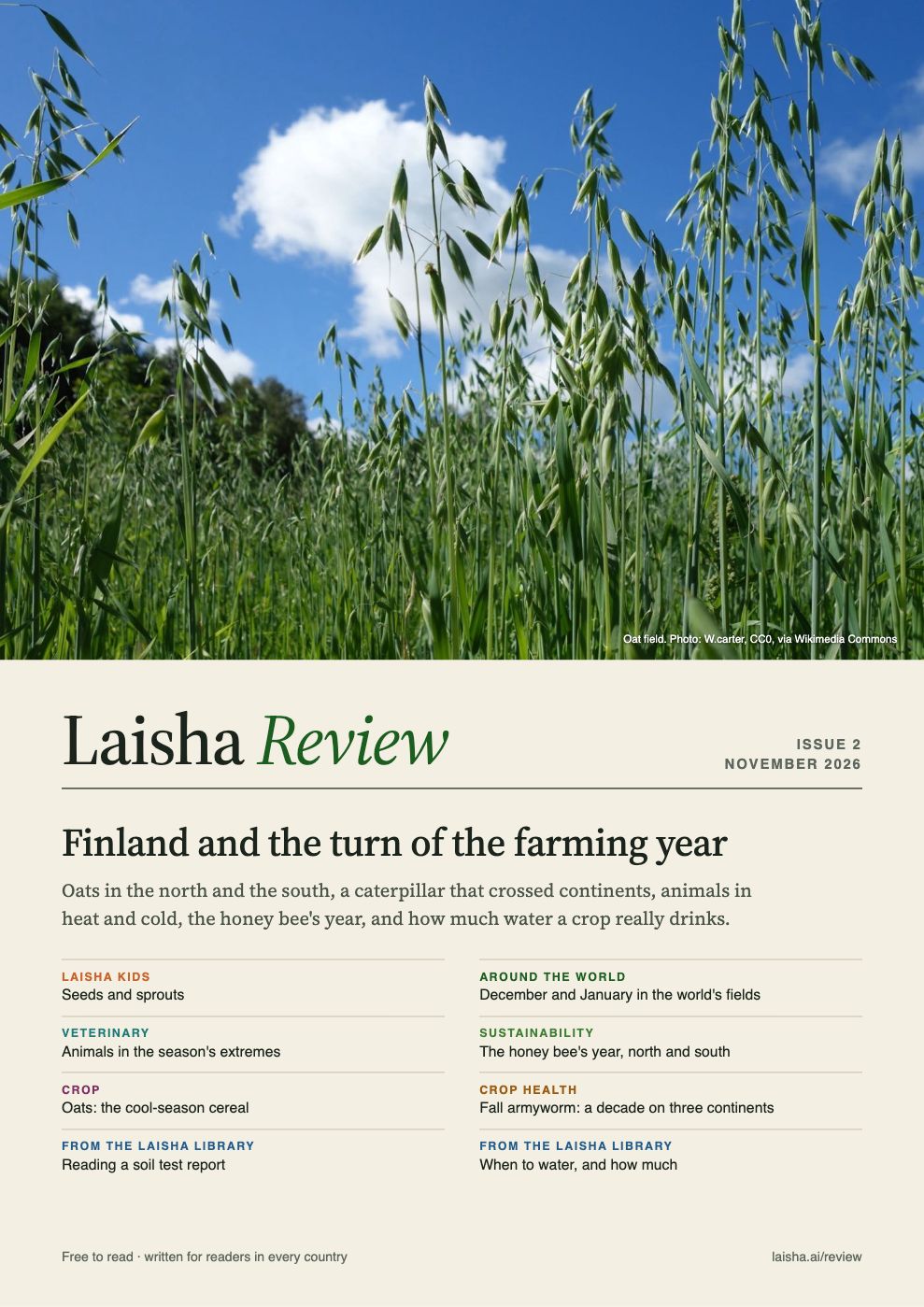
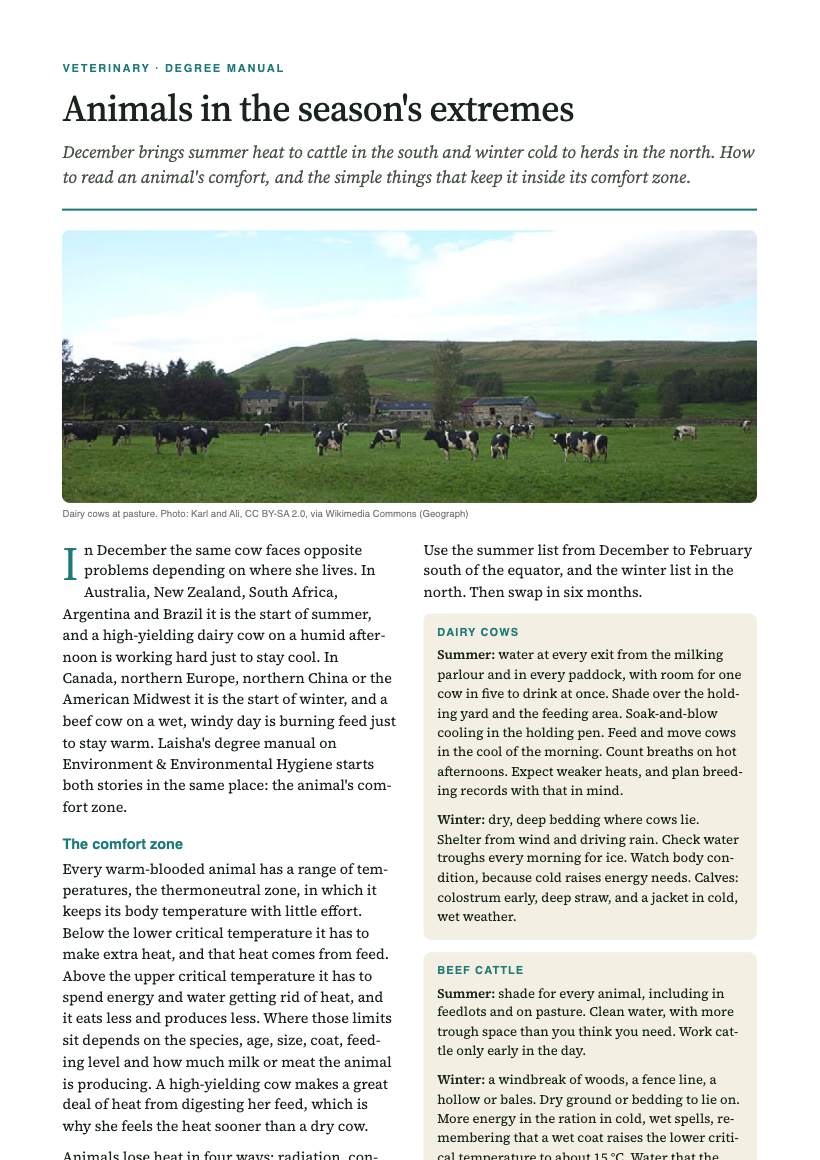
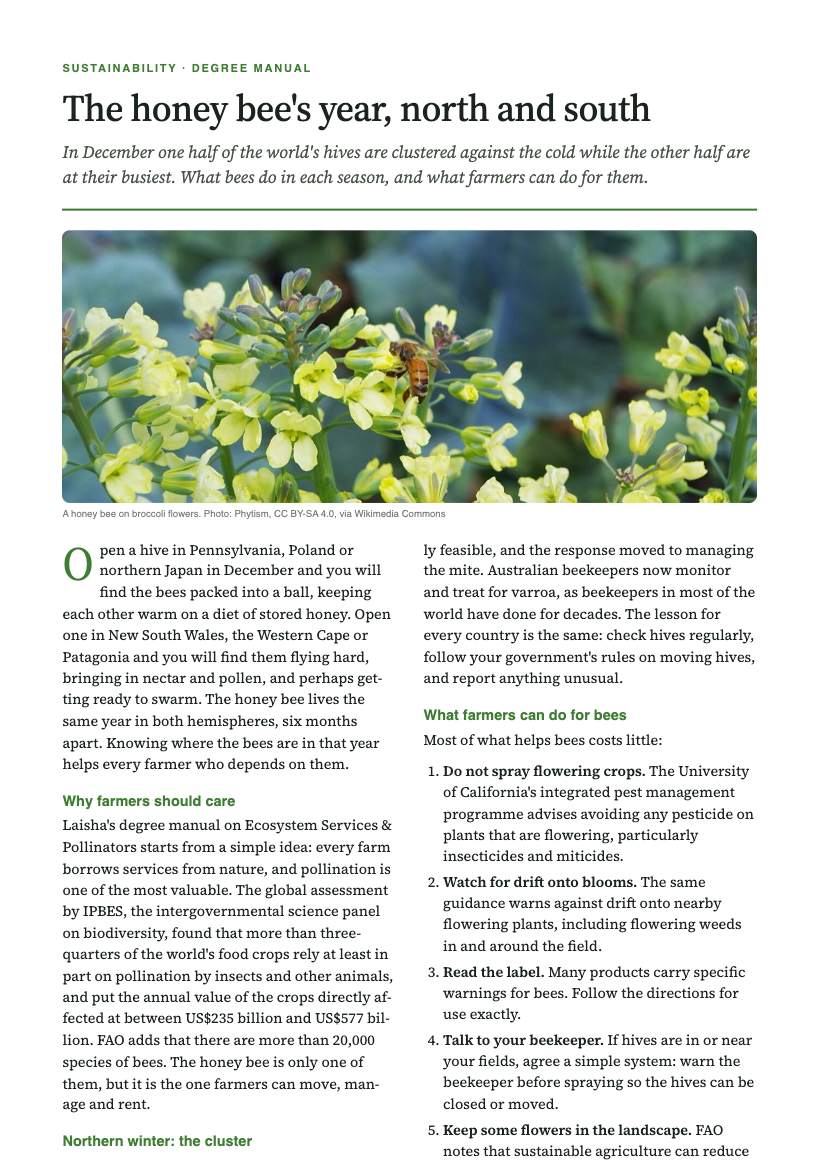
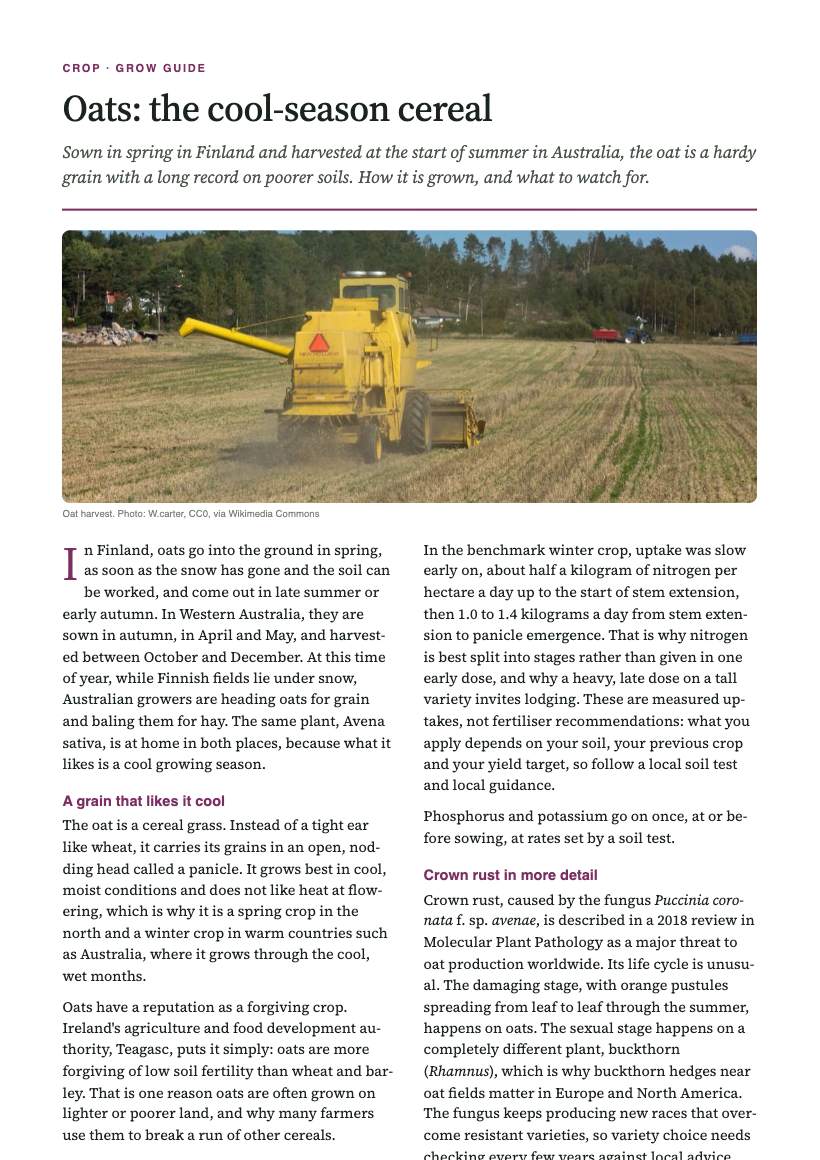
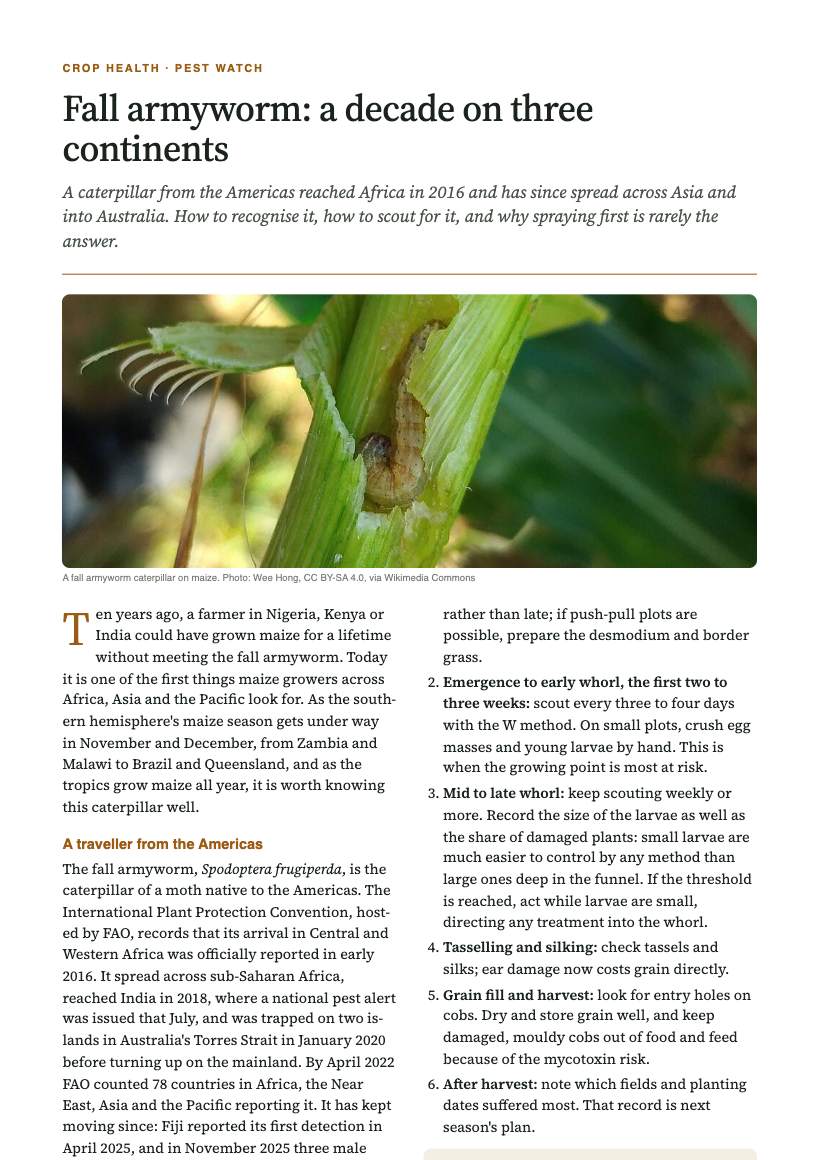
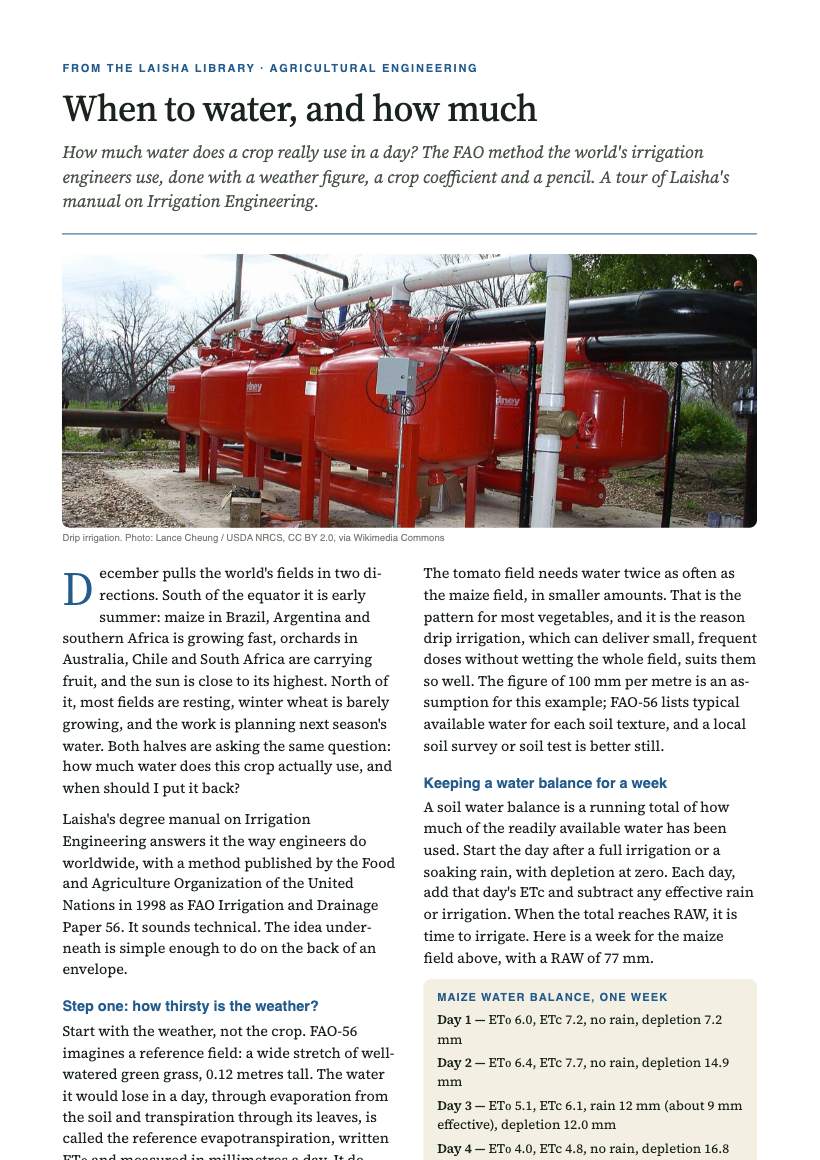
So Issue 2 is written for both halves of the world at once. Our crop health story follows the fall armyworm, a caterpillar that has crossed continents in a decade, and what a careful farmer can do about it. Our crop is the oat, sown in spring in Finland and harvested in early summer in Australia. Our veterinary pages are about animals in the season's extremes, heat in one hemisphere and cold in the other. The bees get their own story, and so does the water: how to work out how much your crop drinks, with nothing more than a weather figure and a pencil.
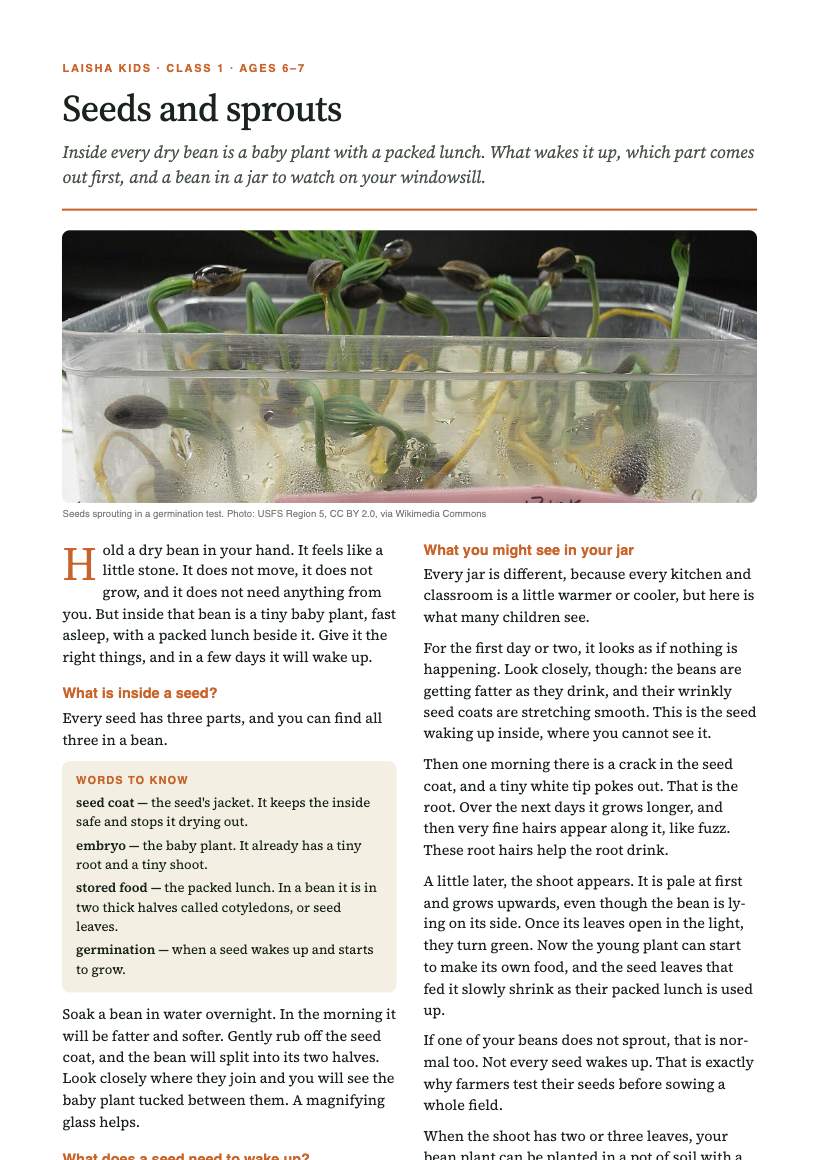
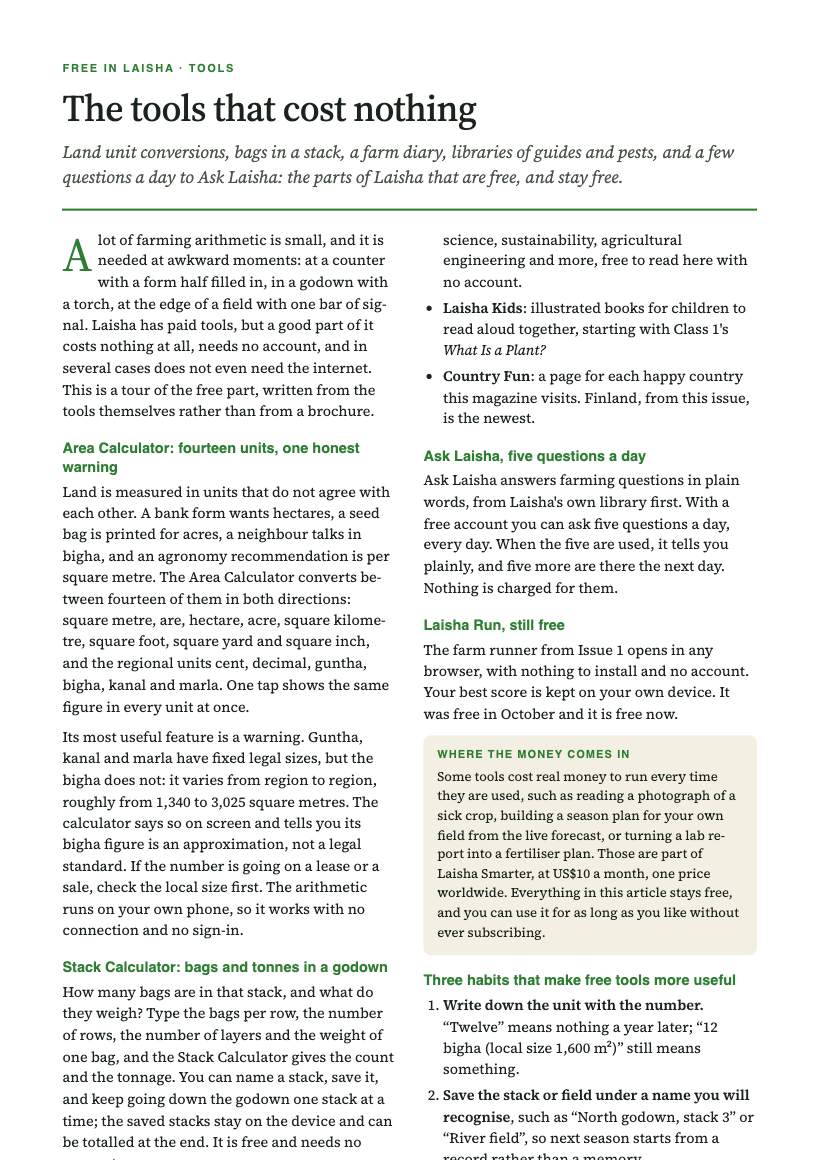
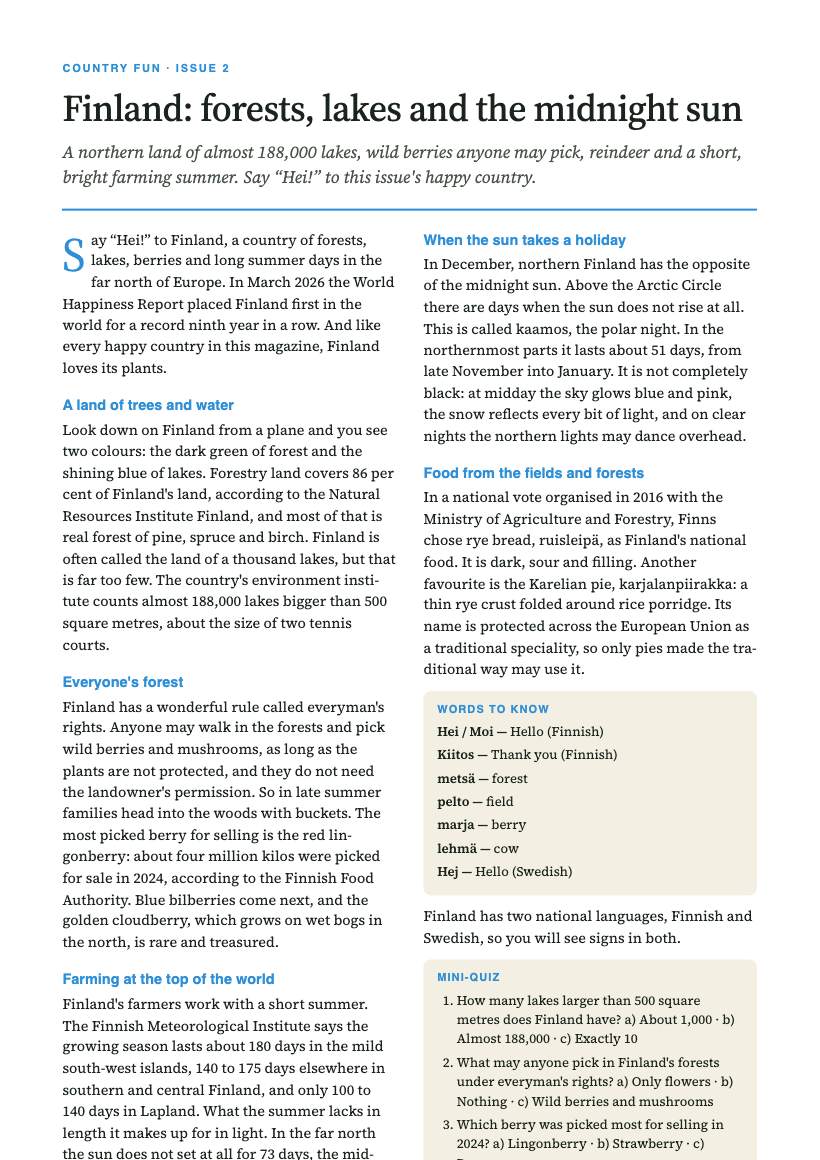
Our happy country this time is Finland, ranked first in the World Happiness Report 2026 for a record ninth year in a row. Its farmers make the most of a short summer, under a sun that in the far north does not set at all for weeks. Children get a story of seeds and sprouts, with a bean to grow on a windowsill. And we show you the parts of Laisha that cost nothing at all.
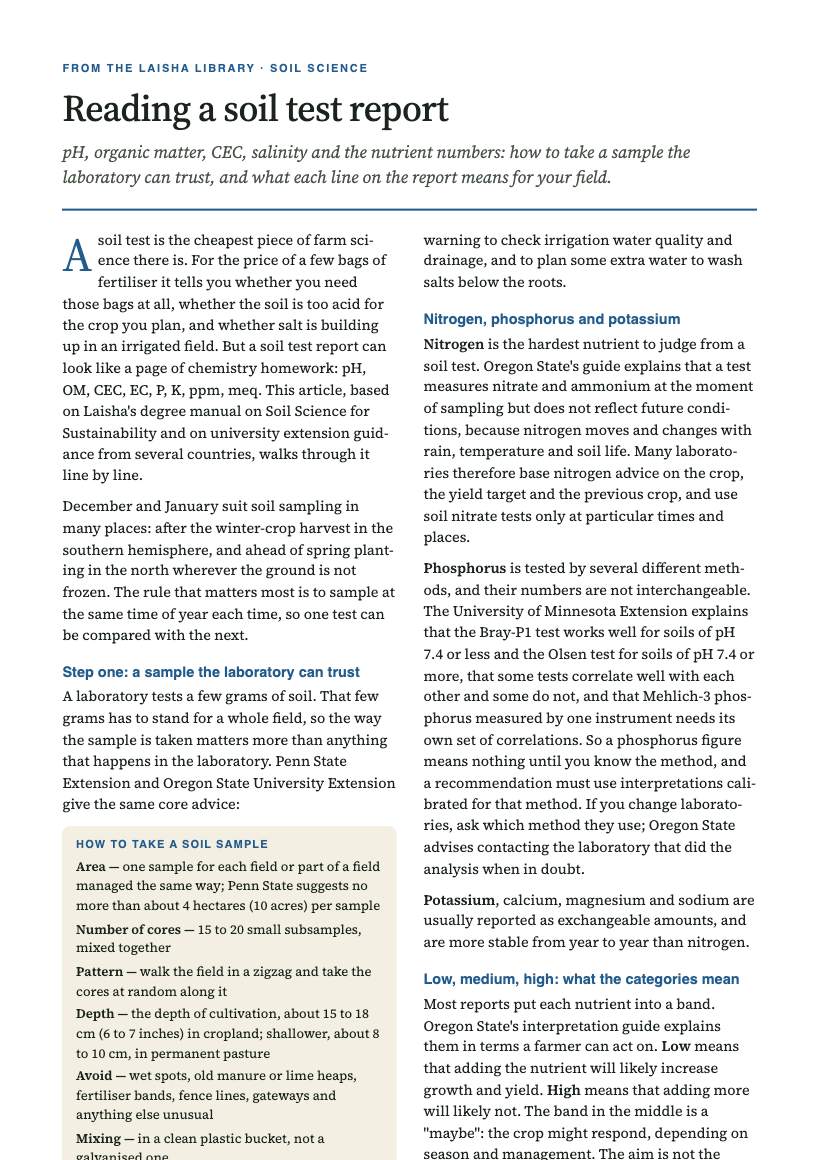
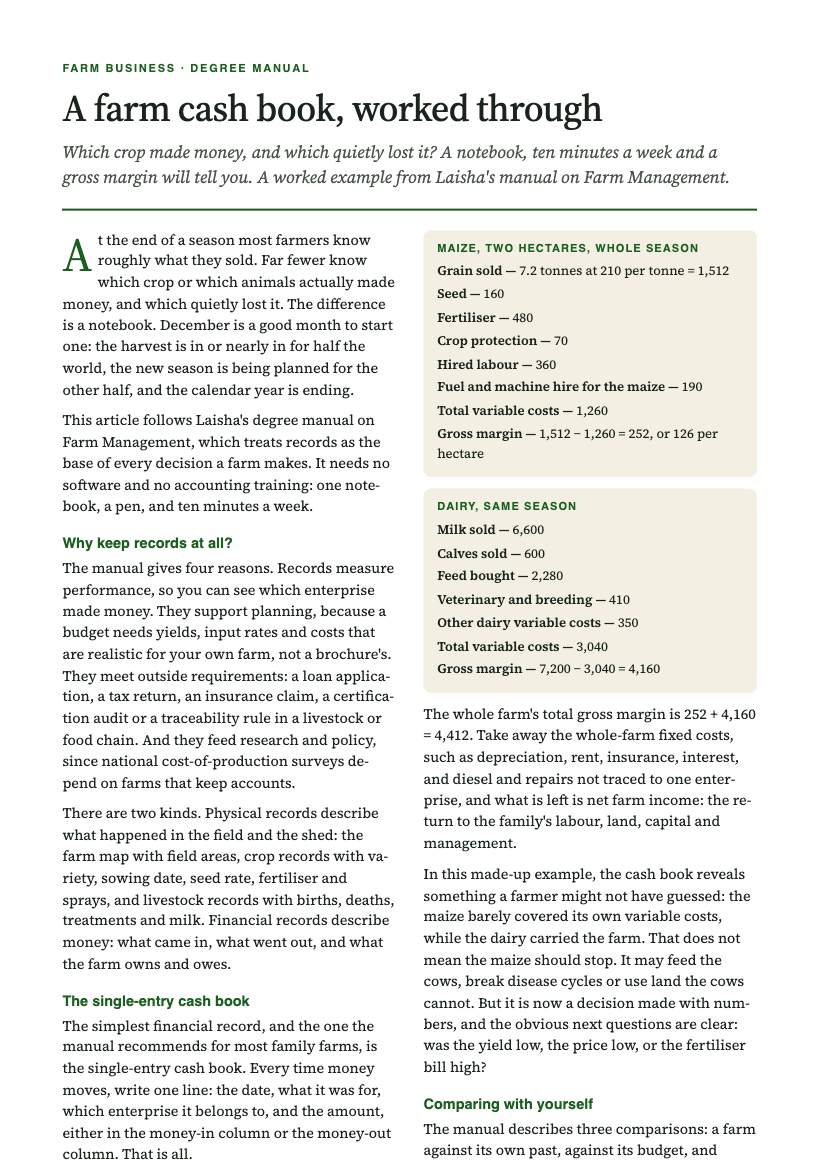
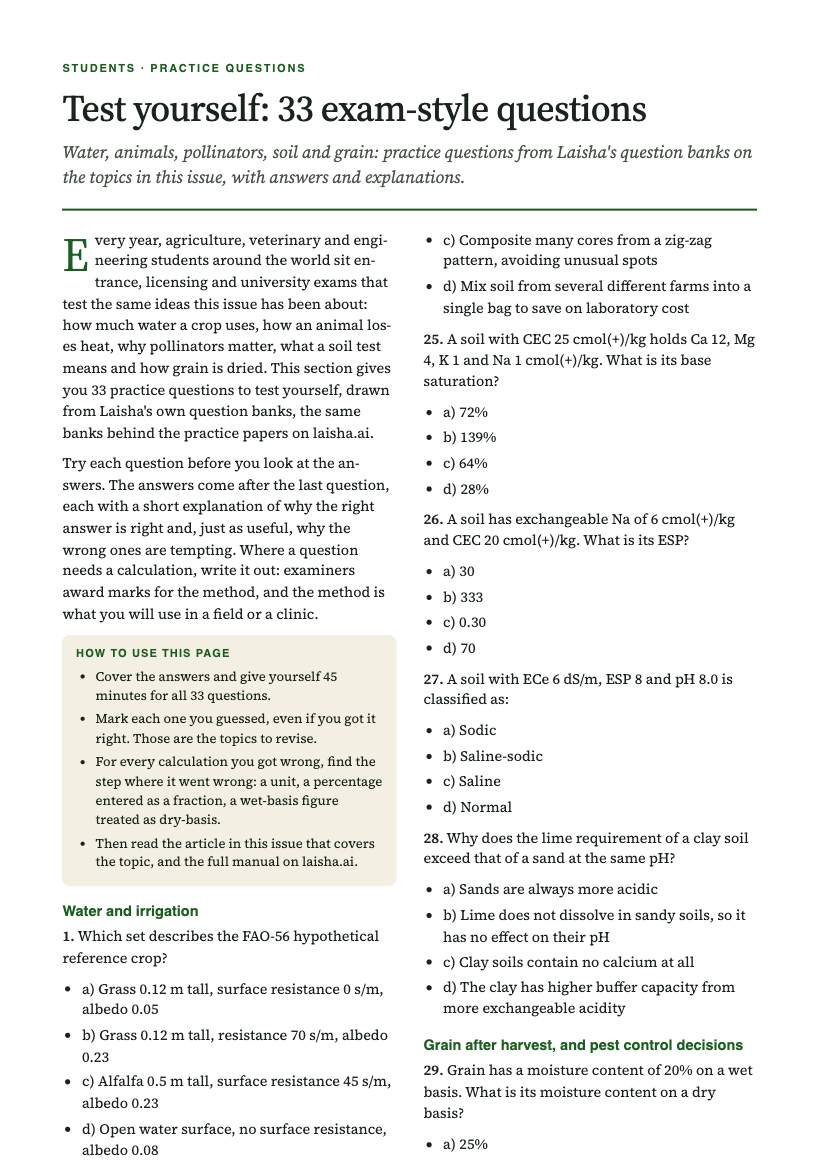
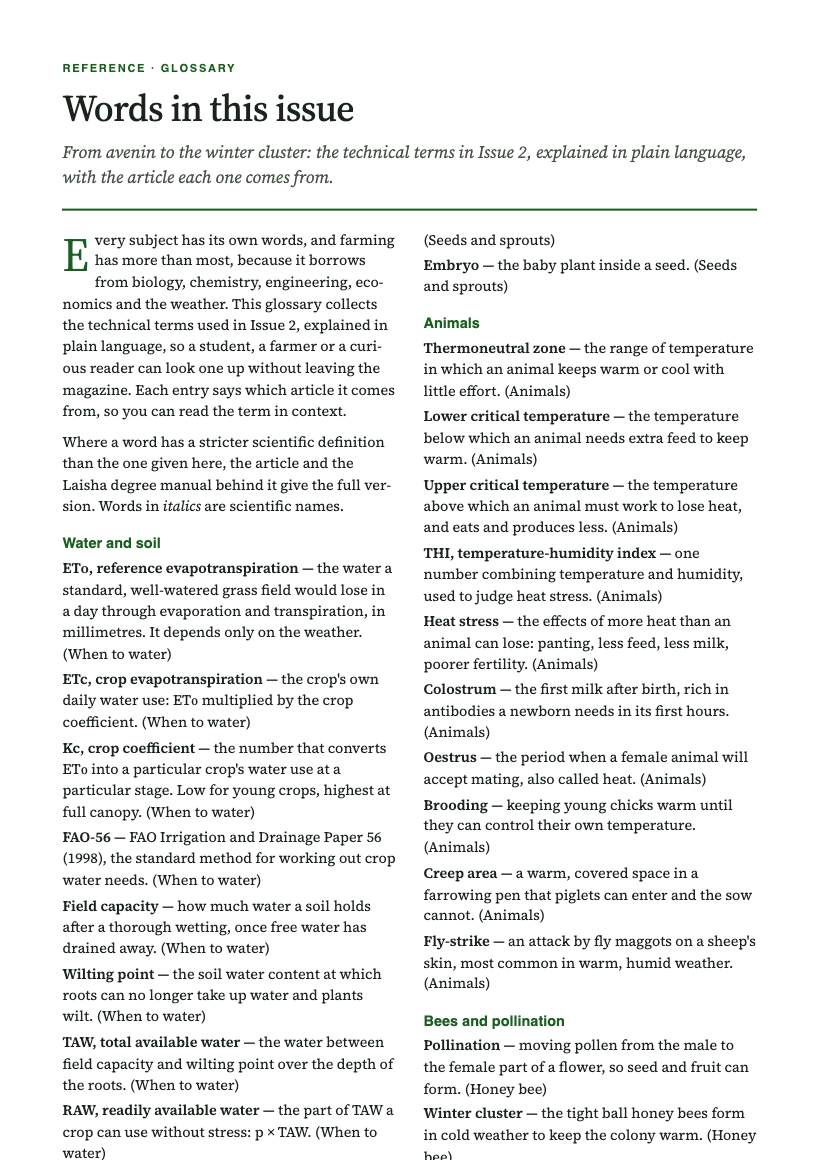
This is also a bigger issue than our first, with more to keep and use. A tour of the world's fields in December and January opens it. There is a guide to reading a soil test report, a chapter on keeping the harvest you grew, and a farm cash book worked through line by line. Students get 33 exam-style practice questions with answers, and a glossary at the back explains every technical word in the issue. Several pages are made to be copied into a notebook: a fall armyworm scouting sheet, a water balance, a table of crop coefficients and a season checklist for each kind of livestock.
Tell us what to write next
This magazine is made for you, so we would like to hear from you. Which article did you read to the end? Which one did you skip? What should we explain next: a crop from your country, a pest in your fields, a question your teacher could not answer? Write to us at the address on laisha.ai/contact, or, if you have a Laisha account, through Feedback and Ideas in the app. Every message is read, and the best ideas become articles.
If this issue was useful, pass it on to one person who grows, studies or simply loves plants. It is free, and it stays free.
— The Laisha team